Semi Technical Description of a Flowering Plant & Some Important Families


The plant is first described by its overall appearance, including its shape and size. Then, we look at the different parts of the plant, like the roots, stem, and leaves. Next, we focus on the flowers and how they are arranged on the plant. We use a special diagram and some symbols to show how the different parts of the flower are organized.
Semi-Technical Description of a Typical Flowering Plant
The Semi-Technical description of a flowering plant explains all the physical features of a plant. It uses scientific symbols and numbers to describe these features. This helps scientists all over the world understand the same flower, even if it has different names in different places.
A Semi-Technical description includes the floral formula and floral diagram, which provide detailed information about the floral structure and arrangement.
Floral Formula
The Floral formula is a shorthand representation of the floral structure of a plant. It provides information about the number, arrangement, and fusion of the floral parts.
The general format of a floral formula includes symbols for sepals, petals, stamens, and carpels, along with additional information about their characteristics.
- Sepals (Calyx) are represented by "K"
- Petals (Corolla) are represented by "C"
- Stamens (Androecium) are represented by "A"
- Carpels (Gynoecium) are represented by "G"
In the floral formula: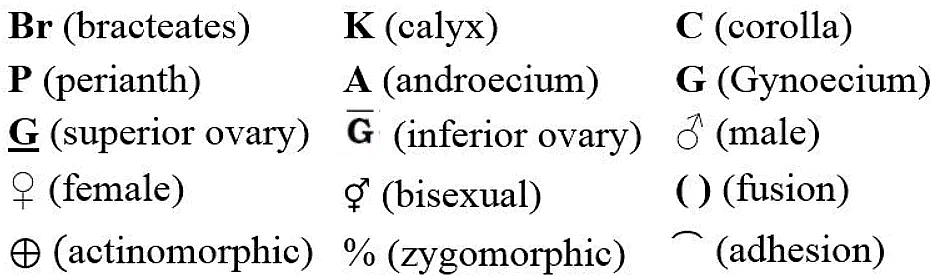
Floral Diagram
The Floral Diagram is a visual representation of the flower's structure, showing the arrangement and relationships between the various floral parts.
The position of the mother axis with respect to the flower is represented by a dot on the top of the floral diagram.
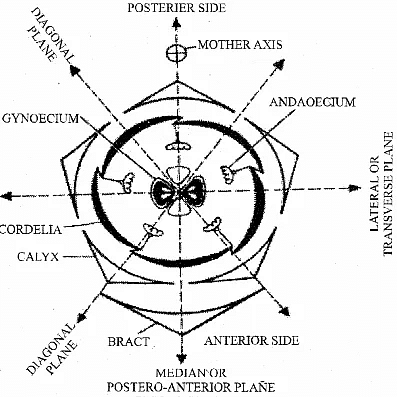 Floral Diagram
Try yourself: What does a dot on the top of a floral diagram represent?
Family Description
According to the plant taxonomists, it has been estimated that a total of 2 to 3 million plant species exists on our planet. Among them, around two lakh species are angiosperms (flowering plants), while others include gymnosperms, bryophytes, hydrophytes and other vascular and non-vascular plants. These plants are grouped into different families depending upon their characteristics: Solanaceae, Fabaceae and Lilaceae.
(a) Solanaceae Family
Solanaceae family is also known as the potato family. Around 2000 species of dicotyledonous plants belong to this family. It's important characteristics are mentioned below.
Characteristics of Solanaceae Family
1.Vegetative characters
- Root System: Taproot System
- Stem: Erect or Climbers, Solanaceae includes herbs, shrubs, small trees, and climbers
- Leaves: Alternate, simple or pinnately compound (rarely); exstipulate; reticulate venation.
2.Floral characters
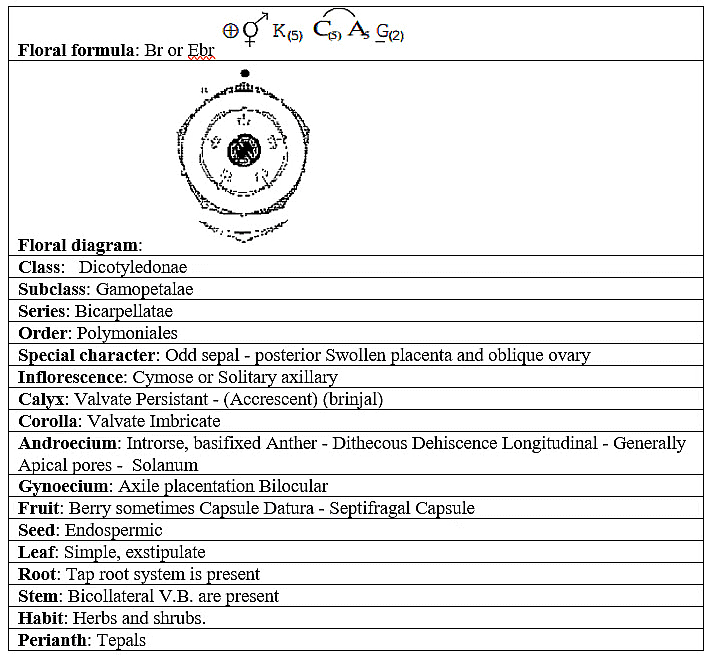
- Inflorescence: Racemose- terminal or axillary raceme; Cymose- solitary in Solanum.
- Flower: Complete, bisexual, actinomorphic, hypogynous.
- Calyx: Five sepals, gamosepalous; valvate aestivation.
- Corolla: Five petals, gamopetalous, valvate aestivation.
- Androecium: Five stamens, epipetalous; anthers basifixed.
- Gynoecium: Syncarpous, bicarpellary, bilocular, superior ovary, axile placentation.
- Fruit: Berry/ capsule.
- Seed: Numerous, endospermous
Economic Importance
The economic importance of some plants belonging to the Solanaceae family are as follows:
- These are an important source of food. E.g. tomato, brinjal and potato
- These are important sources of spices. E.g. chilly
- The leaves of Nicotiana tabacum are a major source of tobacco.
- These are also used as ornamental plants. E.g. petunia
- Plants such as belladonna and ashwagandha are also used as medicinal plants.
Try yourself: What is the inflorescence type of the Solanaceae family?
(b) Fabaceae Family
The Fabaceae family is a large family of the plant kingdom, including several economically important plants. The family Fabaceae is also known as Leguminosae or Papilionaceae since it belongs to the pea or legume family. There are around 20,000 species of dicotyledonous Fabaceae plants widely distributed all over the world.
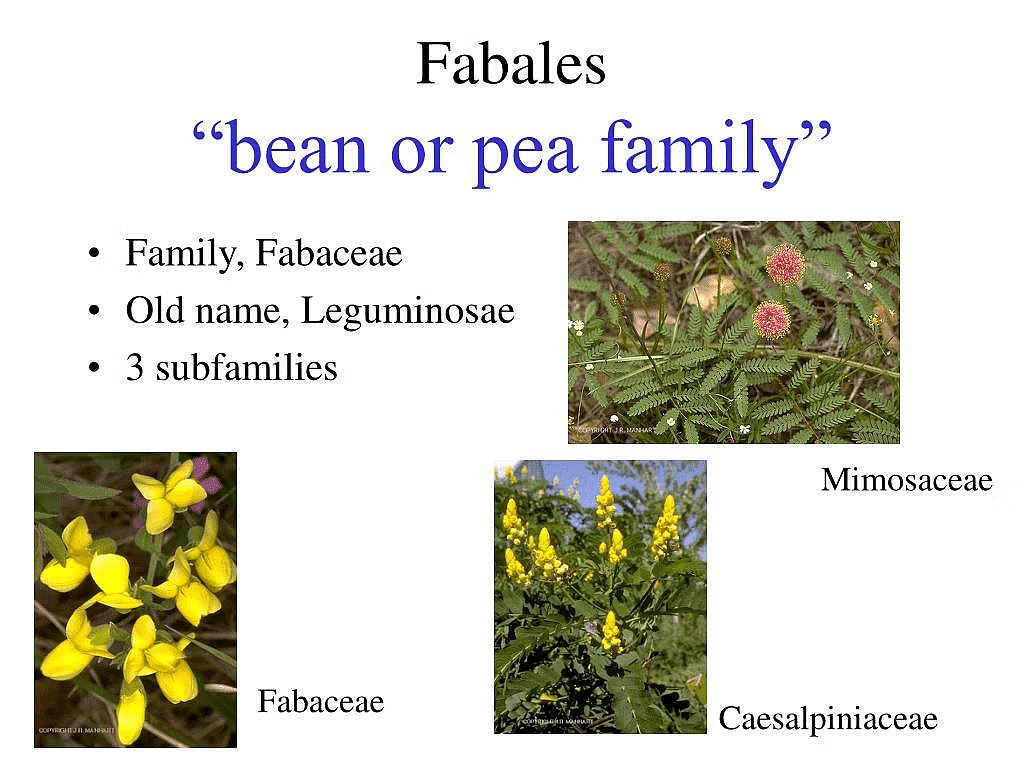
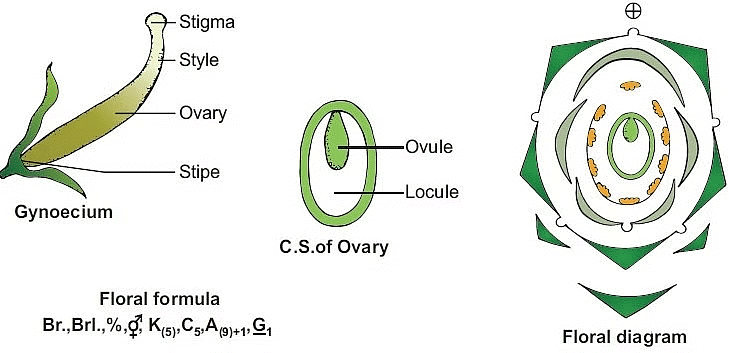 Fabaceae Family
Characteristics of Fabaceae Family
1. Vegetative Characters
- Root: Dicotyledons, taproot with root nodules.
- Stem: Erect or climber; Fabaceae includes shrubs, herbs, trees and majorly climbers.
- Leaves: Petiolate, pinnately compound or simple; pulvinus leaf base, stipulate; reticulate venation.
2. Floral Characters
- Inflorescence: Racemose.
- Flower: Complete, bisexual, zygomorphic, hypogynous, bracteate/ ebracteate.
- Calyx: Five sepals, gamosepalous; valvate or imbricate aestivation.
- Corolla: Five petals, polypetalous, papilionaceous, vexillary aestivation.
- Androecium: Ten stamens (9+1), diadelphous, anther dithecous.
- Gynoecium: Superior ovary, monocarpellary, unilocular, single, short -style and flat, hairy-stigma.
- Fruit: Legume.
- Seed: One or more, non-endospermic.
Economic Importance
Many plants belonging to this family are economically useful. Few of them are listed below:
- The plants of this family are unique and have root nodules which contain nitrogen-fixing symbiotic bacteria, capable of transforming atmospheric nitrogen into fixed nitrogen or ammonia.
- Pulses like gram, moong, soya bean are the main source of food.
- Mulethi plant is known for its medicinal value.
- Soya bean and groundnuts are used to extract oil that is used for cooking.
- Sunn hemp is the source of timber and fibre.
- Indigofera is used to make dye.
- Sesbania and Trifolium are the sources of fodder or livestock feed.
- Lupin and sweet pea are known as ornamental plants.
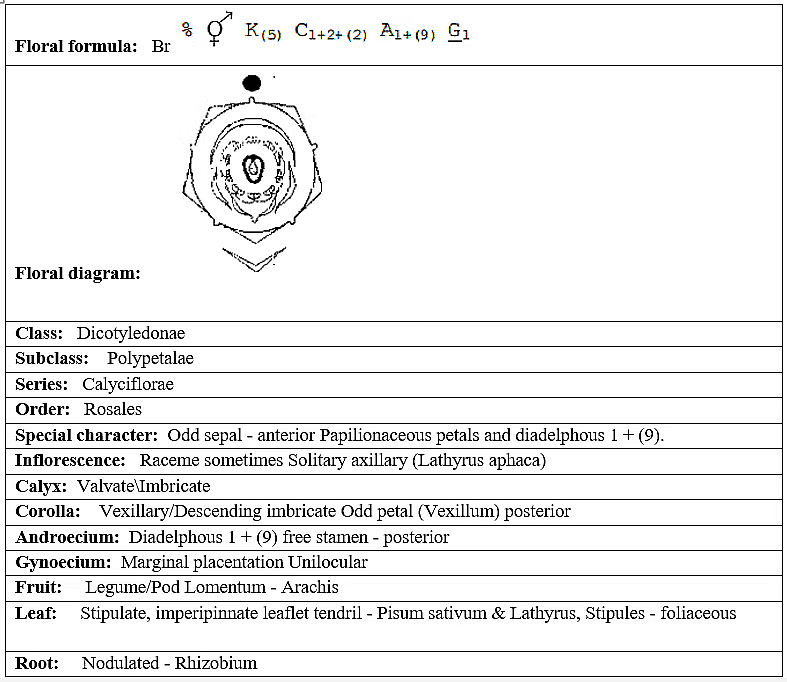
Try yourself: Which part of the flower in the Fabaceae family is polypetalous and exhibits vexillary aestivation?
(c) Liliaceae Family
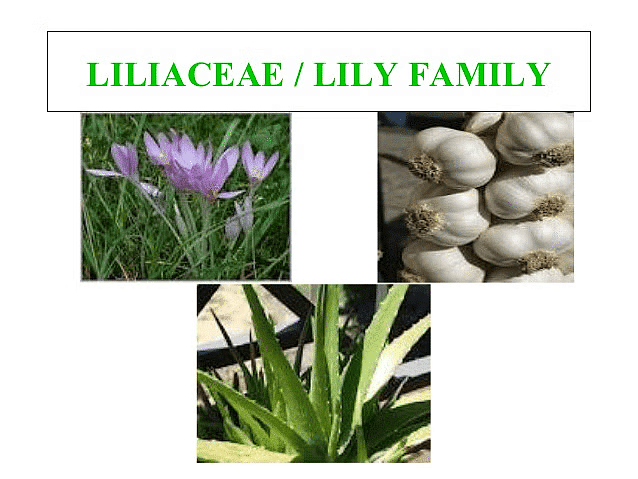
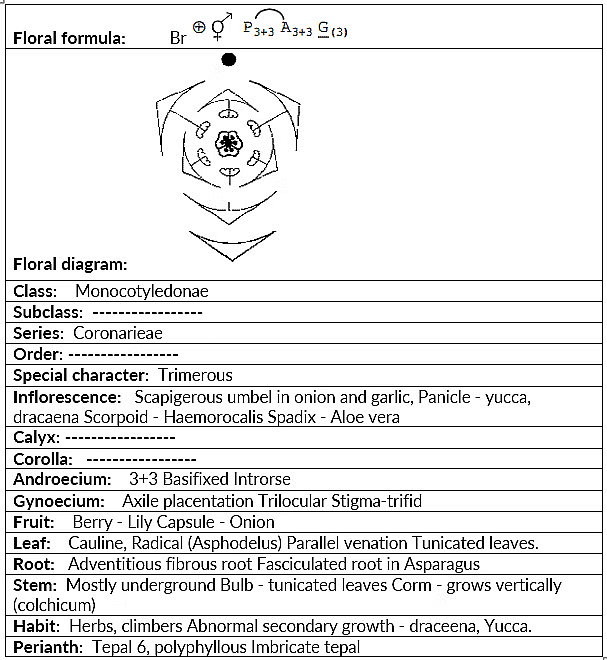
Liliaceae is the family of around 2500 species of perennial, herbaceous monocots. It is also known as the 'lily family'. Its characteristics are discussed below.
Characteristics of Liliaceae Family
1. Vegetative Characters
- Root: Fibrous root system.
- Stem: Erect; Liliaceae includes perennial herbs which propagate through bulbs or rhizomes.
- Leaves: Alternate, simple; exstipulate; parallel venation.
2. Floral characters
- Inflorescence: Cymose- solitary; umbellate clusters.
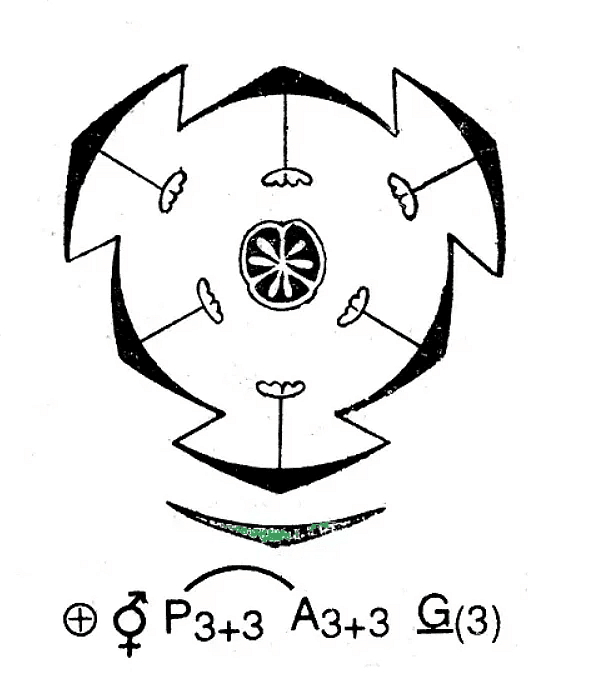
- Flower: Complete, bisexual, actinomorphic; hypogynous, perianth present.
- Perianth: Indistinctive sepal and petal; six tepals (3+3), often united tepals; valvate aestivation.
- Androecium: Six stamens in two whorls (3+3).
- Gynoecium: Syncarpous, tricarpellary, trilocular, superior ovary with axile placentation.
- Fruit: Mostly Capsule and sometimes berry.
- Seed: Endospermic seeds.
Economic Importance
The economic importance of the plants belonging to the Liliaceae family are:
- Source of Medicine - Aloe vera, Smilax and Colchicine.
- Ornamental Plants - Lilium, tulips, Gloriosa and Ruscus.
- Source of food (or) Vegetables-Asparagus.
- Bulbs of Allium cepa and the roots of various species of Smilax are used as flavouring agents.
Try yourself: How many stamens are present in the androecium of the Liliaceae family?
(FAQs) Frequently Asked Questions
Q. Which plant belongs to the Solanaceae family?
The Solanaceae family includes a variety of ornamental plants like Petunia, Lycianthes, Browallia, as well as other plants such as Atropa belladonna, Mandragora, and Datura.
Q. Which vegetables are part of the Solanaceae family?
The Solanaceae family encompasses popular vegetables like potatoes, eggplant, tomato, capsicum, and chilly.
Q. What is the significance of the Fabaceae family?
The Fabaceae family, also known as leguminous plants, holds both ecological and economic importance. These plants enrich the soil with nitrogen and serve as a valuable source of protein for humans and livestock.
Q. What types of plants are classified under the Fabaceae family?
The Fabaceae family, commonly referred to as legumes, are pollinated by insects and are known for their entomophilous n
FAQs on Semi Technical Description of a Flowering Plant & Some Important Families
| 1. What is a floral formula and why is it important in studying flowering plants? |  |
| 2. How does a floral diagram differ from a floral formula? | |
| 3. What role does the family description play in understanding flowering plants? | |
| 4. What are some common families of flowering plants and their distinguishing features? | |
| 5. Why are frequently asked questions (FAQs) important in understanding the content of this article? | |