India's struggle for independence involved many people, events and methods. Before Mohandas Karamchand Gandhi - called Mahatma Gandhi - took an active part in politics, the freedom movement lacked a clear plan that could unite people across regions and communities. Gandhi's arrival changed this. His ideas of satyagraha (holding firmly to truth) and ahimsa (non-violence), his efforts to promote social reform, and his organisation of mass movements helped the country move steadily towards freedom from British rule.
Arrival of Mahatma Gandhi
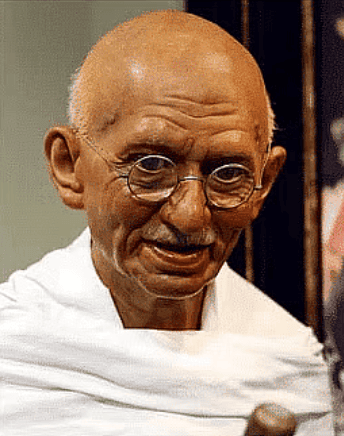
Mahatma Gandhi
Education and early work: Gandhi studied law in England and then practised law in South Africa.
Fight against racial discrimination: In South Africa he experienced and protested against racial discrimination and used peaceful methods to win rights for Indian people living there.
Return to India (1915): Gandhi returned to India in 1915 and travelled widely to learn about problems faced by different people and places.
Social concerns: He was troubled by untouchability, the caste system and other social injustices.
Uniting people: He aimed to unite Hindus and Muslims and bring people of different communities together in the struggle for freedom.
Sabarmati Ashram and khadi: In 1915 he set up the Sabarmati Ashram near Ahmedabad and encouraged the use of khadi (hand-spun cloth) and the spinning wheel to promote self-reliance.
Work for the weak: Gandhi worked for the welfare of the poor and the so-called untouchables, whom he called Harijans (children of God), and he opposed social evils such as the mistreatment of women and alcoholism.
Other concerns: He cared for animals and campaigned against cow slaughter as part of his efforts to respect religious feelings and life.
MULTIPLE CHOICE QUESTION
Try yourself: What did Mahatma Gandhi establish in Ahmedabad in 1915?
A
Sabarmati Ashram
B
Indian National Congress
C
Dandi March
D
Quit India Movement
Correct Answer: A
- Mahatma Gandhi established the Sabarmati Ashram in Ahmedabad in 1915. - The ashram served as a center for organizing and coordinating the Indian freedom movement. - Gandhi promoted the use of khadi (handmade cloth) and the spinning wheel as symbols of self-reliance and resistance against British rule. - The ashram also became a place where Gandhi worked towards social reforms, such as helping the untouchables and advocating for Hindu-Muslim unity. - Gandhi's establishment of the Sabarmati Ashram played a significant role in shaping the Indian freedom movement into a more coordinated effort.
Report a problem
Satyagraha
Meaning:Satyagraha is a word made from "satya" (truth) and "agraha" (firmness or insistence). It means holding firmly to truth.
Method: Satyagraha uses truth and non-violence (ahimsa) as its strongest weapons. It seeks to change the mind of the wrongdoer by suffering rather than by inflicting suffering.
Purpose: Gandhi believed that by practising satyagraha people could win justice and freedom without using violence.
Examples: Gandhi used satyagraha in many movements such as the Champaran campaign, the Non-Cooperation movement and the Civil Disobedience movement.
Champaran Campaign
Why it began: The Champaran Satyagraha began to help poor indigo farmers in Champaran (in present-day Bihar) who were forced by European planters to grow indigo under very unfair conditions.
Tinkathia system: Under the Tinkathia system farmers were compelled to grow indigo on a portion of their land (often one-third), leaving too little land for food crops.
Gandhi's role: Gandhi led a peaceful protest based on satyagraha. He met the farmers, listened to their problems, and helped bring their suffering to public notice.
Outcome: The protests forced the government and planters to change the system and accept the farmers' demands. This was Gandhi's first successful civil protest in India and showed how non-violent action could bring justice.
Indigo Farmers
Importance of the Champaran Campaign: The campaign helped farmers get relief and proved that carefully organised non-violent action could win rights for weak and exploited people. It also marked the beginning of Gandhi's large-scale involvement in India's freedom movement.
MULTIPLE CHOICE QUESTION
Try yourself: Who was the president of the Indian National Congress meeting held in Lahore in December 1929?
A
Mahatma Gandhi
B
Jawaharlal Nehru
C
Subhash Chandra Bose
D
Vallabhbhai Patel
Correct Answer: B
- The president of the Indian National Congress meeting held in Lahore in December 1929 was Jawaharlal Nehru. - He played a significant role in the fight for India's independence. - Nehru, along with other leaders, raised the tricoloured flag near the river Ravi to symbolize the goal of complete independence, known as Poorna Swaraj. - This meeting also marked the decision to start the Civil Disobedience Movement under Mahatma Gandhi's leadership. - Therefore, the correct answer is Option B: Jawaharlal Nehru.
Report a problem
Rowlatt Act and Jallianwala Bagh Massacre
Rowlatt Act (1919): This law allowed the British government to arrest and detain people without trial and curtail civil liberties. Indians protested strongly against this repressive law.
Protests: People all over India organised meetings, hartals and demonstrations to oppose the Act.
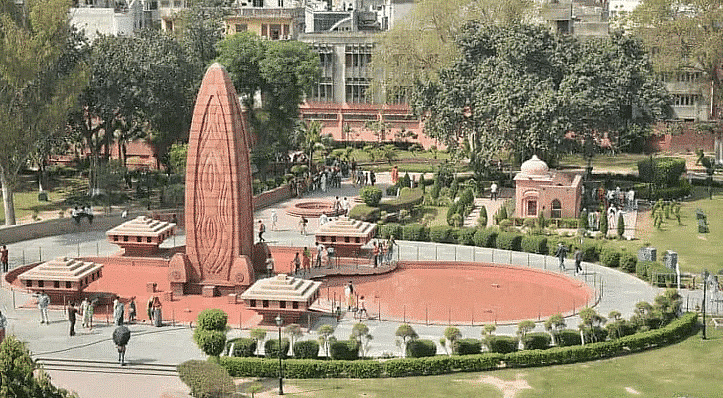
Jallianwala Bagh (13 April 1919): A large meeting was held at Jallianwala Bagh in Amritsar to protest arrests of leaders and suppression of civil liberties.
The massacre: General Dyer ordered his troops to fire on the unarmed crowd, blocked the only exit and prevented people from escaping. Hundreds of innocent men, women and children were killed or injured in this brutal action.
Impact: The massacre shocked the nation and the world. It made many Indians lose faith in British justice and pushed more people towards active protest for independence.
Jallianwala Bagh
Non-Cooperation Movement
Start: After the Jallianwala Bagh tragedy and continued repression, Gandhi and the Indian National Congress decided on a policy of non-cooperation in 1920.
Methods: People were asked to stop cooperating with British institutions: they gave up government jobs, stopped attending British schools and courts, boycotted foreign goods and refused British titles.
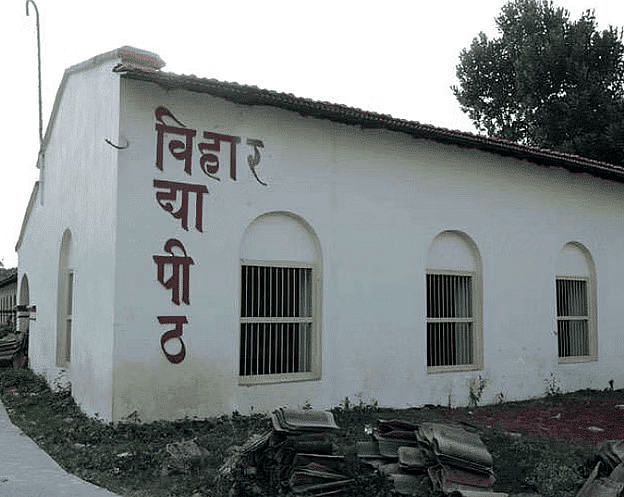
Examples: Prominent people such as Rabindranath Tagore returned British honours, and many students and teachers joined Indian educational institutes like Bihar Vidyapeeth and Jamia Millia Islamia.
Participation: Lawyers, teachers, students and ordinary citizens joined in large numbers; the movement spread across towns and villages.
End of the movement: After a violent incident at Chauri-Chaura where a mob set fire to a police station and policemen were killed, Gandhi called off the movement because he did not want violence to be part of the freedom struggle.
Leaders who rose: The period saw many young leaders such as Jawaharlal Nehru, Sardar Vallabhbhai Patel and Subhas Chandra Bose becoming active in national politics.
Bihar Vidyapeeth
MULTIPLE CHOICE QUESTION
Try yourself: Why did the Congress and Indian people boycott the Simon Commission?
A
They disagreed with the recommendations made by the Simon Commission.
B
They believed that the Simon Commission was biased and lacked Indian representation.
C
They were protesting against the British government's interference in Indian affairs.
D
They wanted to express their dissatisfaction with the law and order situation in India.
Correct Answer: B
- The Congress and Indian people boycotted the Simon Commission because they believed that the Commission was biased and lacked Indian representation. - They didn't agree with a group of all British people making decisions for India, which led to their decision to boycott the Commission. - This boycott was a way for them to express their dissatisfaction with the British government's handling of Indian affairs and to demand more Indian involvement in the decision-making process.
Report a problem
Simon Commission
Formation: The British government sent the Simon Commission to India in November 1927 to review constitutional reforms.
Why it was opposed: The Commission had no Indian members; it was entirely British. Indians felt it was unfair for British officials alone to decide India's future.
Boycott: The Indian National Congress and many political groups decided to boycott the Commission's work.
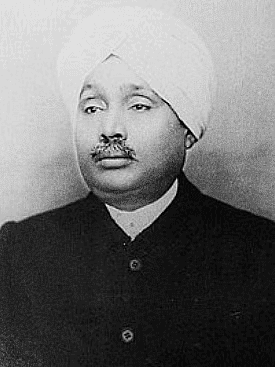
Lala Lajpat Rai: During a peaceful protest against the Commission, Lala Lajpat Rai was badly injured in a police lathi-charge and died soon after from his injuries. His sacrifice became a rallying point for many Indian leaders.
Lala Lajpat Rai
Lahore Session (1929)
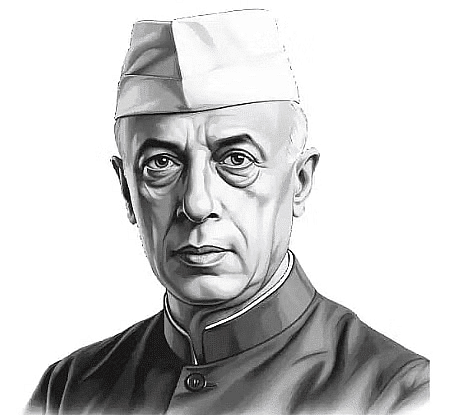
When and who: In December 1929 the Indian National Congress met at Lahore. Jawaharlal Nehru was the president of this session.
Poorna Swaraj: The Congress declared that the goal of the nation should be Poorna Swaraj - complete independence from British rule.
Flag and declaration: On 31 December 1929, Nehru hoisted the tricolour flag to symbolise this demand and the leaders called on Indians to prepare for a decisive struggle for freedom.
Planning civil disobedience: They resolved to begin a broad Civil Disobedience Movement under Gandhi's leadership.
Jawaharlal Nehru
Civil Disobedience Movement
Beginning: Gandhi launched the movement with the famous Dandi March (Salt March).
Salt Law: The British monopoly made it illegal for Indians to collect or produce salt without paying tax. This law affected the poorest people most.
The march: Gandhi and 78 followers walked from Sabarmati Ashram to the coastal village of Dandi in Gujarat, a distance of about 385 kilometres.
Breaking the law: On 6 April 1930 Gandhi made salt from seawater at Dandi, openly breaking the salt law. This act inspired similar protests across India.
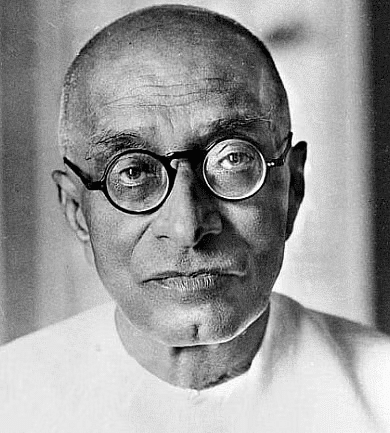
Spread: Leaders and people from many regions joined the movement, including Khan Abdul Ghaffar Khan, Rani Gaidinliu and C. Rajagopalachari. Women also took active part in large numbers.
Duration and effect: The movement continued through the early 1930s and put great pressure on the British government to make concessions.
Government of India Act (1935): The British introduced this Act to give limited provincial autonomy, but Indians were not satisfied because ultimate power remained with the British.
C. Rajagopalachari
MULTIPLE CHOICE QUESTION
Try yourself: Who established the Sabarmati Ashram in Ahmedabad?
A
Jawaharlal Nehru
B
Mahatma Gandhi
C
Lala Lajpat Rai
D
Tagore
Correct Answer: B
- Mahatma Gandhi established the Sabarmati Ashram in Ahmedabad. - The ashram was founded in 1915 as a center for promoting unity and encouraging people to join the fight for freedom. - Gandhi promoted the use of khadi (handmade cloth) and the spinning wheel as a means of promoting self-sufficiency and economic independence. - The ashram also focused on addressing social issues like the unequal treatment of Indians and the caste system. - Gandhi's efforts at the Sabarmati Ashram played a significant role in shaping the Indian freedom movement into a more coordinated effort.
Report a problem
Quit India Movement
Context: World War II began in 1939. The British involved India in the war without asking Indian leaders for their consent.
Demand for freedom: By 1942 Indians were demanding that Britain leave India. The country wanted freedom before being asked to fight in a world war.
Quit India Resolution (8 August 1942): At a meeting in Bombay on 8 August 1942, the Congress passed the Quit India resolution demanding an immediate British withdrawal.
"Do or Die": Gandhi called on Indians to "Do or Die" in their effort to win freedom through mass non-cooperation and civil disobedience.
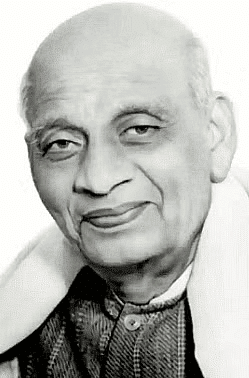
Arrests and unrest: On 9 August 1942 many Congress leaders, including Mahatma Gandhi, Jawaharlal Nehru and Sardar Patel, were arrested. Widespread protests and incidents of violence followed in many places.
Sardar Vallabhai Patel
Azad Hind Fauj (Indian National Army)
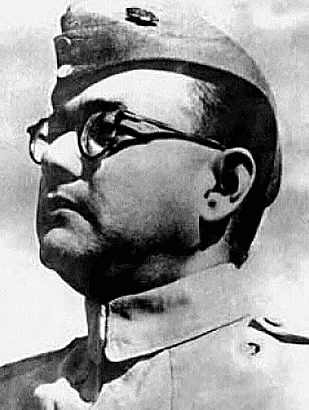
Formation:Subhas Chandra Bose (often called Netaji) formed the Indian National Army (INA) or Azad Hind Fauj to fight the British by armed struggle. The INA was reorganised and grew in strength during the early 1940s.
Support and origin: The INA was formed with help from Indian prisoners of war captured by Japan during World War II and with leaders such as General Mohan Singh and Rash Behari Bose.
Slogans and inspiration: Netaji inspired people with slogans like "Jai Hind" and "Dilli Chalo", urging Indians to rise against colonial rule.
Subash Chandra Bose
Independence and Partition
End of British rule: After World War II the British were weakened economically and politically. Political pressure and mass movements in India made British rule increasingly difficult to maintain.
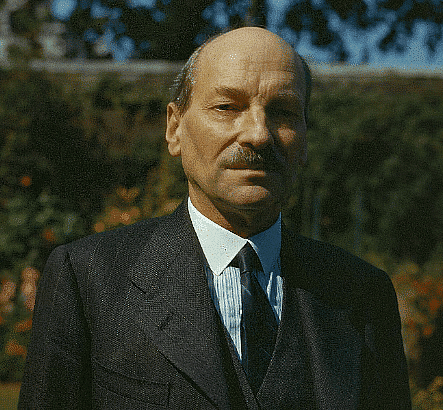
British decision: British Prime Minister Clement Attlee decided that Britain could no longer govern India and agreed to transfer power.
Demand for Pakistan:Mohammad Ali Jinnah and the Muslim League demanded a separate nation for Muslims, which led to the partition plan.
Mountbatten and partition:Lord Mountbatten, the last Viceroy, supervised the transfer of power and the partition of British India into two dominions.
Dates: Pakistan became independent on 14 August 1947 and India on 15 August 1947.
First leaders of India:Dr Rajendra Prasad became the first President of independent India and Pandit Jawaharlal Nehru became the first Prime Minister.
Clement Attlee
Concluding note: India's independence was the result of many years of struggle involving millions of people. Different strategies - from non-violent satyagraha and civil disobedience to political negotiations and, at times, armed resistance - all played a part in ending British rule. The movements taught the nation the value of unity, sacrifice and peaceful protest, and they helped shape modern India.
1. Who were the main freedom fighters that led India's independence movement?
Ans. Major freedom fighters included Mahatma Gandhi, Jawaharlal Nehru, Sardar Vallabhbhai Patel, and Subhas Chandra Bose, who spearheaded India's struggle against British rule. Gandhi championed non-violent resistance through the Civil Disobedience Movement, while others pursued different approaches. Their combined efforts and sacrifices ultimately secured India's independence on August 15, 1947, marking the end of colonial dominance and establishing India as a sovereign nation.
2. What does non-violent resistance mean and how did Gandhi use it to free India?
Ans. Non-violent resistance, or Satyagraha, means opposing injustice without using violence or weapons. Gandhi employed this strategy through boycotts, strikes, and peaceful protests against British authority. The Salt March of 1930 exemplified this approach, where Indians defied salt laws without resorting to aggression. This peaceful method of civil disobedience ultimately weakened British control, demonstrating that moral courage could triumph over military force, inspiring independence movements globally.
3. Why did Britain finally agree to grant India independence after so many years?
Ans. Britain granted India independence due to decades of persistent freedom struggles exhausting colonial resources and morale. World War II weakened Britain's economic and military strength significantly. Growing unified Indian nationalist movements, combined with international pressure and changing global attitudes toward colonialism, forced Britain to recognize India's right to self-governance. On August 15, 1947, India officially became independent, ending approximately 200 years of British colonial rule over the subcontinent.
4. What was the Salt March and why was it so important for India's independence?
Ans. The Salt March (1930) was Gandhi's famous protest where Indians walked to the Arabian Sea to make salt illegally, defying British monopoly laws. This act of civil disobedience inspired millions, demonstrating that ordinary citizens could challenge imperial authority peacefully. The march galvanised the independence movement across India, increased international support, and weakened British legitimacy. It became a turning point in India's struggle for freedom, uniting diverse communities in demanding self-determination and sovereignty from colonial powers.
5. How did India's independence on August 15, 1947 change life for Indian citizens?
Ans. India's independence on August 15, 1947 transformed Indian society by establishing self-governance and ending foreign rule. Citizens gained fundamental rights, freedoms, and democratic participation through India's Constitution. The nation became sovereign, controlling its own laws, economy, and foreign policy independently. Indians could now shape their country's future, pursue education and opportunities without colonial restrictions, and take pride in their national identity. Independence also inspired other colonised nations to seek freedom from imperial powers.
shortcuts and tricks, Sample Paper, Exam, Important questions, video lectures, pdf , Objective type Questions, Summary, Extra Questions, Chapter Notes: India Wins Freedom, MCQs, mock tests for examination, practice quizzes, Chapter Notes: India Wins Freedom, Free, Previous Year Questions with Solutions, past year papers, Chapter Notes: India Wins Freedom, Semester Notes, ppt, Viva Questions, study material;


 Mahatma Gandhi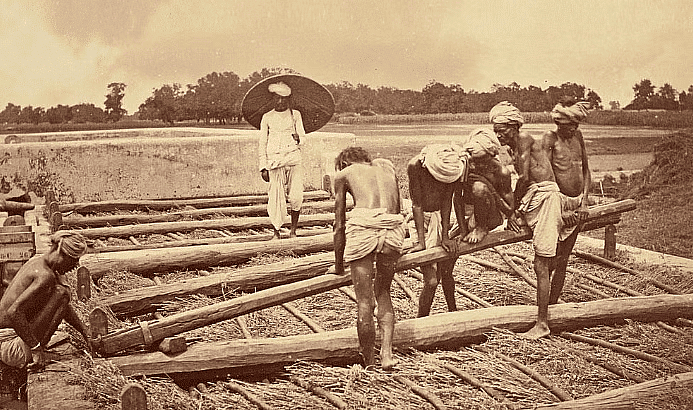
 Clement Attlee