CBSE Class 5 > Class 5 Notes > Social Studies > Chapter Notes: The United Nations
Chapter Notes: The United Nations


Introduction
- Imagine a world where countries work together-not to compete, but to solve big problems like war, hunger, and environmental damage. That's what the United Nations (UN) does.
- It's a group of countries joining hands to make the world safer, fairer, and better for everyone.
- Let's explore how the UN helps bring countries together and creates real change.
United Nations (UN)
- The United Nations is an organisation dedicated to maintaining peace globally.
- The name 'United Nations' was initially coined by Franklin D. Roosevelt, who was the President of the United States of America at that time.
 Embellem of the United Nations
Formation of the UN
- After the devastation of World War II, countries around the world wanted to ensure peace and prevent such destruction in the future.
- On 24 October 1945, representatives from 51 countries gathered in San Francisco, USA, to sign a charter establishing the United Nations (UN).
- India was among the countries present at this important meeting.
- United Nations Day is celebrated every year on 24 October to commemorate this event.
- The UN has grown since its founding and now includes 193 member states.
- The headquarters of the UN is located in New York City, where the Secretary-General serves as the chief administrative officer.
Try yourself: What does the UN stand for?MULTIPLE CHOICE QUESTION
Objectives of the United Nations
- To promote global peace.
- To foster cooperation among nations.
- To enhance social and economic conditions for people.
- To safeguard human rights.
- To maintain international peace and security.
Role of the United Nations
- The UN does not make laws or collect taxes.
- This platform is used for talking about problems and finding ways to solve them.
- Any country that wants peace and supports the goals of the UN Charter can become a member of this organisation.
- The main goal is to make the world safer for people today and for future generations.
Organs of the United Nations
The UN has six main organs:
1. General Assembly
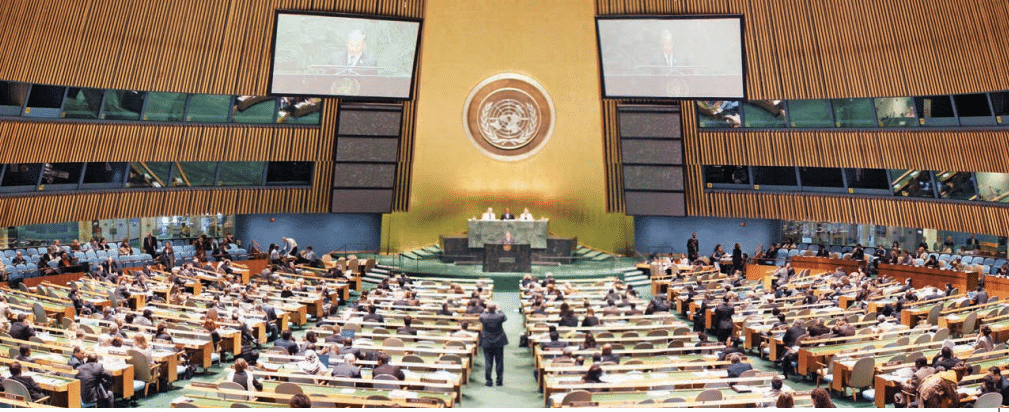
- The General Assembly acts as the main part of the United Nations, similar to how a country's parliament functions.
- In the General Assembly, every member state has one vote.
- The General Assembly meets once a year, every September, to discuss important issues related to peace and security.
2. Security Council
- The Security Council is tasked with upholding global peace and security.
- It is comprised of 15 members, including five permanent seats held by China, France, Russia, the United Kingdom, and the USA.
- The Council also includes non-permanent members who are elected for two-year terms.
3. Economic and Social Council
- This Council manages a group of UN agencies that focus on helping marginalised populations.
- It works on important issues like human rights, gender equality, and trade regulations.
- The Council's role is to coordinate the efforts of these agencies.
4. Trusteeship Council
- The Trusteeship Council was originally in charge of overseeing territories that were not fully independent.
- This council, which is now no longer active, managed the process of these territories becoming independent.
- Its main role was to ensure a smooth transition to self-governance for the territories it supervised.
5. Secretariat
- The Secretariat manages the everyday activities of the United Nations, ensuring that the plans and rules set by other UN groups are carried out.
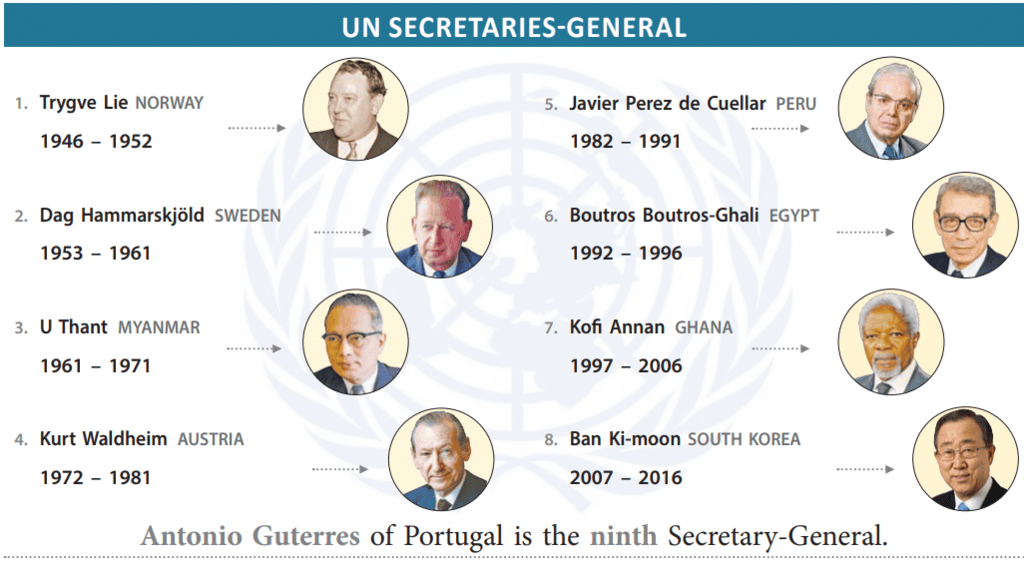
- The Secretary-General is the leader of the Secretariat.
6. International Court of Justice (ICJ)
- As the main judicial body of the UN, the International Court of Justice (ICJ) settles conflicts between countries.
- The ICJ also gives legal advice to member nations on matters related to international law.
- The Court is made up of 15 judges, each serving a term of nine years.
- Its headquarters is located in The Hague, which is in the Netherlands.
MULTIPLE CHOICE QUESTIONTry yourself: What is the main role of the Security Council in the United Nations?
Agencies of the UN
The UN's agencies help solve common world problems, mostly through the Economic and Social Council. Let's learn about these agencies.
- United Nations Educational, Scientific and Cultural Organisation (UNESCO): UNESCO is dedicated to enhancing global education and safeguarding significant historical and cultural sites.
- United Nations Children's Fund (UNICEF): UNICEF advocates for the rights of children, supporting their development and ensuring their safety and health.
- World Health Organisation (WHO): The WHO works to improve health outcomes for people around the world.
- Food and Agriculture Organisation (FAO): The FAO aims to eradicate global hunger, with its motto 'FIAT PANIS' meaning 'let there be bread.'
- International Labour Organisation (ILO): The ILO focuses on creating job opportunities and safeguarding workers' rights.
- United Nations Human Rights Council (UNHRC): The UNHRC is a vital agency committed to addressing human rights issues.
Achievements of the United Nations
- The United Nations (UN) has played a crucial role in maintaining global peace and security.
- It has been instrumental in facilitating discussions and negotiations to resolve international disputes.
- The UN has successfully prevented conflicts from escalating into large-scale wars.
- It is actively involved in peacekeeping missions in various parts of the world.
- The UN also advocates for disarmament to prevent the use of dangerous weapons.
- Currently, the world benefits significantly from the UN's efforts in promoting a more peaceful environment.
- Additionally, the UN provides humanitarian aid to countries in need.
India and the United Nations
- India is very active in many initiatives and operations of the United Nations.
- India has always supported UN peacekeeping missions.
- Indian peacekeeping forces are sent to various parts of the world to help establish and maintain peace.
- India regularly takes part in relief efforts organised by UN agencies.
MULTIPLE CHOICE QUESTIONTry yourself: Which organ of the United Nations is responsible for settling conflicts between countries?
The document Chapter Notes: The United Nations is a part of the Class 5 Course Social Studies for Class 5.
All you need of Class 5 at this link: Class 5
FAQs on Chapter Notes: The United Nations
| 1. What is the United Nations and why was it created after World War 2? |  |
Ans. The United Nations is an international organisation formed in 1945 by 51 countries to maintain world peace and security after World War 2 ended. It was established because nations recognised the need for a global platform to resolve conflicts peacefully, promote cooperation, and prevent future wars. The UN brought countries together to work on shared problems like hunger, disease, and education.
| 2. How many member countries are in the UN and what does each country get to do? | |
Ans. The United Nations has 193 member countries today, with each nation having equal representation and voting rights in the General Assembly. Every country, whether large or small, gets one vote on important decisions affecting the world. This ensures that all nations have a voice in international matters, from peacekeeping missions to humanitarian relief efforts and sustainable development goals.
| 3. What are the main organs of the United Nations and what's the difference between them? | |
Ans. The UN has six main organs: the General Assembly (where all members meet), the Security Council (handles peace and security), the Economic and Social Council (focuses on development), the Trusteeship Council (oversees territories), the International Court of Justice (settles legal disputes), and the Secretariat (administration). Each organ has distinct responsibilities, with the Security Council holding the most power to enforce decisions and maintain international peace.
| 4. What does the UN Secretary-General actually do in the United Nations? | |
Ans. The UN Secretary-General serves as the chief administrative officer and spokesperson for the entire organisation, leading the Secretariat and implementing decisions made by other UN bodies. The Secretary-General brings global issues to the Security Council's attention, mediates conflicts between nations, and works toward resolving humanitarian crises. This position requires diplomatic skills and commitment to universal principles like human rights and international cooperation.
| 5. What are the main goals and principles of the United Nations that we should know? | |
Ans. The UN's primary objectives include maintaining international peace and security, developing friendly relations among nations, and promoting social progress and better living standards. Core principles include respecting sovereign equality of all states, settling disputes peacefully, and protecting human rights. The organisation also focuses on sustainable development, climate action, and eliminating poverty to create a safer, fairer world for all people.
About this Document

2.6K Views

4.92/5 Rating

Apr 19, 2026 Last updated
Related Exams
Document Description: Chapter Notes: The United Nations for Class 5 2026 is part of Social Studies for Class 5 preparation. The notes and questions for Chapter Notes: The United Nations have been prepared according to the Class 5 exam syllabus. Information about Chapter Notes: The United Nations covers topics like and Chapter Notes: The United Nations Example, for Class 5 2026 Exam. Find important definitions, questions, notes, meanings, examples, exercises and tests below for Chapter Notes: The United Nations.
Introduction of Chapter Notes: The United Nations in English is available as part of our Social Studies for Class 5 for Class 5 & Chapter Notes: The United Nations in Hindi for Social Studies for Class 5 course. Download more important topics related with notes, lectures and mock test series for Class 5 Exam by signing up for free. Class 5: Chapter Notes: The United Nations
Description
Chapter Notes: The United Nations of SST with clear explanations of key concepts & important topics of the chapter, to help you underst& lessons better & revise quickly, & crack the Class 5 exam.
Information about Chapter Notes: The United Nations
In this doc you can find the meaning of Chapter Notes: The United Nations defined & explained in the simplest way possible. Besides explaining types of Chapter Notes: The United Nations theory, EduRev gives you an ample number of questions to practice Chapter Notes: The United Nations tests, examples and also practice Class 5 tests



Related Searches
past year papers, ppt, pdf , practice quizzes, study material, Viva Questions, Chapter Notes: The United Nations, Objective type Questions, Sample Paper, shortcuts and tricks, Previous Year Questions with Solutions, Chapter Notes: The United Nations, MCQs, Exam, Extra Questions, video lectures, Semester Notes, Important questions, Chapter Notes: The United Nations, Free, Summary, mock tests for examination;