Worksheet: How Do Plants Make Their Food - 1

Q1: Give two examples of the following.
(i) Roots with stored food ______________ ______________
(ii) Flowers with stored food ______________ ______________
(iii) Insectivorous plants ______________ ______________
(iv) Stems with stored food ______________ ______________
(v) Parasitic plants ______________ ______________
(vi) Animals that depend on plants for shelter ______________ ______________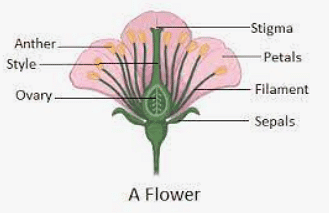
Q2: Multiple Choice Questions (MCQs).
(i) Which part of the plant supplies water collected from the stem to the leaf?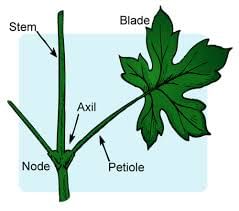 (a) Leaf blade
(b) Stomata
(c) Stalk
(d) Veins
(ii) Which of the following is responsible for green colour of the leaves?
(a) Midrib
(b) Leaf blade
(c) Stoma
(d) Chlorophyll
(iii) Which of the following stores the food in leaves?
(a) Cauliflower
(b) Legumes
(c) Spinach
(d) Broccoli
(iv) Which of the following is not required for photosynthesis?
(a) Water
(b) Sunlight
(c) Carbon dioxide
(d) Oxygen
(v) Venus flytrap has modified ________ to trap insects.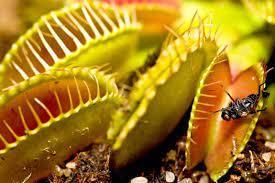 (a) stem
(b) roots
(c) flowers
(d) leaves
Q3: Fill in the blanks.
(i) The ______________ is the flat part of a leaf.
(ii) The ______________ on the lower surface of leaves absorb carbon dioxide from air.
(iii) The extra food is stored in the form of ______________ in plants.
(iv) The leaves in cactus are reduced to ______________.
(v) The ______________ has modified leaves in the form of tubular pitcher-like structure with a lid.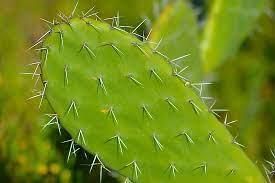
Q4: Match the following.
 Q5: True & False.
(i) The energy from the sun is absorbed by green leaves with the help of chlorophyll. ______________
(ii) Animals depend directly or indirectly on plants for food. ______________
(iii) Insectivorous plants grow in soil rich in nutrients. ______________
(iv) During photosynthesis, plants give out carbon dioxide through the stomata. ______________
(v) Croton plant appears red because it lacks chlorophyll. ______________
Q6: Answer the following questions in brief.
(i) Define photosynthesis.
(ii) List any two plant parts that store food. Give two examples each.
(iii) Why do plants make their own food?
(iv) What is midrib? What is its function?
(v) What are insectivorous plants? Give two examples.
Q7: Answer the following questions in detail.
(i) What are the three things for which animals depend on plants? What are the three things for which plants depend on animals?
(iii) What happens during photosynthesis?
Q8: Label the following parts of a leaf.
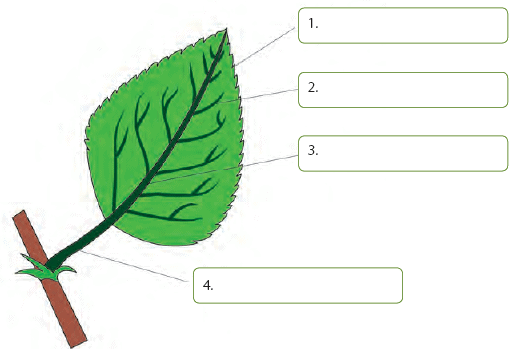
You can find Worksheets Solutions here: Worksheet Solutions: How Do Plants Make Their Food - 1
FAQs on Worksheet: How Do Plants Make Their Food - 1
| 1. How do plants make their own food using sunlight? |  |
| 2. What's the difference between photosynthesis and respiration in plants? | |
| 3. Why do plants need chlorophyll to make food? | |
| 4. What happens to the glucose that plants make during photosynthesis? | |
| 5. Can plants make food without sunlight, and why or why not? | |