Worksheet: Weather, Water and Air - 1

Q1: Multiple Choice Questions (MCQs).
(i) Which of these does not occur during the water cycle?
(a) Evaporation
(b) Condensation
(c) Pollution
(d) Precipitation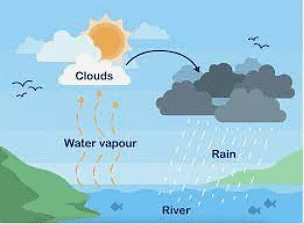
(ii) Water vapour condensed to form ice crystals are called
(a) dew
(b) snow
(c) mist
(d) rain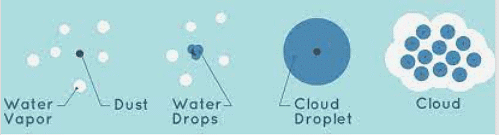
(iii) Which of the following factors is responsible for weather changes?
(a) Sun
(b) Rotation of earth
(c) Revolution of earth around the sun
(d) All of these
(iv) What kind of weather is the most uncomfortable?
(a) Hot and humid
(b) Hot and dry
(c) Cool and humid
(d) Cool and dry
Q2: True or False.
(i) Hot air is heavier than cold air.
(ii) Temperature is higher on mountains.
(iii) Weather changes are mainly caused by the heat of the sun.
(iv) When clouds are formed close to the ground it is called fog.
Q3: Name the following.
(i) Water vapour cooling to form water_______
(ii) Wind blowing from sea to land _______
(iii) It forms on plants in cold nights _______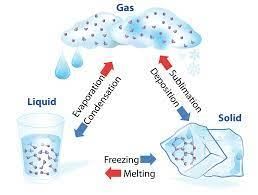
Q4: Fill in the blanks.
(i) The tiny droplets of water present in the air is called _______
(ii) The processes of evaporation and condensation in the nature result in _______
(iii) The water vapour upon cooling forms _______
Q5: Answer the following questions in brief.
(i) What are the factors that affect evaporation in the nature?
(ii) Define atmosphere.
(iii) What is water cycle?
Q6: Long answer type questions.
(i) Why does wind blow from the land to the sea during the day?
(ii) Why do you feel very uncomfortable in hot and humid weather?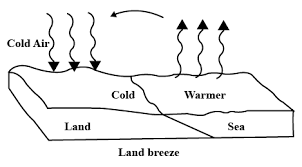
You can find Worksheets Solutions here: Worksheet Solutions: Weather, Water and Air - 1
FAQs on Worksheet: Weather, Water and Air - 1
| 1. What are the different types of weather and how do they form? |  |
| 2. How does the water cycle work and why is it important for life on Earth? | |
| 3. Why does air have weight and how does atmospheric pressure affect weather changes? | |
| 4. What's the difference between weather and climate and why do students get confused about them? | |
| 5. How does temperature affect the behaviour of air and water in the environment? | |