Worksheet: Soils of India - 1

Q1: Fill in the blanks.
(i) Alluvial soils allow the growth of _____________, _____________, ____________
(ii) Health of the soil depends on ______________________
(iii) Red soils allow the growth of _____________, _____________, ___________
(iv) Soil is the upper layer________________________
(v) Black soils allow the growth of _____________, _____________, ___________
(vi) Mountain soils allow the growth of ____________, ____________, ________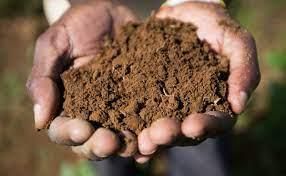
Q2: True or False.
(i) Steep part of mountains does not allow any deposit of soil.
(ii) Potatoes are grown on slopes of a hill, as well as in a valley.
(iii) Mountain Soils are formed from the small broken pieces of stones.
(iv) Contour ploughing and terracing are practiced to conserve soil.
(v) Orchards can be planted even on the slope of a hill.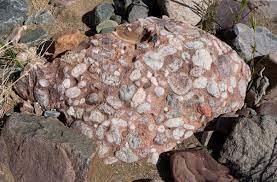
Q3: Tick the correct word.
(i) Black soil is formed from _____________(broken stones, silt, volcanic lava)
(ii) Red soils are formed from _____________ (broken stones, silt, granite and other stones)
(iii) Alluvial soil is good to grow _____________ ( all the crops, cotton and onion)
(iv) Alluvial soil is formed from _____________(broken stones, silt, volcanic lava)
(v) Black soil is good to grow _____________ ( all the crops, cotton and onion)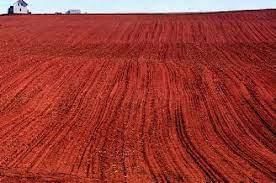
Q4: Multiple Choice Questions (MCQs).
(i) What is soil?
(a) The core of the Earth
(b) The upper layer of the Earth composed of loose material
(c) A type of rock
(d) The atmosphere
(ii) Which of the following is not a component of soil?
(a) Minerals
(b) Water only
(c) Air
(d) Remnants of plants and animals
(iii) What is humus?
(a) A type of rock
(b) Lava soil
(c) Natural fertilizer from decomposed plant material
(d) Red soil
(iv) Which type of soil is most fertile?
(a) Black soil
(b) Desert soil
(c) Red soil
(d) Alluvial soil
(v) Which soil type is rich in iron and aluminum?
(a) Mountain soil
(b) Laterite soil
(c) Red soil
(d) Alluvial soil
(vi) What causes soil erosion?
(a) Plant roots
(b) Proper land use
(c) Wind and rain
(d) Soil conservation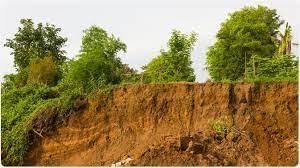
(vii) Which activity can help prevent soil erosion?
(a) Overgrazing
(b) Deforestation
(c) Terracing
(d) Ignoring plant roots
(viii) Which soil type is found in arid regions?
(a) Mountain soil
(b) Laterite soil
(c) Desert soil
(d) Alluvial soil
(ix) What is the purpose of contour ploughing?
(a) Enhance soil fertility
(b) Prevent water erosion
(c) Encourage overgrazing
(d) Increase soil erosion
(x) Why is soil conservation important?
(a) To increase soil erosion
(b) To prevent water conservation
(c) To protect soil and its fertility
(d) To encourage deforestation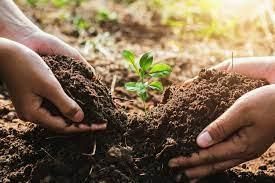
Q5: Define the Following Words.
(i) Soil Fertility
(ii) Alluvial Soil
(iii) Black Soil
(iv) Erosion
(v) Terracing
Q6: Answer the questions briefly.
(i) What natural forces erode mountain soils?
(ii) What conservation methods are used in desert soils?
(iii) How can soils on mountain slopes be conserved?
(iv) List natural causes of soil erosion.
(v) List man created causes of soil erosion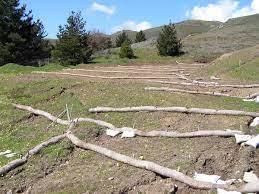
You can find Worksheets Solutions here: Worksheet Solutions: Soils of India - 1
FAQs on Worksheet: Soils of India - 1
| 1. What are the different types of soil found in India and how do they form? |  |
| 2. Why is alluvial soil considered the most fertile soil in India? | |
| 3. What is the difference between red soil and black soil in India? | |
| 4. How does climate affect soil formation in different regions of India? | |
| 5. Which soils are best for growing different crops and why do farmers need to know soil types? | |