Worksheet Solutions: How Do Plants Make Their Food - 1

Q1: Give two examples of the following.
(i) Roots with stored food ______________ ______________Ans: Carrot, Radish
Roots hold the plant firmly in the ground and absorb water and minerals. Some roots, like carrot and radish, also store extra food as starch. These stored foods help the plant survive when conditions are not good for making food.
(ii) Flowers with stored food ______________ ______________
Ans: Broccoli, Cauliflower
In some plants the flower parts become thick and store food. Examples are broccoli and cauliflower. People eat these parts because they contain stored food.
(iii) Insectivorous plants ______________ ______________
Ans: Venus flytrap, Bladderwort
Insectivorous plants catch and digest insects to get nutrients that are missing from the soil. Good examples are the Venus flytrap and bladderwort.
(iv) Stems with stored food ______________ ______________
Ans: Sugarcane, Potato
Stems carry water and food inside the plant. Some stems store a lot of food. For example, sugarcane stores sugar in its stem and potato stores starch in its underground stem (tuber).
(v) Parasitic plants ______________ ______________
Ans: Cuscuta, Viscum , Loranthus
A parasitic plant gets water and food from another living plant. Two common examples are Cuscuta (dodder) and Viscum (mistletoe).
(vi) Animals that depend on plants for shelter
Ans: Squirrel, Monkey
Plants and trees give animals a place to live and hide from danger. Animals such as squirrels and monkeys use trees for shelter and for making their nests.
Q2: Multiple Choice Questions (MCQs).
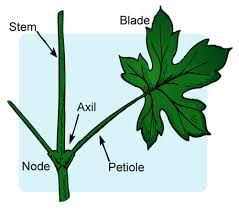
(i) Which part of the plant supplies water collected from the stem to the leaf?
(a) Leaf blade
(b) Stomata
(c) Stalk
(d) Veins
Ans: (d)
Explanation: Veins in the leaf carry water and minerals from the stem into the leaf. They also carry the food made in the leaf to other parts of the plant, so veins act like small tubes for transport.
(ii) Which of the following is responsible for the green colour of the leaves?
(a) Midrib
(b) Leaf blade
(c) Stoma
(d) Chlorophyll
Ans: (d)
Explanation: Chlorophyll is a green pigment found in leaves. It absorbs sunlight to help make food and reflects green light, which is why leaves look green.
(iii) Which of the following stores the food in leaves?
(a) Cauliflower
(b) Legumes
(c) Spinach
(d) Broccoli
Ans: (c)
Explanation: Some plants store food in their leaves. Examples are spinach, lettuce and cabbage. These leaves become thick and store food that we can eat.
(iv) Which of the following is not required for photosynthesis?
(a) Water
(b) Sunlight
(c) Carbon dioxide
(d) Oxygen
Ans: (d)
Explanation: Photosynthesis needs water, sunlight and carbon dioxide to make food. Oxygen is produced and released by the plant during photosynthesis, so it is not needed for the process to take place.
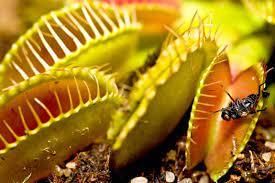
(v) Venus flytrap has modified ______ to trap insects.
(a) stem
(b) roots
(c) flowers
(d) leaves
Ans: (d)
Explanation: The Venus flytrap has leaves that are changed into a trapping structure. These modified leaves snap shut when an insect touches the tiny hairs inside, trapping the insect for the plant to digest.
Q3: Fill in the blanks.
(i) The ______ is the flat part of a leaf.
Ans: Leaf blade
The flat part of a leaf is called the lamina or leaf blade. It is the main part where food is made. Most leaves have two main parts: (1) the blade and (2) the petiole, or leafstalk. The leaves of some kinds of plants also have a third part, called the stipules.
(ii) The ______ on the lower surface of leaves absorbs carbon dioxide from the air.
Ans: Stomata
Stomata are tiny pores mostly on the lower surface of leaves. They let carbon dioxide in and allow oxygen and water vapour to go out. Stomata facilitate the exchange of gases and transpiration.
(iii) The extra food is stored in the form of ______ in plants.
Ans: Starch
Plants change the sugar made in photosynthesis into starch and store it in roots, stems, leaves, or seeds for later use.
(iv) The leaves in cactus are reduced to ______.
Ans: Spines
Cactus leaves are changed into spines to reduce water loss and protect the plant from animals.The plant has to prevent water loss as there is very little rainfall in the areas of the cactus.
(v) The ______ has modified leaves in the form of a tubular pitcher-like structure with a lid.
Ans: Nepenthes
In Nepenthes (the pitcher plant), the leaf blade is shaped like a pitcher with a lid. This holds water and traps insects that the plant uses for nutrients.The pitcher of Nepenthes modified lamina.
Q4: Match the following.
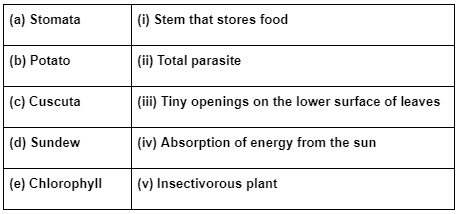
Ans: (a) Stomata - (iii) Tiny opening on the lower surface of the leaf.
Stomata are minute openings found in the epidermis of leaves and other parts. They allow gases such as carbon dioxide, oxygen and water vapour to pass in and out of the leaf.
(b) Potato - (i) Stem that stores food
Potato is an underground stem called a tuber. It stores food in the form of starch which the plant can use later.
(c) Cuscuta - (ii) Total parasite
Cuscuta (dodder) is a parasitic plant that attaches to other plants and takes water and food from them. It depends completely on its host, so it is a total parasite. Cuscuta plants simultaneously, forming connected plant clusters.
(d) Sundew - (v) Insectivorous plant
Sundews are carnivorous plants that have sticky hairs on their leaves to catch insects. The plant then digests the insect to get nutrients.
(e) Chlorophyll - (iv) Absorption of energy from the sun
Chlorophyll is the green pigment in leaves that absorbs sunlight. This energy is used to make food in the leaf.
Q5: True & False.
(i) The energy from the sun is absorbed by green leaves with the help of chlorophyll.
Ans: True
Explanation: Chlorophyll in the green leaves takes in sunlight. This energy helps the plant to make food by combining water and carbon dioxide.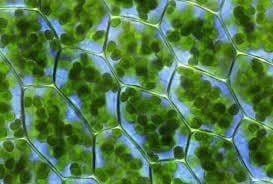
(ii) Animals depend directly or indirectly on plants for food.
Ans: True
Explanation: Animals either eat plants directly or eat other animals that have eaten plants. Plants are the main source of food and oxygen for animals.Plants provide shelter and safety for animals.
(iii) Insectivorous plants grow in soil rich in nutrients.
Ans: False
Explanation: Insectivorous plants usually grow where the soil is poor in nutrients. They catch insects to get nutrients such as nitrogen that the soil cannot provide.
(iv) During photosynthesis, plants give out carbon dioxide through the stomata.
Ans: False
Explanation: During photosynthesis plants take in carbon dioxide through stomata and give out oxygen. Carbon dioxide is used to make food, not released.
(v) Croton plant appears red because it lacks chlorophyll.
Ans: False
Explanation: Many croton leaves have both chlorophyll (green) and red pigments. The red pigments hide the green colour, so the leaf looks red even though chlorophyll is present and the leaf can make food.
Q6: Answer the following questions in brief.
(i) Define photosynthesis.
Ans: Photosynthesis is the process by which green plants use sunlight to make their own food. They use sunlight, water and carbon dioxide, and with the help of chlorophyll they make sugar and give out oxygen.
(ii) List any two plant parts that store food. Give two examples each.
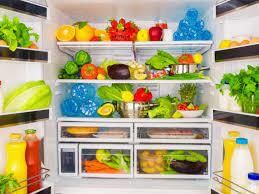
Ans: Plants store their food in the form of starch in various parts of them. This starch can be stored in the leaves, stems, roots, flowers, fruits, and seeds of a plant. Those plants that can store food in their leaves are -Cabbage, Lettuce, spinach etc. Some can store food in their stem-like sugar cane.
(iii) Why do plants make their own food?
Ans: Plants make their own food so they can grow and stay alive. They make food using water from the soil, carbon dioxide from the air and sunlight. The foods are called glucose and starch. This food helps the plant to live and produce fruits and seeds.
(iv) What is midrib? What is its function?
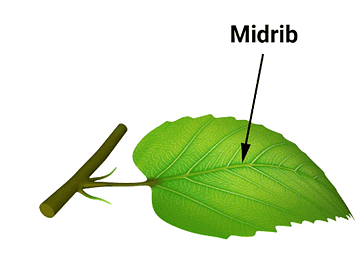
Ans: The midrib is the central thick vein that runs along the middle of a leaf from the leaf base to the apex . It gives support to the leaf and contains tubes (veins) that carry water to the leaf and food from the leaf to other parts of the plant.
(v) What are insectivorous plants? Give two examples.
Ans: Insectivorous plants are insect-eating plants that catch and eat insects to get nutrients not available in the soil. Two examples are the Venus flytrap and the pitcher plant (Nepenthes).They are often called Carnivorous plants.
Q7: Answer the following questions in detail.
(i) What are the three things for which animals depend on plants? What are the three things for which plants depend on animals?
Ans: Animals depend on plants for:
1. Food - many animals eat leaves, fruits, seeds or plant-eating animals.
2. Shelter - trees and plants give homes and protection to many animals.
3. Oxygen - plants release oxygen during photosynthesis which animals need to breathe.
Plants depend on animals for:
1. Pollination - animals like bees and butterflies help move pollen so plants can make seeds.
2. Seed dispersal - animals carry seeds to new places, for example by eating fruits and passing seeds away from the parent plant.
3. Nutrients from decomposition - when animals die and decay, they return minerals to the soil that help plants grow.
(ii) What happens during photosynthesis?
Ans: During photosynthesis:
1. Leaves take in sunlight and use chlorophyll to capture the light energy.
2. Roots supply water from the soil and leaves take in carbon dioxide from the air through stomata.
3. The plant uses the light energy to combine water and carbon dioxide to make sugar (food).
4. Oxygen is produced as a by-product and released into the air.
Q8: Label the following parts of a leaf.
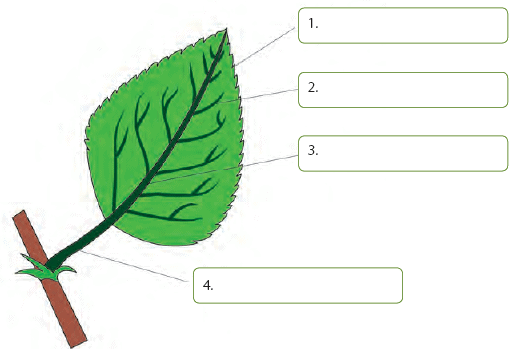
Ans: 1. Apex
2. Margin
3. Midrib
4. Petiole
FAQs on Worksheet Solutions: How Do Plants Make Their Food - 1
| 1. How do plants make their own food using sunlight? |  |
| 2. What is the role of chlorophyll in how plants prepare their food? | |
| 3. Why do plants need sunlight, water, and carbon dioxide to make food? | |
| 4. What happens to the food that plants make during photosynthesis? | |
| 5. How can I solve worksheet problems about photosynthesis and plant food production correctly? | |