Worksheet Solutions: The Climate in Our Country - 1

Q1: Fill in the blanks.
(i) The Mango shower is ___________
Ans: Pre Shower Monsoons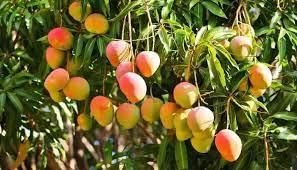
Mango showers occur just before the main monsoon arrives. They give welcome rain to fruit trees such as mango trees and are common in Kerala, Karnataka and parts of Tamil Nadu and Pondicherry. These showers help the fruits to develop and cool the weather a little before the heavy rains begin.
(ii) When the sun is over the Tropic of Cancer, the climate in Northern Plains is ______
Ans: Summer
When the Sun is over the Tropic of Cancer, the Northern Plains receive more direct sunlight. This makes the weather hot, and we call this time Summer.
(iii) Climatically the year is divided in _______ seasons in India.
Ans: Four
The meteorological year in India is divided into four main seasons: Winter (January-February), Summer (March-May), Monsoon or Rainy season (June-September) and Post-monsoon (October-December). These help us plan farming and daily activities.
(iv) The Kal Baishakhi is _____________
Ans: Violent Thunderstorms
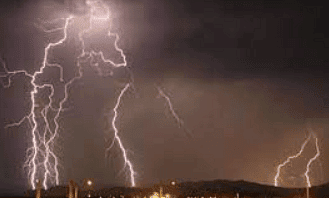
Kal Baisakhi are sudden, strong thunderstorms with heavy rain and gusty winds. They occur mostly in the Gangetic plains and often bring relief from hot weather, but can also cause damage because they are violent and fast.
(v) When the sun is over the Tropic of Capricorn, the climate in Northern Plains is ______
Ans: Winter
When the Sun is over the Tropic of Capricorn, the Northern Plains get less direct sunlight, and the weather becomes cooler. We call this time Winter.
Q2: True or False.
(i) The Cold Weather starts in January._________
Ans: False
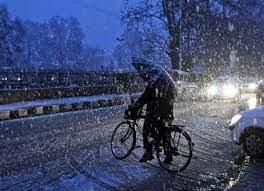
Explanation: In many parts of India, cold weather begins in December and becomes coldest in January. Saying it "starts in January" is not quite correct because chilly conditions often begin earlier, in December.
(ii) The Hot Weather season starts from March in South India.___________
Ans: True
Explanation: In South India, temperatures begin to rise from March. This pre-monsoon time brings hot days and is called the hot weather or pre-monsoon season.
(iii) The advancing South-West monsoon starts in June.___________
Ans: True
Explanation: The South-West monsoon usually reaches the Kerala coast in early June and then moves northwards to cover most of India by July. This marks the start of the rainy season for much of the country.
Q3: Tick the correct word.
(i) The Arabian Sea, The Indian Ocean and the Bay of Bengal surround the _________. (the Northern Plains, the Peninsular India, the Western Plains)
Ans: (the Peninsular India)
Explanation: Peninsular India is a large landmass surrounded on three sides by the Arabian Sea, the Indian Ocean and the Bay of Bengal. This makes its climate strongly influenced by the seas.
(ii) The season of a region is affected by________. (The physical features, the people, the cities in that region)
Ans: The physical features
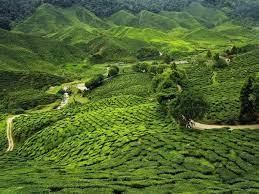
Explanation: Landforms such as seas, mountains and plains help decide how much sun, wind and rain an area gets. These physical features are important in shaping the seasons of a region.
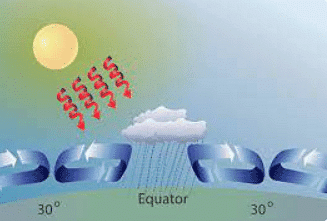
(iii) In winter season the sun is nearer the ______. (Tropic of Cancer, the Tropic of Capricorn)
Ans: Tropic of Capricorn
Explanation: During the winter months in the Northern Hemisphere, the Sun's direct rays are over the Tropic of Capricorn in the Southern Hemisphere, so the Northern Plains receive less direct sunlight and become cooler.
(iv) The Northern Mountain Ranges protect India from_______. (Bitterly cold and dry winds of Central Asia, South-West Monsoons)
Ans: Bitterly cold and dry winds of Central Asia
Explanation: The Himalayas act as a barrier and stop very cold, dry winds from Central Asia from blowing into most parts of India. This keeps many regions warmer in winter than they would otherwise be.
(v) The Tropic of Cancer passes through the______ of the country. (Top, Bottom, Middle)
Ans: Middle
Explanation: The Tropic of Cancer is an imaginary line at about 23.5°N latitude, and it passes roughly through the middle of India from west to east.
Q4: Define the Following.
(i) Hot Weather Season: The period from March to May (sometimes June in North India) when temperatures are high, and the air is often dry. Hot winds called "loo" blow in the Northern Plains during May and June. Small pre-monsoon rains like Mango Showers and Kal Baishakhi bring short relief in some places.
(ii) Advancing South-West Monsoon Season: The rainy season from June to September, when moist winds from the Indian Ocean bring heavy rainfall to most of India. It usually begins on the Kerala coast in early June and reaches northern India by mid-July, cooling the weather and helping crops to grow.
(iii) Retreating South-West Monsoon Season: The months of October and November, when the monsoon withdraws from India. Most places have fair weather, but the East Coast, especially Tamil Nadu, gets rain during this time.
(iv) Cold Weather Season: From December to February, when temperatures fall as the Sun moves towards the Tropic of Capricorn. January is often the coldest month in many parts of India.
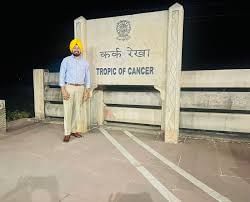
(v) Tropic of Cancer: An imaginary circle of latitude located about 23.5° north of the Equator. It passes through the middle of India and marks the northernmost point where the Sun can be directly overhead.
(vi) Monsoon: A seasonal wind that brings heavy rains to parts of the world. In India, the South-West monsoon brings most of the yearly rainfall from June to September.
(vii) Physiography: The study of the physical features of the land, like mountains, plains and plateaus, which influence the climate and life of a region.
(viii) Equator: The imaginary line at 0° latitude that divides the Earth into the Northern and Southern Hemispheres.
(ix) Coromandel Coast: The southeastern coast of India along the Bay of Bengal, known for its warm climate and occasional rainfall in the cold season.
(x) Globalization: The growing connection and exchange between countries through trade, ideas, culture and technology across the world.
Q5: Match the Following.
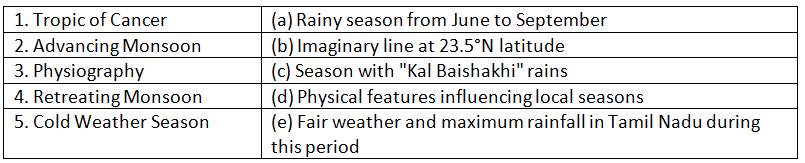 Ans: Tropic of Cancer (b): The Tropic of Cancer is at about 23.5°N and passes through the middle of India. It shows where the Sun can be directly overhead in summer.
Advancing Monsoon (a): The advancing South-West monsoon is the rainy season from June to September. It starts on the Kerala coast and moves northwards.
Physiography (d): Physiography means the physical features of a region - its hills, plains and plateaus - which affect the climate.
Retreating Monsoon (e): The retreating South-West monsoon happens in October and November when rains withdraw, and fair weather begins; Tamil Nadu receives rain at this time.
Cold Weather Season (c): The Cold Weather season is from December to February, when temperatures are lower and days are cooler.
Q6: Answer the Following Questions.
(i) The effects of cold weather on your food.
Ans: Eating very cold food in cold weather can sometimes upset the stomach and make digestion slower. Warm foods and drinks help the body stay comfortable and keep digestion working well.

(ii) The effect of the nearness of a sea on day and night temperatures.
Ans: Areas near the sea have smaller differences between day and night temperatures. The sea warms up and cools down slowly, so coastal places stay cooler in the day and warmer at night compared to inland areas. This makes the climate near the sea more moderate and often more humid.
(iii) The effects of hot weather on your clothing.
Ans: In hot weather, we should wear light, loose cotton clothes. Such clothes let air pass and help sweat evaporate, keeping our body cool and comfortable.
(iv) The effects of climate on human activities are
Ans: Climate affects how we live and work. It decides which crops we can grow, what clothes we wear, how we build our houses and how we travel. Climate changes can also cause problems like too little or too much rain, which affect food, water and health.

(v) Discuss the human activities which are likely to affect the climate of a region.
Ans: Human activities such as cutting down forests, burning coal, oil and gas, and producing many goods in factories release extra gases into the air. These gases can change the weather and make the Earth warmer. Farming methods and too much building also change the land and can affect the local climate.
FAQs on Worksheet Solutions: The Climate in Our Country - 1
| 1. How does climate change affect our country's weather patterns? |  |
| 2. What are the main factors contributing to climate change in our country? | |
| 3. How can we mitigate the effects of climate change in our country? | |
| 4. Are there any initiatives or policies in place to address climate change in our country? | |
| 5. How can individuals contribute to fighting climate change in our country? | |