Worksheet Solutions: Perimeter and Area

Q1: Find the perimeter of each of the following figures:
(i) Perimeter of the triangle is ______ cm.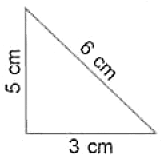 Ans: 6 + 5 + 3 = 14 cm
(ii) Perimeter of the square is ______ cm.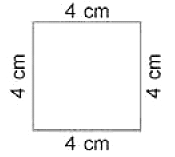 Ans: 4 + 4 + 4 + 4 = 16 cm
(iii) Perimeter of the square is ______ cm.
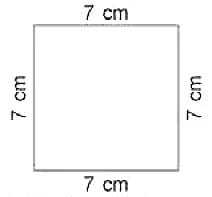 Ans: 7 + 7 + 7 + 7 = 28 cm
(iv) Perimeter of the rectangle is ______ cm.
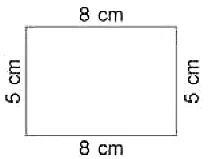 Ans: 8+ 5 + 8 + 5 = 26 cm
(v) Perimeter of the triangle is ______ cm.
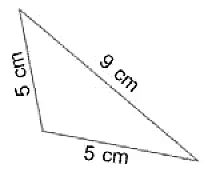 Ans: 5+ 9 + 5 = 19 cm
(vi) The perimeter of the rectangle is ______ cm.
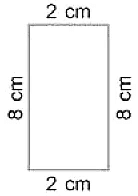 Ans: 8+ 2 + 8 + 2 = 20 cm
Q2: In the following figures, assume that each small square is 1 sq cm. Count the squares and find the area:
(i) Area = ______ sq cm.
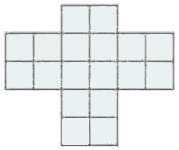 Ans: 18 sq cm
(ii) Area = ______ sq cm.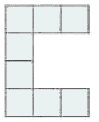 Ans: 8 sq cm
(iii) Area = ______ sq cm.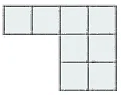 Ans: 8 sq cm
(iv) Area = ______ sq cm.
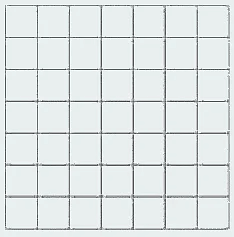 Ans: 49 sq cm
(v) Area = ______ sq cm.
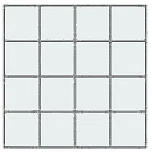 Ans: 16 sq cm
Q3: Find the area of the rectangle, whose:
(i) length = 5 m 8 cm, breadth = 3 m 75 cm
Ans: 5.8 x 3.75 = 21.75 sq m
(ii) length = 4 m 50 cm, breadth = 2 m 7 cm
Ans: 4.50 x 2.7 = 12.15 sq m
(iii) length = 1 m 5 cm, breadth = 90 cm
Ans: 1.5 x 90 = 1.35 sq m
(iv) length = 125 m, breadth = 84 m
Ans: 125 x 84 = 10500 m
(v) length = 80 cm, breadth = 24 cm
Ans: 80 x 24 = 1920 sq cm
Q4: Find the perimeter of:
(i) The triangle whose sides are 8 cm, 9 cm, and 12 cm.
Ans: Perimeter = 8 + 9 + 12 = 29 cm
(ii) The square whose side is 14 cm.
Ans: Perimeter = 4 x14
or 14 + 14 + 14 + 14 = 56 cm
Q5: Find the area of the following rectangles:
(i) 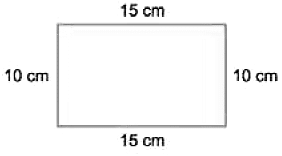
Ans: Area of rectangle = l x b
= 10 x 15 = 150 sq cm
(ii)
Ans: Area of rectangle = l x b
= 2 x 5 = 10 sq cm
Q6: Find the area of the square, whose:
(i) side = 256 dm
Ans: 256 x 256 = 65536 sq dm
(ii) side = 92 dm
Ans: 92 x 92 = 8464 sq dm
(iii) side = 18m
Ans: 18 x 18 = 324 sq m
(iv) side = 7 cm
Ans: 7 x 7 = 49 sq cm
(v) side = 20 cm
Ans: 20 x 20 = 400 sq cm
Q7: Find the area of the following squares:
Area of square = side x side
(i)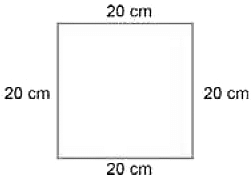
Ans: 20 x 20 = 400 sq cm
(ii)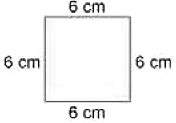
Ans: 6 x 6 = 36 sq cm
Q8: Find the area of a square whose side is 4 cm.
Ans: Area = 4 x 4 = 16 sq cm
Q9: Area of a rectangle = ______ x ______.
Ans: Length x breadth
Q10: Area of a square of side 1 cm = ______.
Ans: 1 x 1 = 1 sq cm
Q11: Area of a rectangle of dimensions 1 m and 2 m is ______ sq m.
Ans: 1 x 2 = 2 sq m
Q12: Area of a square = ____x ____.
Ans: side x side.
FAQs on Worksheet Solutions: Perimeter and Area
| 1. How do I find the perimeter of a rectangle when I only know the length and width? |  |
| 2. What's the difference between perimeter and area, and why do I keep mixing them up? | |
| 3. How do I calculate the area of a square if the worksheet only gives me the perimeter? | |
| 4. Why do some worksheet solutions show different methods for finding area of rectangles? | |
| 5. Can I use the same perimeter formula for all shapes, or does it change for triangles and other polygons? | |