Worksheet Solutions: Forest and Wildlife - 1

Q1: Fill in the Blanks.
(i) Vegetation growing naturally in a particular region due to environmental factors is called ___________ vegetation.
Ans: Natural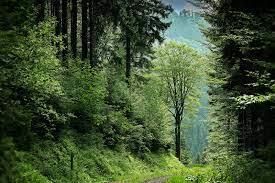
Natural vegetation refers to plant life that has developed and thrives in a specific area based on the prevailing environmental conditions, such as climate, soil, and topography. It has not been significantly influenced by human activities or cultivation.
(ii) Forests are a type of ___________ vegetation that has economic usefulness.
Ans: Natural
Forests are a prime example of natural vegetation. They consist of a variety of trees, shrubs, and other plants that grow naturally and provide various economic benefits, including timber, wood products, and non-timber forest products like fruits and medicinal plants.
(iii) Tropical Evergreen vegetation is found in regions with high annual rainfall of ___________ cm.
Ans: 300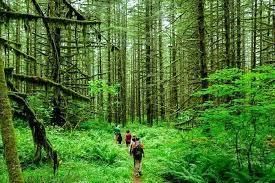
Tropical Evergreen forests are characterized by lush greenery and year-round foliage. They are typically found in regions with high and evenly distributed annual rainfall, often around 300 cm or more.
(iv) Deciduous vegetation sheds its leaves once a year during the ___________ season.
Ans: Dry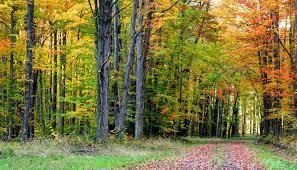
Deciduous vegetation includes trees and plants that drop their leaves annually, typically in response to seasonal changes. They shed their leaves during dry or unfavorable conditions to conserve water and energy.
(v) Dry Tropical Thorny vegetation is found in regions with less than ___________ cm of annual rainfall.
Ans: 70
Dry Tropical Thorny vegetation, often found in arid and semi-arid regions, thrives in areas with limited rainfall, usually less than 70 cm per year. These regions are characterized by thorny and drought-resistant plants.
(vi) The representative tree of Tidal vegetation is the ___________.
Ans: Mangrove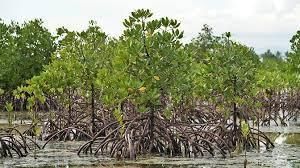
Mangroves are salt-tolerant trees and shrubs that grow in coastal areas, particularly in brackish water. They form dense forests in tidal zones and play a crucial role in protecting coastal ecosystems and providing habitat for various species.
(vii) The variety of vegetation in the Himalayan Ranges changes with ___________ and location.
Ans: Altitude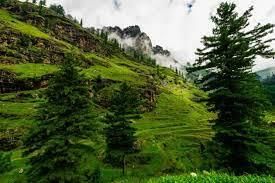
In the Himalayan Ranges, vegetation varies significantly with changes in altitude and geographical location. This is due to the varying climatic conditions and ecological zones at different altitudes, leading to a diverse range of vegetation types.
(viii) Forests help maintain the ___________ level in the atmosphere and control flooding.
Ans: Humidity
Forests play a vital role in regulating humidity by releasing moisture through a process called transpiration. This moisture contributes to local rainfall patterns and helps maintain humidity levels. Additionally, forests can reduce the risk of flooding by absorbing and slowing down rainfall, preventing rapid runoff.
(ix) The act that protects wildlife all over India is called the ___________ Act.
Ans: Central
The Wildlife Protection Act of 1972 is a central legislation in India aimed at protecting wildlife and conserving their habitats across the entire country. It provides legal provisions for the protection and management of wildlife.
(x) ___________ and ___________ are examples of animals protected under wildlife sanctuaries.
Ans: Tiger, peacock
Wildlife sanctuaries are designated areas where the conservation and protection of wildlife are a priority. Animals like tigers and peacocks are often protected within these sanctuaries to safeguard their populations and habitats.
Q2: Multiple Choice Questions (MCQs).
(i) What is the economic usefulness of forests?
(a) Providing shade
(b) Controlling flooding
(c) Adding to natural beauty
(d) Planned logging and paper production
Ans: (d)
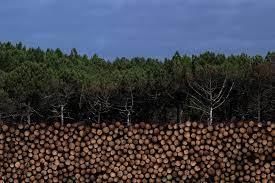
Forests have economic uses such as planned logging for timber and paper production, which contribute to the economy of the region.
(ii) Tropical Semi-evergreen vegetation is found in regions with annual rainfall of:
(a) Less than 100 cm
(b) 250 cm to 300 cm
(c) More than 300 cm
(d) Exactly 70 cm
Ans: (b)
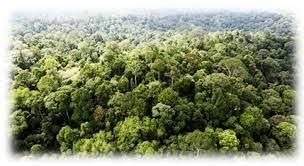
Tropical Semi-evergreen vegetation is found in regions with annual rainfall between 250 cm and 300 cm.
(iii) Which type of vegetation is dominant in regions with a dry season of three to four months?
(a) Tropical Evergreen vegetation
(b) Tropical Semi-evergreen vegetation
(c) Dry Tropical Deciduous vegetation
(d) Dry Tropical Thorny vegetation
Ans: (c)
Dry Tropical Deciduous vegetation is dominant in regions with a dry season of three to four months, where trees shed leaves during the dry season.
(iv) Which type of vegetation is found in delta regions and flooded by tidal waves?
(a) Tropical Deciduous vegetation
(b) Dry Tropical Thorny vegetation
(c) Tidal vegetation
(d) Tropical Semi-evergreen vegetation
Ans: (c)
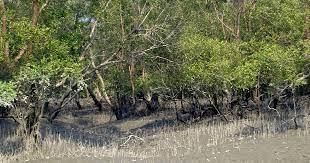
Tidal vegetation is found in delta regions and is flooded by tidal waves. Mangroves are a representative type of this vegetation.
(v) The Mountain Vegetation of The Himalayan Ranges changes with:
(a) Time of day
(b) Altitude and location
(c) Wind direction
(d) Distance from the equator
Ans: (b)
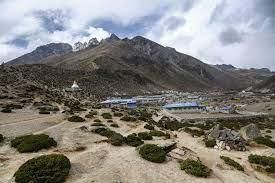
The vegetation in the Himalayan Ranges changes with altitude and location. Different altitudes and climatic conditions support various types of trees.
Q3: True or False.
(i) At present one-third of India's total area is under forests.
Ans: True
The new policy targets having 33% of India's geographical area under forest and tree cover. In the hills and mountainous regions, the aim will be to maintain two-thirds of the area under forest and tree cover. At present, India's forest and tree cover is about 24.39% of the country's total geographical area.
(ii) Evergreen trees shed their leaves during the dry season.
Ans: False
Trees that lose all of their leaves for part of the year are known as deciduous trees. Those that don't are called evergreen trees.
(iii) The sundari tree grows in the mangrove forests.
Ans: True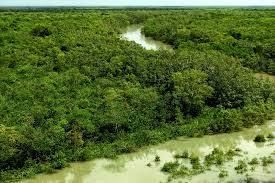
The Sundari trees are the dominant varieties of mangrove trees present in the Indian subcontinent.
Q4: Write the names of these trees in the correct columns.
 Ans:
Ans:
Q5: Underline the correct answers.
(i) The Gir National Park protects the snow leopards / Asiatic lions.
Ans: Asiatic lions
It is the only area in Asia where Asiatic lions occur and is considered one of the most important protected areas in Asia because of its biodiversity.
(ii) About one-third / two-thirds of a country's total area should be under forests.
Ans: two-thirds
The aim will be to maintain two-thirds of the area under forest and tree cover. At present, India's forest and tree cover is about 24.39% of the country's total geographical area.
(iii) The mangrove forests are found in the Ganga-Brahmaputra delta / Himalayas.
Ans: Ganga-Brahmaputra delta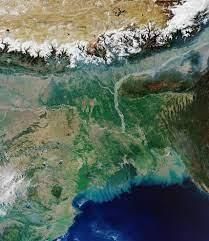
Sundarbans is a mangrove area in the delta formed by the confluence of the Ganges, Brahmaputra and Meghna Rivers in the Bay of Bengal.
Q6: Answer these questions.
(i) Why have national parks and wildlife sanctuaries been set up?
Ans: To take care of the natural heritage of India, the government has set-up 89 national parks and 490 wild life sanctuaries.
(a) To protect the natural ecosystem of our flora and fauna.
(b) To prevent the indiscriminate destruction of the natural environment.
(ii) Where do we find thorn, mountain and mangrove forests in India?
Ans: These forests are found in the semi-arid areas of Gujarat, Haryana, Madhya Pradesh, Chhattisgarh, Uttar Pradesh and Rajasthan.
(iii) How are forests important to us?
Ans: Forests are very important for wildlife, and they play an important role in the food chain. It also plays an important role in the water cycle. They check the flow of running water and are produced through the soil and increase the groundwater level.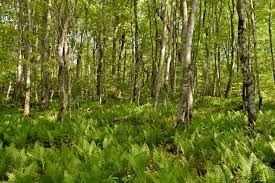
Q7: Think and Answer.
Trees found in thorn forests have long roots and small leaves. Why?
Ans: They have long roots so that the roots can go very deep into the soil in search of water and have small leaves to avoid dehydration of water through them because thorn forests are usually very sunny, hot and usually receive very minimal rainfall.
FAQs on Worksheet Solutions: Forest and Wildlife - 1
| 1. What are the main factors affecting forest biodiversity? |  |
| 2. How do forests contribute to wildlife conservation? | |
| 3. What role do protected areas play in forest and wildlife preservation? | |
| 4. How can individuals contribute to forest and wildlife conservation? | |
| 5. What are the consequences of deforestation on wildlife? | |