CBSE Class 3  >  Class 3 Notes  >  Mathematics  >  Worksheet Solutions: Geometry

Worksheet Solutions: Geometry

Q1. Examples of 3D Shapes

For each solid shape listed, write down two objects from everyday life that match its form.

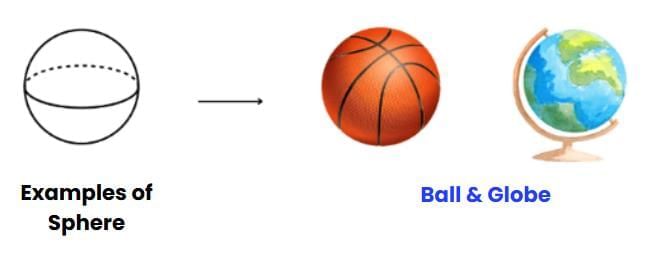
a) Sphere: ball, globe

Ans: A ball and a globe are both round all over. They are called spheres because every point on their surface is the same distance from the centre.
Q1. Examples of 3D Shapes

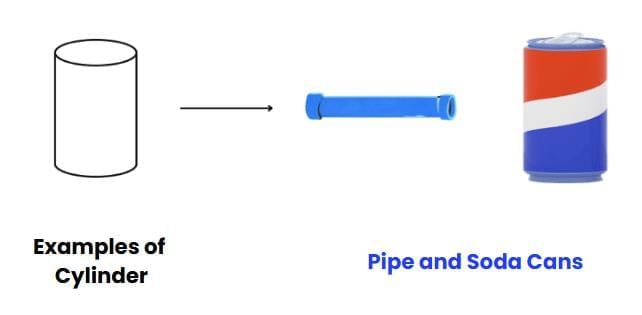
b) Cylinder: pipes, cold drink cans

Ans: A pipe and a cold drink can have flat circle ends and a curved side. These are called cylinders.
Q1. Examples of 3D Shapes

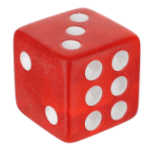
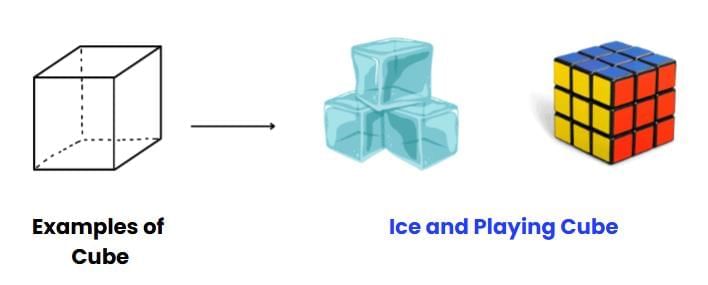
c) Cube: dice, ice cubes

Ans: A dice and an ice cube have six square faces of equal size. Each face is flat, so these are cubes.
Q1. Examples of 3D Shapes

Q2. Types of Faces on Solids

Look at each solid shape named and decide whether its faces are flat, curved, or a combination of both.

  • Book: Flat
    Q2. Types of Faces on Solids
    Explanation: A book has flat faces like its cover and pages.
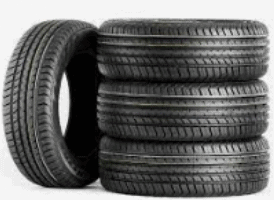
  • Tyres: Curved
    Q2. Types of Faces on Solids
    Explanation: A tyre has a rounded, curved surface all around.
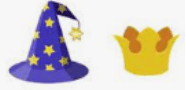
  • Jocker's cap: curved
    Q2. Types of Faces on Solids
    Explanation: A joker's cap is rounded, so its face is curved.
  • Dice : Flat
    Q2. Types of Faces on Solids
    Explanation: Dice have flat square faces on all sides.
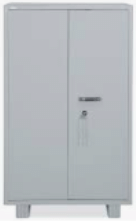
  • Almirah: Flat
    Q2. Types of Faces on Solids
    Explanation: An almirah (cupboard) has flat faces like its doors and sides.

Q3: Solid vs. Plane Shapes

Look at the list of objects and write "Solid" if it is three-dimensional or "Plane" if it is a two-dimensional shape.

  • A football
  • A book
  • A coin
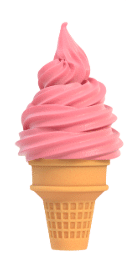
  • An ice cream cone

Answer:

  • A football → SolidQ3: Solid vs. Plane Shapes
  • A book → PlaneQ3: Solid vs. Plane Shapes
  • A coin → PlaneQ3: Solid vs. Plane Shapes
  • An ice cream cone → SolidQ3: Solid vs. Plane Shapes

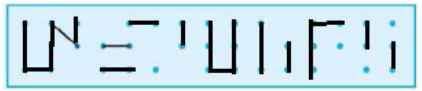
Q4. Join the Dots to Draw Straight Lines
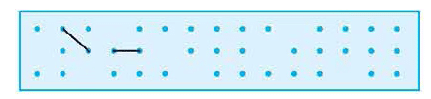
Q4. Join the Dots to Draw Straight LinesAns: Q4. Join the Dots to Draw Straight Lines

Q5: Identify Shapes Made Only with Straight Lines

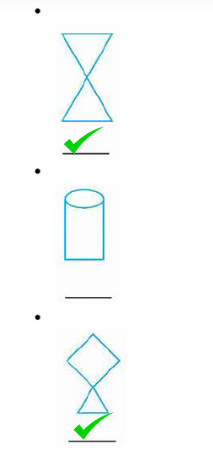
Tick (✓) shapes which are made up of straight lines only:
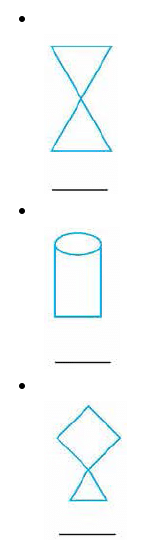
Q5: Identify Shapes Made Only with Straight LinesAns: Q5: Identify Shapes Made Only with Straight Lines

The second image has a curved face, thus it is not made of all the straight lines.

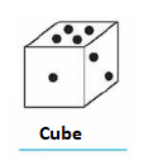
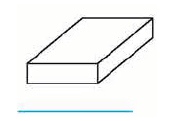
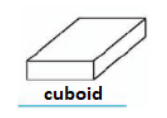
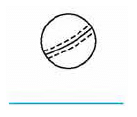
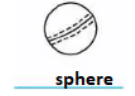
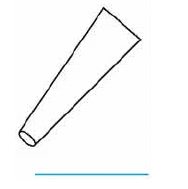
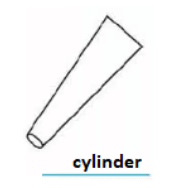
Q6. Naming Solid Shapes from Pictures

For each illustration, write down the correct name of the solid shape shown.

a) Q6. Naming Solid Shapes from Pictures

Ans: Q6. Naming Solid Shapes from Pictures

b) Q6. Naming Solid Shapes from Pictures

Ans: Q6. Naming Solid Shapes from Pictures

c) Q6. Naming Solid Shapes from Pictures

Ans: Q6. Naming Solid Shapes from Pictures

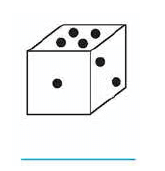
d) Q6. Naming Solid Shapes from Pictures

Ans: Q6. Naming Solid Shapes from Pictures

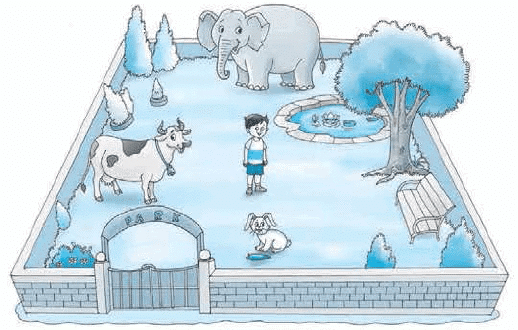
Q7. Positional Words on a Map

Study the simple map, then tick the word that correctly describes each object's position.
Q7. Positional Words on a Map

a) The location of the boy from the big tree is Left.

b) The location of the elephant from the boy is Behind.

Q8. Fill in the Blanks about 2D & 3D Properties

Complete each sentence with the correct number or adjective to describe corners, edges, faces, and sides
a)  A square has ______ corners.

Ans: A square has 4 corners.

b) A cylinder has ______ curved edges.

Ans: A cylinder has 2 curved edges.

A cylinder has 2 plane surfaces. It has 1 curved face and 2 edges.

c) A cuboid has ______ edges.

Ans: A cuboid has 12 edges.

A cuboid is a three-dimensional shape that has 6 faces, 12 edges, and 8 vertices.

d) All the sides of a square are ________.

Ans: All the sides of a square are equal.

All four sides of a square are equal. The diagonals of a square are equal.

e) A triangle has sides _______ and ________ vertices.

Ans: A triangle has sides three and three vertices.

The document Worksheet Solutions: Geometry is a part of the Class 3 Course Mathematics for Class 3.
All you need of Class 3 at this link: Class 3

FAQs on Worksheet Solutions: Geometry

1. What are the different types of angles in geometry?
Ans. In geometry, there are several types of angles. Some common types include: - Acute angle: An angle that measures less than 90 degrees. - Right angle: An angle that measures exactly 90 degrees. - Obtuse angle: An angle that measures more than 90 degrees but less than 180 degrees. - Straight angle: An angle that measures exactly 180 degrees. - Reflex angle: An angle that measures more than 180 degrees but less than 360 degrees.
2. How do you calculate the area of a triangle?
Ans. The formula to calculate the area of a triangle is (base * height) / 2. The base is the length of the triangle's bottom side, and the height is the perpendicular distance from the base to the opposite vertex. By substituting these values into the formula, you can find the area of the triangle.
3. What is the difference between a polygon and a polyhedron?
Ans. A polygon is a two-dimensional closed figure with straight sides, while a polyhedron is a three-dimensional solid with flat faces. In simpler terms, polygons exist in two dimensions (like a flat piece of paper), and polyhedrons exist in three dimensions (like a cube or a pyramid).
4. How do you find the circumference of a circle?
Ans. The circumference of a circle can be calculated using the formula 2 * π * r, where π (pi) is a mathematical constant approximately equal to 3.14159, and r is the radius of the circle. The radius is the distance from the center of the circle to any point on its edge. By multiplying twice the value of pi with the radius, you can determine the circumference of the circle.
5. What is the Pythagorean Theorem?
Ans. The Pythagorean Theorem is a fundamental concept in geometry that relates the lengths of the sides of a right triangle. It states that in a right triangle, the square of the length of the hypotenuse (the side opposite the right angle) is equal to the sum of the squares of the lengths of the other two sides. The theorem can be written as a^2 + b^2 = c^2, where a and b are the lengths of the two legs of the triangle, and c is the length of the hypotenuse. This theorem is widely used in various applications, including solving for unknown side lengths in right triangles.
Explore Courses for Class 3 exam
Get EduRev Notes directly in your Google search
Related Searches
Worksheet Solutions: Geometry, Summary, past year papers, Worksheet Solutions: Geometry, Previous Year Questions with Solutions, Exam, Objective type Questions, practice quizzes, Free, Viva Questions, mock tests for examination, video lectures, ppt, shortcuts and tricks, Sample Paper, MCQs, study material, pdf , Important questions, Worksheet Solutions: Geometry, Semester Notes, Extra Questions;