Adverb and its Kinds


What is an Adverb?
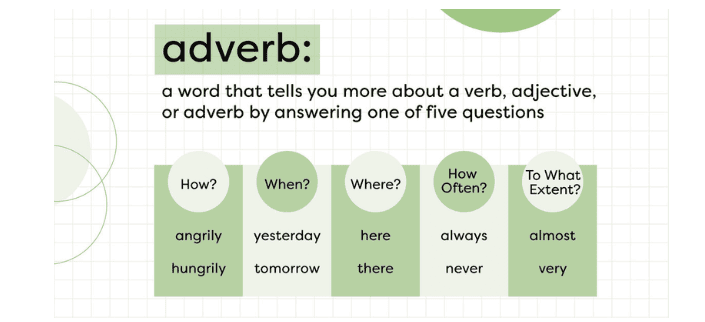
- An adverb is a word that modifies or gives more information about a verb, an adjective, or another adverb.
- Adverbs tell us more about how, when, where, why, and to what extent something happens.
Types of Adverbs
1. Adverbs of Time
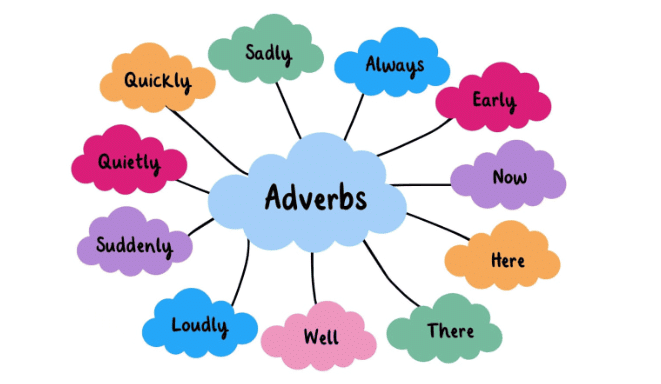
Adverbs of time tell us when an action happens. They often appear at the beginning or at the end of a sentence, or immediately before/after the verb depending on emphasis.
Examples
- "Lately, you have been coming early to the football practice."
- "We recently bought a puppy."
- "We go out for morning tea daily."
Common Adverbs
- annually
- daily
- recently
- soon
- yet
- during
- before
- now
- then
2. Adverbs of Place
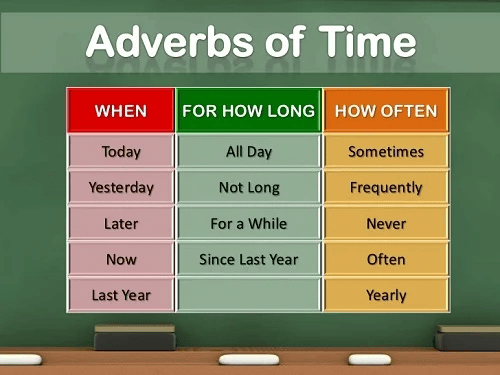
Adverbs of place describe where an action happens. They usually come after the main verb or after the object when there is one.
Examples
- "The girl who took my phone was nowhere to be found."
- "There were blue butterflies everywhere in the garden."
- "Clearly, there aren't any Pokémon here."
Common Adverbs
- here
- there
- nowhere
- everywhere
- out
- in
- above
- below
3. Adverbs of Degree
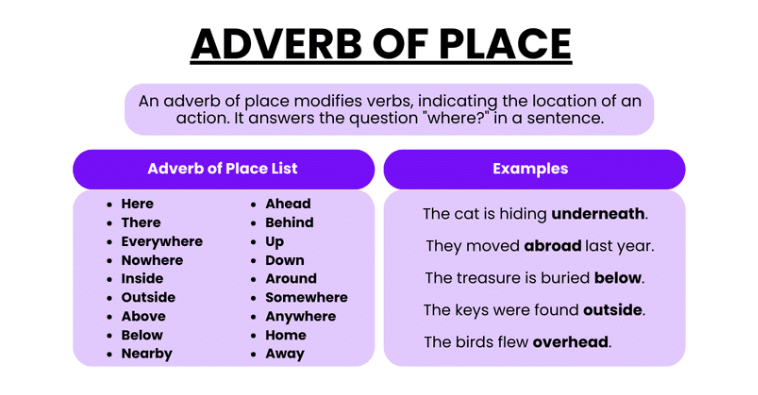
Adverbs of degree tell us about the intensity or extent of an action, adjective, or another adverb. They are often placed before the word they modify.
Examples
- "You have hardly read that chapter."
- "His health is extremely critical."
- "I am so excited to go to the new amusement park."
Common Adverbs
- almost
- quite
- nearly
- too
- very
4. Adverbs of Manner
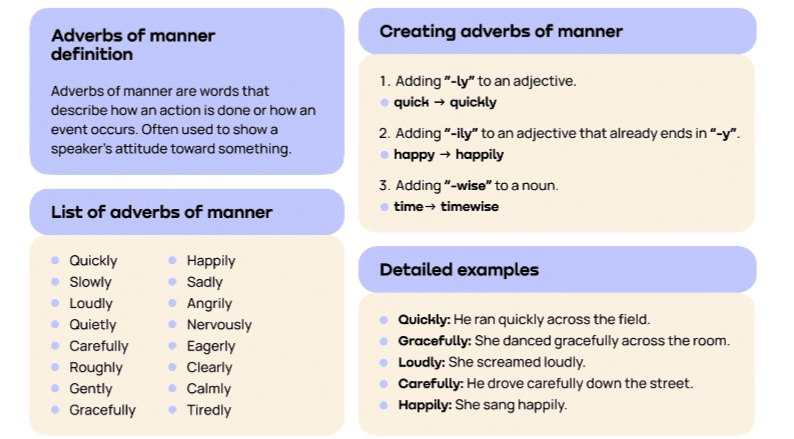
Adverbs of manner describe how an action is performed. Many of these adverbs end in -ly and are often placed at the end of a clause, though position can vary for emphasis.
Examples
- "She ironed and folded the clothes neatly."
- "We can discuss this matter calmly."
- "He carefully labeled all the files given to him."
Common Adverbs
- neatly
- slowly
- quickly
- sadly
Try yourself: Which of the following sentences contains an adverb of manner?
5. Adverbs of Frequency
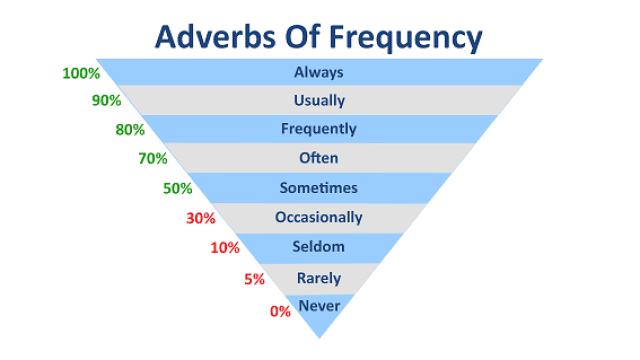
Adverbs of frequency tell us how often an action occurs. They commonly appear before the main verb (but after the verb "to be").
Examples
- "I always call my mother before I sleep."
- "She rarely talks to anyone these days."
- "They usually go to restaurants on weekends."
Common Adverbs
- never
- always
- rarely
- sometimes
- usually
6. Adverbs of Reason or Cause
Adverbs of reason or cause explain why an action takes place. They often join ideas by showing cause and effect.
Examples
- "He is very indisciplined. He cannot, therefore, be taken in the team."
- "She talked too much in class. She was hence turned out of the class."
Common Adverbs
- therefore
- thus
- hence
- so
7. Adverbs of Affirmation and Negation
Adverbs of affirmation express agreement or certainty; adverbs of negation express denial or refusal.
Examples
- "I do not know."
- "Yes, I will help you."
- "No, I am not willing to rest here."
Common Affirmation Adverbs
- surely
- certainly
- definitely
Common Negation Adverbs
- no
- not
- never
8. Interrogative Adverbs
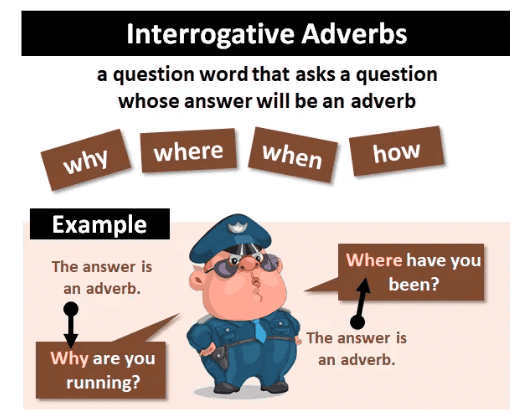
Interrogative adverbs are used to ask questions about time, reason, manner, place, or frequency.
Examples
- "When do you get up?"
- "Why are you late?"
- "Where do you live?"
Common Interrogative Adverbs
- when
- why
- how
- where
- how often
9. Relative Adverbs
Relative adverbs connect clauses and refer back to some antecedent in the sentence. They introduce a clause that gives more information about time, place, or reason.
Examples
- "This is the place where the accident took place."
- "I do not understand the reason why he has behaved thus."
Common Relative Adverbs
- where
- why
- when

Recognising Adverbs
Many words can look similar as adjectives and adverbs. The simplest test is to ask what the word modifies. If it modifies a noun, it is an adjective. If it modifies a verb, an adjective, or another adverb, it is an adverb.
Examples
- Adjective: "He is a fast runner." - fast describes the noun runner.
- Adverb: "He runs fast." - fast describes how he runs.
Formation of Adverbs
Adverbs are formed from different word classes in several common ways. Below are the usual methods with examples.
- From adjectives: Add -ly to many adjectives. Examples: brave → bravely, careful → carefully. Spelling may change slightly before adding -ly (for example, true → truly).
- From nouns: Add -ly to some nouns. Examples: day → daily, month → monthly.
- From participles: Add -ly to participles. Examples: loving → lovingly, hurried → hurriedly.
- Using prefixes: Forms with an initial letter or letters added to a word often function as adverbial words. For nouns: abed, ablaze, abreast, aboard, adown, afoot, again, ahead, aloud, astir, apace, apart, ashore, aside. For verbs: across, ado, ago, arise, asleep. For adjectives: abroad, afresh, akin, aloud, alone, alike, anew, around. Words formed with be- can give adverbial senses: beside, below, behind, beyond.
- Using prepositions: Some adverbs are formed from prepositional forms. Examples: thereby, therein.
- Different meanings: Some forms change meaning when the form changes; context determines the sense of the adverb.


Words Ending in -ly but Acting as Adjectives
Not every word that ends in -ly is an adverb. Some such words are adjectives and describe nouns. Below are examples with explanation.
- "The girls played a friendly match." - friendly qualifies the noun match (adjective).
- "This food has a sickly taste." - sickly qualifies the noun taste (adjective).
- "A cub has a curly coat." - curly qualifies the noun coat (adjective).
- "She has a deep manly voice." - manly qualifies the noun voice (adjective).
Other adjective forms that end in -ly include: costly, cowardly, godly, heavenly, likely, lonely, lovely, orderly, slovenly, stately, untimely.
Fixed Adverbial Pairs and Phrases
Certain adverbs or adverbial phrases are used together and joined by conjunctions. These pairs and phrases are common in spoken and written English and usually function as single adverbial units.
- as
- all in all
- again and again
- by and by
- off and on
- far and near
- far and wide
- far and away
- over and above
- once and again
- out and out
- first and foremost
- now and then
- now or never
- now and again
- through and through
- to and fro
Try yourself: Which of the following sentences contains an adverb?
FAQs on Adverb and its Kinds
| 1. What is an adverb? |  |
| 2. What are the types of adverbs? | |
| 3. How can adverbs be recognized in a sentence? | |
| 4. How are adverbs formed? | |
| 5. What are the different kinds of adverbs in Class 6 grammar? | |