Olympiad Notes: Acids, Bases and Salts

Introduction
Like we individuals have certain kind of nature, likewise, every chemical substance that we come across has some nature. But in terms of chemicals, we relate nature either with acidic, basic or neutral nature. But to know exactly what is acidic, basic or neutral, we need to know about what exactly we mean by being acidic, basic or neutral. So, accordingly, different concepts were introduced to define them. So, let us study them first. Earlier, it was thought that those substances that are sour, turn blue litmus red and are corrosive are called acids.
Whereas those which are bitter, turn red litmus blue, soapy in touch are called bases. But later this concept was replaced by relevant concepts like lewis concept, bronsted lowry concept and Arrhenius concept.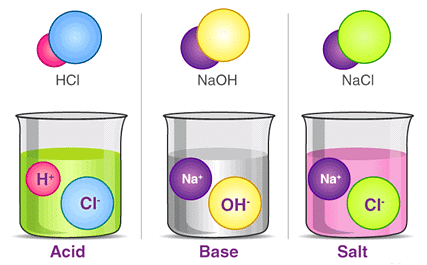
Acids
Arrhenius Concept: According to his way of judging substances, he classified the acids and bases as given below: Acids are those that when dissolved in water, give hydrogen ion or we can write hydronium ion (H3O+) This hydronium ion is formed due to the combination of hydrogen ion produced by acid with water molecule.
Example of acids are:
- hydrochloric acid (HCl)
- sulphuric acid (H2SO4)
- nitric acid (HNO3)
- phosphoric acid (H3PO4)
- carbonic acid (H2CO3)
Classification of Acids: we have different classification based on different factors so let's sum up and make ourselves familiar with it.
1. Depending upon source from which they are obtained
- Organic acids: Organic Acids are obtained from plants and animals or we can say they are present in organic matter.
Example: in tomato, oxalic acid is present, in apple, malic acid and in lemon, we have citric acid and so many other acids are present in different organic substances. - Inorganic acids: Inorganic Acids are those that are obtained from minerals present in earth. These are quite reactive in nature.
Example we have are: nitric acid, sulphuric acid, etc.
2. Classification of acids on the basis of strength
If we talk about strength, it means the amount of hydrogen ions given out when acid is dissolved in water.
On the basis of this we have two categories of acids -
- Strong acids: Strong Acid is the acid that completely dissociates into hydrogen ion. These acidstotally dissociate and leave no dissociated molecule of acid.
Example: Hydrochloric acid, sulphuric acid, etc. - Weak acids: Weak Acid is the acid that partially dissociates into hydrogen ions. There actually exists the equilibrium between dissociated ions and undissociated molecules of acids .
Example: Carbonic acid.
3. Classification of acids on the basis of water content
- Dilute acid: Dilute Acid is the acid that has more amount of water in it and less salt content. They are not quite strong.
- Concentrated acid: Concentrated Acid is that which has less amount of water in it and more amount of salt content.
We can dilute the concentrated acid but need to take certain precautions as follows-
One can dilute concentrated acid by adding concentrated acid slowly in water with continuous stirring. By doing so, the heat released is comparatively less and is constantly absorbed by water. So, it prevents the reaction from becoming violent.
Bases
If we talk about bases, according to Arrhenius, they are those that when dissolved in water give hydroxide ion (OH-)
Example:
- Calcium hydroxide Ca(OH)2
- Magnesium hydroxide Mg(OH)2
Classification of bases:
1. Classification of bases on the basis of their solubility in water
- The bases that are soluble in water are called alkalis.
- Note: it is interesting to note that all bases are not alkalis but all alkalis are bases.
2. Classification on the basis of strength
- Strong bases: That completely dissociates in water to give hydroxide ions. These bases totally dissociates and leave no dissociated molecule of base.
Example: Hydroxides of all reactive metals - Weak bases: That do not completely dissociates in water to give hydroxide ions.
There actually exists the equilibrium between dissociated ions and undissociated molecules of bases.
Example: Calcium hydroxide etc.
Physical Properties Of Acids And Bases
Some physical properties of acids are as follows -
- They are sour.
- They turn blue litmus red.
- They are corrosive in nature
Some physical properties of bases are as follows -
- They are bitter.
- They turn red litmus blue.
- They are soapy in nature
Chemical Properties of acids and bases
Chemical properties of acids
1. Action with Indicators: when treated with litmus, they turned blue litmus red.
2. Reaction with Metals: They react with acid to form metal salt and hydrogen gas is released.
Acid + metal → metal salt + hydrogen gas
Example: HCL+Zn→ZnCl2+H2
3. Action with metal carbonate and metal bicarbonate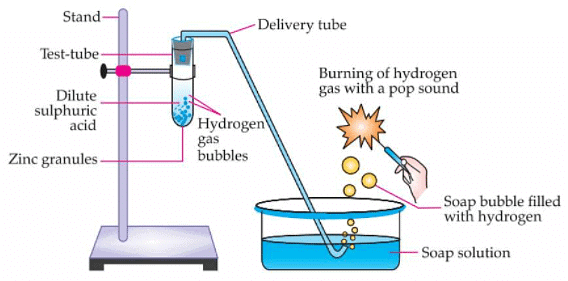
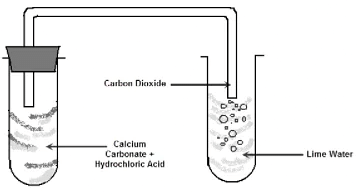
Whenever acids react with metal carbonate or metal bicarbonate, they form respective salts, water and carbon dioxide gas is released.
Example: acid + metal carbonate →metal salt + water + carbon dioxide gas
i.e. HCl +Na2CO3→NaCl +H2O+CO2
4. Reaction with Bases: Acids react with bases to form salt and water.
i.e. Acid + base →salt and water
HCL + NaOH → NaCl + H2O
This reaction is regarded as neutralization reaction as salt formed is neither acidic nor basic its neutral.
5. All acids act as electrolytes in aqueous states
In aqueous state when current is passed they dissociate into ions.
Chemical properties of bases
- Action with Indicators: They turn red litmus blue
- Reaction with Metals: They react with base to form oxy salt and hydrogen gas is released.
Example: Al + NaOH → NaALO2 + H2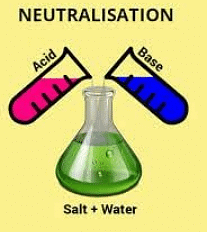
- Action with ammonium salts
Example: NH4CL + NaOH → NaCL + NH4OH - Reaction with Acids: Acid react with acids to form salt and water
Acid + base →salt and water
HCL + NaOH → NaCl + H2O
This reaction is regarded as neutralization reaction as salt formed is neither acidic nor basic its neutral - All bases act as electrolyte in aqueous states i.e. NaOH → Na+ +OH-
- alts are formed when acid and base react with each other.
i.e. acid + base→salt + water
HCL + NaOH → NaCl + H2O
The salts are formed as a result of neutralization reaction as both acid and base neutralize each others effect.
The Nature of Salts Can Be-
1. Acidic Salt: It is formed when strong acid react with weak base. As the acid is strong, therefore, strong character is retained in the salt that is why it comes out to be acidic
Example: HCL + Ca(OH)2 → CaCL2 + H2O
2. Basic Salt: It is Formed When Strong Base Reacts With weak acid
Example: NaOH + CH3COOH → CH3COONa + H2O
3. Neutral Salt: It is Formed When Weak Or Strong Acid And Base React With Each other. They Cancel Each Other's Effect And Can Form Neutral Salt
Example: HCL + NaOH → NaCl + H2O
Ph and its biological importance, indicators
- Strength of acid and base is expressed in terms of Ph
- It is the Logarithm of Reciprocal of Hydrogen ion Concentration.
i.e.: PH = -LOG(H+) - The ph of any substance can be detected by using ph paper or ph scale.
- Ph scale consists of scale ranging from 0 to 14.
- Ph ranging from 0 to 7 are acids
- Ph ranging from 7 to 14 are bases And 7 is neutral
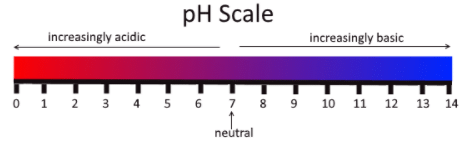
For Measuring, We Have Ph Scale Given By:
Observations Made On The Bases Of Ph Values
Ph Range Indicate the strength of acids and bases as given below:
- 0-2: Strong Acid
- 2-4: Moderately Acidic
- More Than 4: Weak Acid
- At 7: Neutral
- 7-10: Weak Base
- 10-12: Moderately Basic
- More Than 12: Strongly Base
Effect of ph on dilution:
- In Case Of Acids On Dilution: Ph Increases as acidic strength decreases
- In Case Of Bases On Dilution: Ph Decreases as basic strength decreases
Importance of Ph
- Biological Importance: Our Body Works Within 7-7.8 Ph. The Ph Of Acid Rain Is Below 5.6 And This Water Affects Aquatic Life.
- Agriculture: Plants Also Specific Range Of Ph For Survival In Order To Grow Crops
- In Dairies: Ph Value Of Milk Is Adjusted About 6.6. If Ph Falls Below 6.6 It Turns Sour.
- In Tooth Decay: Tooth Decay Starts When Ph Of Mouth Falls Below 5.5. At That Ph Acid Reacts With Calcium Phosphate Of Tooth Enamel And Cause Its Corrosion. When We Eat Some Sugary Substance The Acids Production Is Stimulated That Corrode Enamel.
- Indicators: Are the substances that bring about change in themselves when some acid or base is added to Natural and artificial indicators
- Natural indicators: Litmus (it is extracted from lichens) original color of litmus is purple but in lab it is used as red and blue litmus.
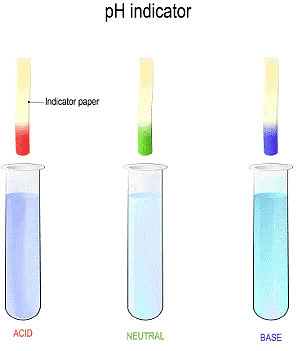
- Effect of Acid: Turns blue litmus red
- Effect on Base: Turns red litmus blue
- Artificial Indicators: Phenolphthalein, methyl orange
Effect on phenolphthalein-
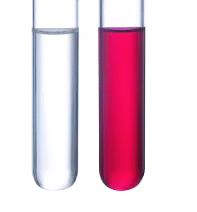 Original color is colorless
Acid: Remain colorless
Base: Turns pink
Effect on methyl orange: original color (orange)
Acid: from orange to red
Base: from orange to yellow
We have olfactory indicators as well that bring about change in smell when any substance is added to it.
Like Onion Extract And Vanilla Extract
- Effect Of Acid On Vanilla Extract: same smell
- Effect Of Base On Vanilla Extract: smell changes
- Effect Of Acid On Onion Extract: same smell
- Effect Of Base On Onion Extract: smell changes
Washing Soda
Formula: Na2CO3.10c
Chemical name: Sodium carbonate decahydrate
Preparation: by solvays process
Reaction involved:
Na2CO3 + 10H2O → Na2CO3.10H2O
The solvay process is an efficient process because the bi products can be reused in this process:
CaCO3 → CaO+CO2
CaO + H2O → Ca(OH)2
Ca(OH)2 + NH4CL → CaCL2 + NH3 + H2o
This ammonia and water can be reused in solvay's process.
Physical properties
- It is crystalline solid
- Action of heat: Na2CO3.10H2O → Na2CO3 + 10H2O
- Action of air: Na2CO3.10H2O → Na2CO3 H2O.+9H2O
- Efflorescence: "the loss of 9 molecules of crystallization when washing soda is exposed to air ".
Uses of washing soda:
- Used for softening of hard water
- Used in detergents as it has cleansing properties
- Used in glass industry, etc
Baking Soda
Formula: NaHCO3
Chemical name: Sodium Bicarbonate
Preparation: by Solvay's process
Reaction involved :
NH₃ + H₂O +NaCl + CO₂ → NaHCO₃ + NH₄Cl
Physical properties of Baking Soda:
1. It is white crystalline solid
2. Action of heat: NaHCO3-HEAT→Na2CO3 + H2O + CO2
Uses of Baking Soda
- It is used as antacid
- It is used in baking cakes, etc - in cakes baking powder is added that contains baking soda and tartaric acid. in the batter of cake, baking powder is added and mixed well, then this cake is heated. On heating, the following reaction occurs
NaHCO3-HEAT →Na2CO3 + H2O + CO2
The carbon dioxide so produced, being volatile, escapes and makes the cake fluffy but the cake becomes bitter due to sodium carbonate. So, to restore bitterness, the tartaric acid reacts with sodium carbonate to form sodium tartrate that neutralizes its effect and original taste of cake is retained .
3. It is used in soda acid fire extinguishers
It consist of two cylinders -
- Outer: made of metal
- Inner: made of glass
baking soda + sulphuric acid → sodium sulphate +water + carbon dioxide
The outer cylinder has baking soda and inner one has concentrated Sulphuric acid. Both the cylinders are bounded by common knob. When knob is pressed, the glass cylinder breaks, both of them react and as a result, carbon dioxide is released that forms the protective blanket and extinguishes fire.
Plaster of Paris
Formula: CaSO4/2H2O
Chemical name: Calcium Sulphate Hemihydrate
Preparation: from Gypsum
CaSO₄.2H₂O -Heat 100⁰C→ CaSO₄.1/2H2O + 11/2H2O
Precaution to be taken while preparing it:
- The temperature is to be controlled because if temperature exceeds 100 degree celsius, all water will get evaporated and it will form dead burnt plaster (calcium sulphate)
CaSO4.2H2O-Temp. above 100→CaSO4 + 2H2O
Physical Properties of POP
- white crystalline solid
- Reaction with water: When used it has to mixed with water and following reaction occurs-POP + H2O → Gypsum
Uses of POP
- It is used to decorate ceilings, etc
- It is used to make statues, etc
- It is used for joining fractured bones
Bleaching Powder
Formula: CaoCL2
Chemical name: Calcium Oxychloride
Preparation: Ca(OH)₂ + Cl₂ → CaOCl₂ + H₂O
Physical properties of Bleaching Powder
- White crystalline solid
- Action of air: CaoCL2+CO2--CaCO3+CL2
Uses of Bleaching Powder:
- It makes wool unshrinkable
- It is used for cleaning water tanks, toilets, etc.




