The Noun

Ways of Changing Gender
There are several common ways to form the feminine of a masculine noun. Simple methods used at this level are described below in an easy way:
1. By adding '-ess' to the masculine form without any other change. Examples: actor → actress, lion → lioness.
2. By adding '-ess' after a small change in the ending of the masculine word. Example: waiter → waitress.
3. By placing a word before or after the noun to show the gender. Examples: male nurse, female doctor.
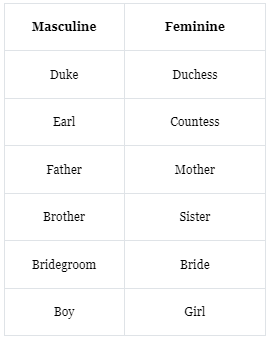
4. By using a completely different word for the feminine. Examples: bull → cow, rooster → hen, man → woman.
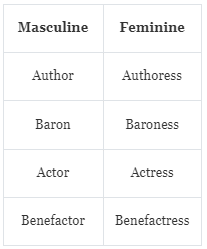
We can change the gender by placing a word before or after a noun to indicate whether we mean a male or a female. This is useful when there is no special feminine form of the noun itself. Examples: male author, female singer.
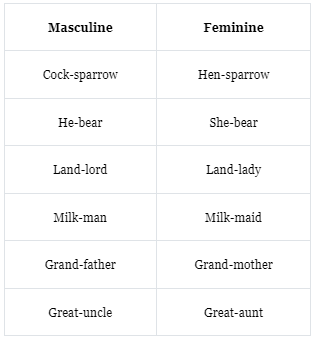
We can also change the gender by using an entirely different word for the male and female forms. Examples include father → mother, son → daughter, bull → cow.
Nouns as Common Gender
Some nouns are of common gender. They can refer to either a male or a female without changing the word. Examples: infant, baby, child, artist, advocate, advisor, accountant, auditor, broker, businessman, cousin, cook, chairman, chairperson, criminal, constable, client, driver, engineer, enemy, fool, guest, judge, librarian, musician, manager, novelist, professor, photographer, bird, fowl, elephant, fish, deer, shopkeeper, teacher, student, lawyer, etc.
Points to be remembered
- Artists, professionals and executives are often described in the masculine form for both sexes. Examples: author, poet, writer, doctor, advocate, driver, cook, etc.
- Lifeless things or powerful natural forces are sometimes personified as masculine. Examples: sun, death, anger, time, summer, winter, day, night, thunder, wind.
- Certain words have no commonly used masculine form. Examples: fairy, housewife, nurse, laundress.
- Miss is used for an unmarried girl, while Mrs. is used for a married woman.
- Mr. is used to address both a married and an unmarried man.
- Collective nouns such as army, people, nation, flock, class and group are used for collections of living things; they are normally treated as neuter in gender.
FAQs on The Noun
| 1. What is common gender in nouns? |  |
| 2. How can gender be changed in nouns? | |
| 3. What are some examples of nouns that have common gender? | |
| 4. Why is understanding common gender important in language? | |
| 5. What role does context play in identifying the gender of nouns? | |