The Conjunction

A conjunction is a word that joins words, phrases or clauses together. Conjunctions are also called linkers or connectors. There are mainly three types of conjunctions: coordinate conjunctions, subordinate conjunctions and correlative conjunctions. Definitions of the three types with examples are given below.
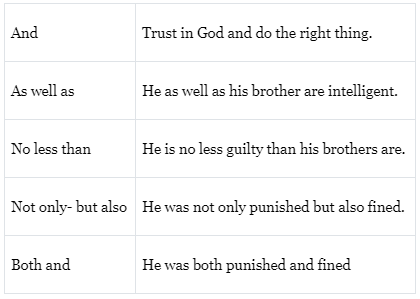
Cumulative or Copulative Coordinate Conjunctions
These conjunctions simply add one statement or fact to another. Common examples include and, both...and, not only...but also. Use them when you want to join similar ideas or add information.
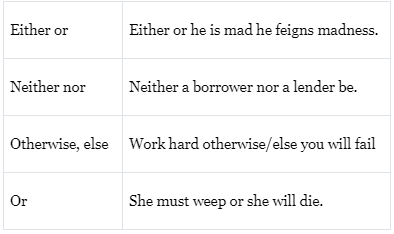
Alternative or Disjunctive Coordinate Conjunctions
These conjunctions offer an alternative or choice between one statement and another. Common examples are or, either...or, neither...nor. Use them to present options or possibilities.
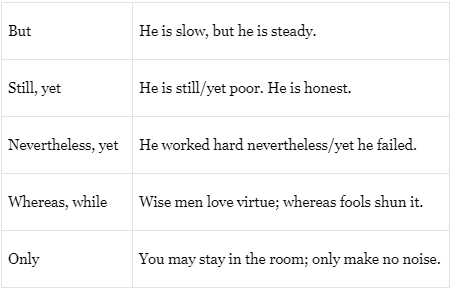
Adversative Coordinate Conjunctions
These conjunctions express opposition or contrast between two statements. Typical examples include but, yet, however, whereas. Use them to show a contrast or an unexpected result.
Subordinate Conjunctions
Subordinate conjunctions join a dependent clause to an independent clause. They show relations such as time, cause, condition, purpose, and concession.
The examples for time are: when, after, as soon as, while, till, until, as long as, before, etc.

Subordinate Conjunctions Examples
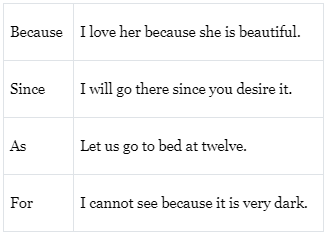
The examples for cause or reason are: because, since, as, for, that, etc. These are used to show why something happens or to give a reason.
Correlative Conjunctions
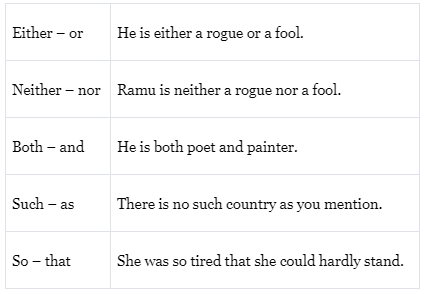
Certain conjunctions are used in pairs to join equal sentence elements. These are called correlative conjunctions. Examples include either...or, neither...nor, both...and, not only...but also, and whether...or. Each pair works together to show a clear relationship between two parts of a sentence.