CBSE Class 4  >  Class 4 Notes  >  EVS  >  Worksheet: Going To School - 1

Worksheet: Going To School - 1

Q1: Fill in the Blanks

(i) People make _____ to cross a river.

(ii) In Rajasthan _____ is used to pull the carts.

(iii) In mountain areas of Uttarakhand, children travel on _____ and _____ paths to reach school.

(iv) A pucca bridge is made up of _____ and _____.
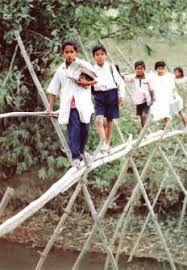
Bamboo Bridge AssamBamboo Bridge Assam

Q2: Multiple Choice Question

(i) Bridges are built over:
(a) River
(b) Canals
(c) Railway Lines
(d) All

(ii) Name the transport by which you can cross a river.

(a) Boat
(b) Donga
(c) Ferry
(d) All

(iii) Which is the longest bridge in India:
(a) Howrah Bridge
(b) Bhupen Hazarika Setu
(c) Sea link bridge
(d) All

(iv) Where do you see 'jugads':
(a) Gujarat
(b) Rajasthan
(c) UP
(d) MP
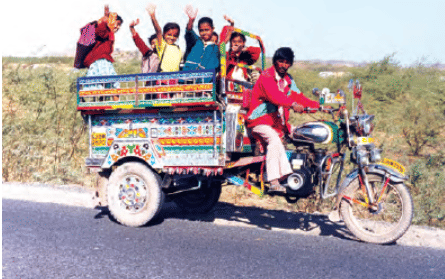
Vehicle JugadVehicle Jugad

(v) Where are the camel carts used:
(a) Desert
(b) Green land
(c) Forest
(d) All

Q3: Short Answer Type Questions

(i) In many remote areas, students have to travel through many difficult paths to reach school.

(ii) The government should try to make pucca roads where possible so that children can reach schools easily.

(iii) How do children go to school in desert areas of Rajasthan?

(iv) What is a bullock cart?
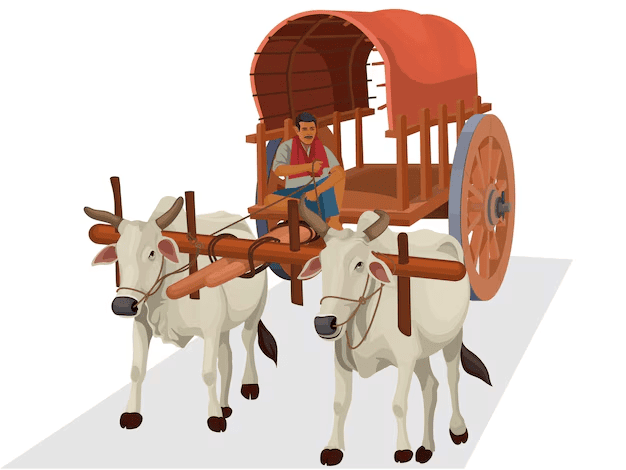
Bullock CartBullock Cart

(v) How do children usually go to school in Gujarat?

(vi) Why do children going to school in snow areas hold each other's hands?

(vii) How can we avail easy education to the students in remote areas?

(viii) Punishment is necessary for the students to study.

(ix) More schools should be made in remote areas to promote education. 

(x) We use an umbrella while going to school if it is too sunny or raining outside the house.

(xi) What is vallam?

VallamVallam

(xii) How do students reach school on long roads?

(xiii) What is jugad? How does it look like?

(xiv) How do people cross the paths which have big gaps between two paths?

(xv) Where do we use trolleys?


You can find Worksheets Solutions here: Worksheet Solutions: Going To School - 1 

The document Worksheet: Going To School - 1 is a part of the Class 4 Course EVS for Class 4.
All you need of Class 4 at this link: Class 4

FAQs on Worksheet: Going To School - 1

1. What are the different ways to go to school that Class 4 students use?
Ans. Students can reach school through walking, cycling, school bus, auto-rickshaw, car, or public transport like buses and trains. Each mode of transport has its own benefits-walking builds fitness, cycling is eco-friendly, and buses are shared transport options. The choice depends on distance from home, safety, and availability of transport in the area.
2. Why is it important to follow traffic rules while going to school?
Ans. Following traffic rules ensures safety for students and prevents accidents on roads. Traffic signals, zebra crossings, and road markings guide safe movement. Wearing helmets while cycling, looking both ways before crossing, and staying alert protect students from injuries and teach responsibility for personal safety during daily commute.
3. What should students do to stay safe while travelling to school alone?
Ans. Students should stay aware of their surroundings, follow familiar routes, travel with friends when possible, and inform parents about their whereabouts. Carrying a whistle, avoiding talking to strangers, wearing visible clothing, and knowing emergency contact numbers are essential safety measures for independent school commutes and personal security.
4. How can students make their journey to school more eco-friendly and sustainable?
Ans. Walking or cycling reduces carbon emissions and pollution from vehicles. Carpooling or using public transport like buses minimizes individual vehicle use. Students can also encourage parents to use shared transport options. These sustainable commuting choices protect the environment while promoting physical fitness and community responsibility during daily travel routines.
5. What is the importance of being punctual while going to school?
Ans. Punctuality develops discipline and responsibility in students' daily routines. Arriving on time ensures students don't miss important lessons, morning assembly, and classroom activities. Regular punctuality builds good habits, improves academic performance, and teaches respect for schedules. It also reduces stress and allows students to settle into class calmly before learning begins.
Explore Courses for Class 4 exam
Get EduRev Notes directly in your Google search
Related Searches
MCQs, Semester Notes, past year papers, Free, Worksheet: Going To School - 1, practice quizzes, ppt, Worksheet: Going To School - 1, Important questions, Worksheet: Going To School - 1, Sample Paper, Exam, Objective type Questions, Previous Year Questions with Solutions, study material, Summary, video lectures, shortcuts and tricks, Viva Questions, mock tests for examination, Extra Questions, pdf ;