NCERT Summary: Crop Production & Management

Introduction
- Food is essential for human survival because it provides energy and raw materials required for bodily functions such as respiration, growth, repair and excretion.
- Major sources of food are plants (produced by agriculture) and animals (produced by animal husbandry).
- To feed a large and growing population we need consistent production, effective farm management and proper distribution of food products.
- A large area cultivated with the same type of plant is called a crop. Common crops include wheat, rice (paddy), other cereals, vegetables and fruits.
- Crops are classified according to the season in which they are grown.
- India has varied climatic conditions (temperature, humidity and rainfall) across regions; this makes it suitable for a wide variety of crops.
Types of Crops
- Kharif crops: Crops sown with the onset of monsoon (rainy season). The rainy season in India is usually from June to September. Examples: paddy (rice), maize, soybean, groundnut, cotton.
- Rabi crops: Crops grown in the winter months after the monsoon. Their main growing period is generally from October to March. Examples: wheat, gram (chana), pea, mustard, linseed.
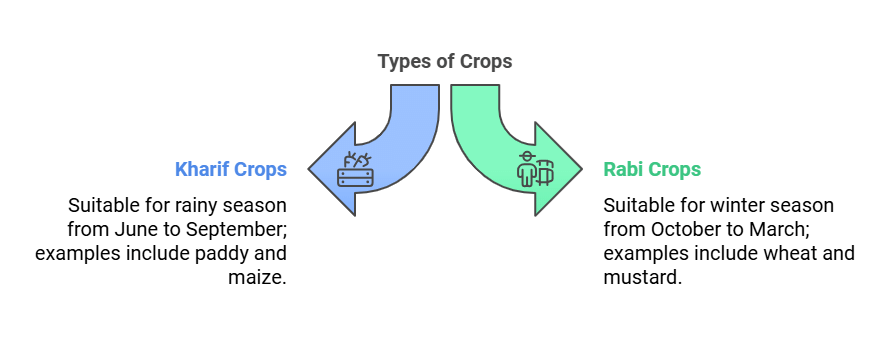
Note: Paddy requires large quantities of water; therefore it is not cultivated in summer and is generally grown during the rainy (kharif) season.
Cultivation of Crops: Major Agricultural Practices
1. Preparation of Soil
The first step before sowing is the preparation of soil. Turning and loosening the top few centimetres of soil is essential so that roots can penetrate easily, obtain air and absorb water and nutrients.
- Loose soil allows easier movement of roots, better aeration and drainage.
- Turning the soil brings nutrient-rich deeper layers to the surface and promotes activity of beneficial organisms such as earthworms and microbes. These organisms help make the soil more fertile by producing humus.
- The process of loosening and turning the soil is called tilling or ploughing.
- After ploughing the field is levelled before sowing so that water and seeds are distributed uniformly.
Agricultural Implements
Plough
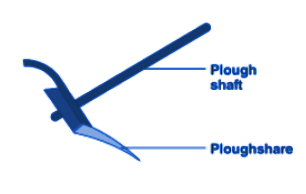
The plough is a traditional implement used for tilling the soil. Main features:
- It contains a strong triangular iron strip called the ploughshare which cuts and turns the soil.
- The main body is a long log known as the plough shaft. Wooden ploughs have gradually been replaced by iron ploughs and mechanised ploughs.
Hoe and Cultivator
- Hoe: A simple tool with a long handle and a broad blade fixed at one end used for removing weeds and loosening soil in small farms.
- Cultivator: A tractor-drawn implement with several tines used for ploughing, turning and breaking the soil; it saves labour and time.
Sowing
Sowing is the process of placing seeds in the soil at appropriate depths and spacing. Selecting good quality seeds that give high yield is important.
- Traditional tool: A funnel-shaped sowing tool which dispenses seeds through small pipes; it is simple but less uniform.
- Seed drill: A mechanised tool usually attached to a tractor that sows seeds uniformly at the correct depth and spacing and covers them with soil. It reduces seed wastage and damage by birds and improves germination.
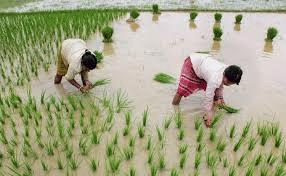
Correct spacing prevents overcrowding, ensuring each plant receives adequate nutrients, sunlight and water.
Adding Manures and Fertilisers (Manuring)
Continuous cropping removes nutrients from the soil. To replenish these nutrients farmers add organic manures and chemical fertilisers.
- Manures: Organic matter such as decomposed plant and animal wastes that enrich the soil with nutrients and improve soil structure and water-holding capacity. Farmers collect biomass in pits and allow microorganisms to decompose it to form compost (organic manure).
- Fertilisers: Chemical substances manufactured in factories and rich in particular nutrients. Common fertilisers include urea (a source of nitrogen), ammonium sulphate, superphosphate (phosphorus), potash (potassium) and NPK mixtures (Nitrogen, Phosphorus, Kalium).
- Excessive use of chemical fertilisers can reduce soil fertility over time and cause water pollution due to runoff of nutrients into rivers and lakes.
- Crop rotation-growing different crops in succession on the same land-also helps replenish nutrients. For example, legumes (pulses) fix atmospheric nitrogen and improve soil nitrogen levels for subsequent crops.
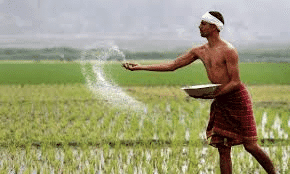 Adding manures & Fertilizers
Advantages of organic manures
- Organic manure improves soil texture and makes soil more porous, aiding the exchange of gases.
- It increases the water-holding capacity of soil and reduces erosion.
- It promotes growth of beneficial soil microbes and earthworms.
- It supplies a balanced range of nutrients and releases them slowly, reducing the risk of nutrient leaching.
Irrigation
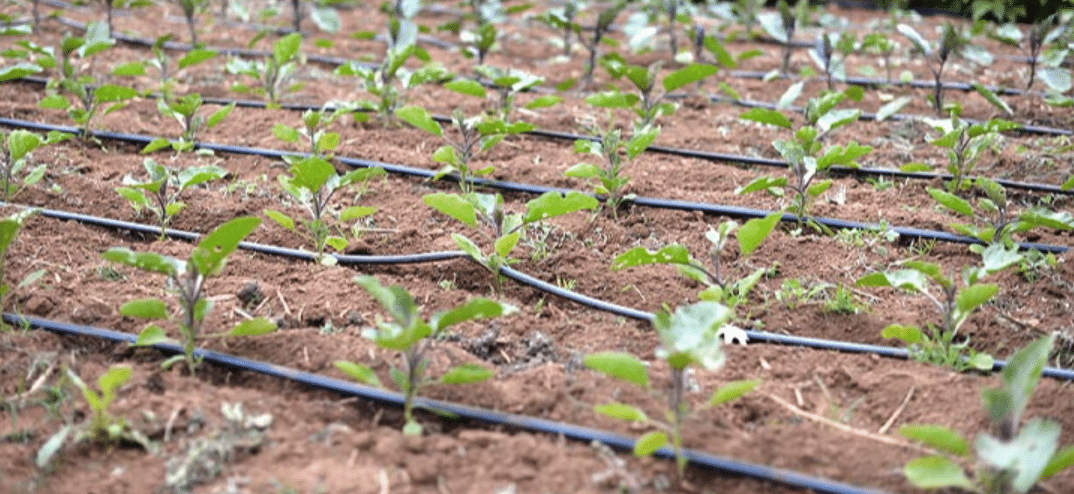
Irrigation is the artificial supply of water to crops at required intervals. The timing and frequency depend on crop, soil type and season.
- Water helps maintain soil moisture, supports plant growth and protects crops from frost and hot air currents.
- Sources of irrigation: wells, tube wells, ponds, lakes, rivers, dams and canals.
- Traditional methods: Cheaper but generally less efficient. Examples include: moat (pulley) systems, chain pumps, dhekli and rahat (lever system).
- Modern methods: Economical in water use and more efficient. Main methods are sprinkler system and drip irrigation.
Protection from Weeds
Undesirable plants that grow along with crops are called weeds. Weeds compete with crops for water, nutrients, space and light and therefore reduce crop yield.
- The removal of weeds is called weeding. The best time for removal is before flowering and seed formation.
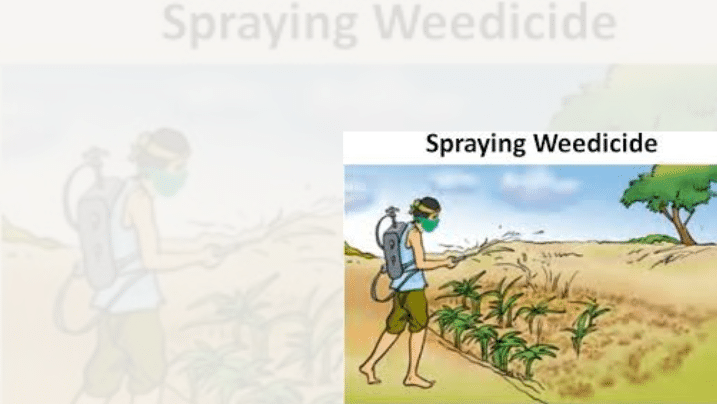
- Weeds can be removed manually, mechanically or chemically.
- Weedicides are chemicals used to kill weeds. An example is 2,4-D. Weedicides are diluted in water and sprayed with a sprayer; they are formulated to kill weeds without harming the crop when used as directed.
Harvesting and Post-harvest Operations
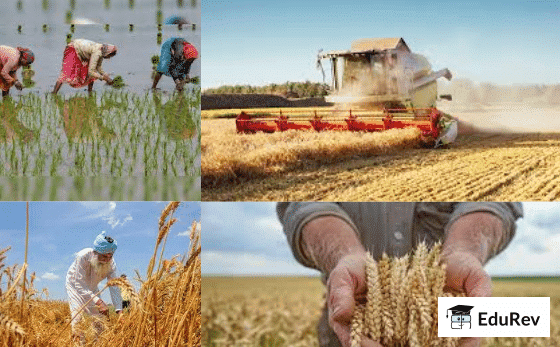
- Harvesting is cutting or gathering the crop once it is mature. It may be done manually with a sickle or by machines such as a harvester.
- Threshing separates the grain from the chaff. Modern farms use a combine-a machine that both harvests and threshes in a single operation.
- Small farmers often use winnowing to separate grain from chaff by taking advantage of wind or by fanning.
Storage
Proper storage is necessary to protect harvested produce from pests, fungi, bacteria and moisture.
- Grains are dried in the sun to reduce moisture and then stored in jute bags, metallic bins or specially constructed silos and granaries.
- Dried neem leaves are traditionally used at home to protect stored grains from insect pests.
- Large godowns require controlled conditions and sometimes chemical treatments or fumigation to prevent attack by insects and rodents.
Animal Husbandry
- Animal husbandry is the care, breeding and management of farm animals to obtain products such as milk, meat, eggs and wool, and to provide draft power.
- Proper feeding, shelter, healthcare and breeding practices are important to maintain healthy livestock and obtain good yields.
- Fish and fish products are important components of a nutritious diet. For example, cod liver oil (from fish) is a rich source of vitamin D.
FAQs on NCERT Summary: Crop Production & Management
| 1. क्या फसल उत्पादन के लिए आवश्यक मुख्य संसाधन कौन-कौन से हैं? |  |
| 2. फसल चक्रीकरण क्या है और इसका महत्व क्या है? | |
| 3. खाद का उपयोग फसल उत्पादन में कैसे किया जाता है? | |
| 4. सिंचाई के विभिन्न तरीकों के बारे में बताएं। | |
| 5. फसल उत्पादन में कीटनाशकों का उपयोग कैसे किया जाता है? | |





