NCERT Summary: Coal & Petroleum


Introduction
Human activities impact essential resources like air, water, and soil. Natural resources are broadly classified into two categories based on their availability:Inexhaustible Natural Resources: These exist in abundant supply in nature and are unlikely to be depleted by human use. Examples include sunlight and air.
Exhaustible Natural Resources: These are limited in quantity and can be exhausted through human activities. Examples include forests, wildlife, minerals, coal, petroleum, and natural gas.
Understanding the distinction between these resource types is crucial for sustainable management and conservation.
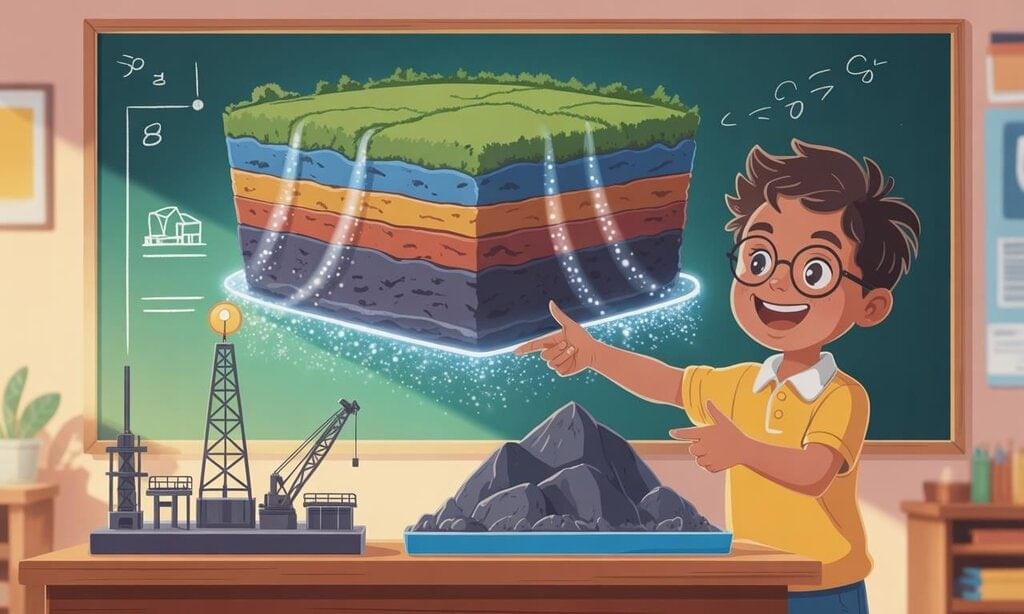 Natural Resources
Coal and Petroleum
- Coal and petroleum are created from the decay of ancient plant life that existed millions of years ago.
- These plants grew, died, and fell to the ground, often in swampy areas.
- Over time, new plants grew, and natural events like flooding buried these forests under soil.
- With time, heat and pressure from geological processes changed these materials into coal.
- Because they come from the remains of ancient organisms, they are called fossil fuels.
- Coal is used for cooking and was historically essential for powering steam engines in trains.
- It is also processed in industries to produce valuable products such as coke, coal tar, and coal gas.
How Is Coal Formed?
The formation of coal began around 300 million years ago when the earth was covered with vast, moist forests filled with large trees, shrubs, and ferns.
- These plants lived, died, and fell into swampy areas. Due to natural events like flooding, these forests became buried under layers of soil.
- As more soil piled on top, they were compressed, and the temperature increased as they sank deeper.
- Under the combined effects of high pressure and temperature, the dead plants gradually transformed into coal.
- This slow change of dead vegetation into coal is known as carbonisation.
- Since coal comes from plant remains, it is also referred to as a fossil fuel.
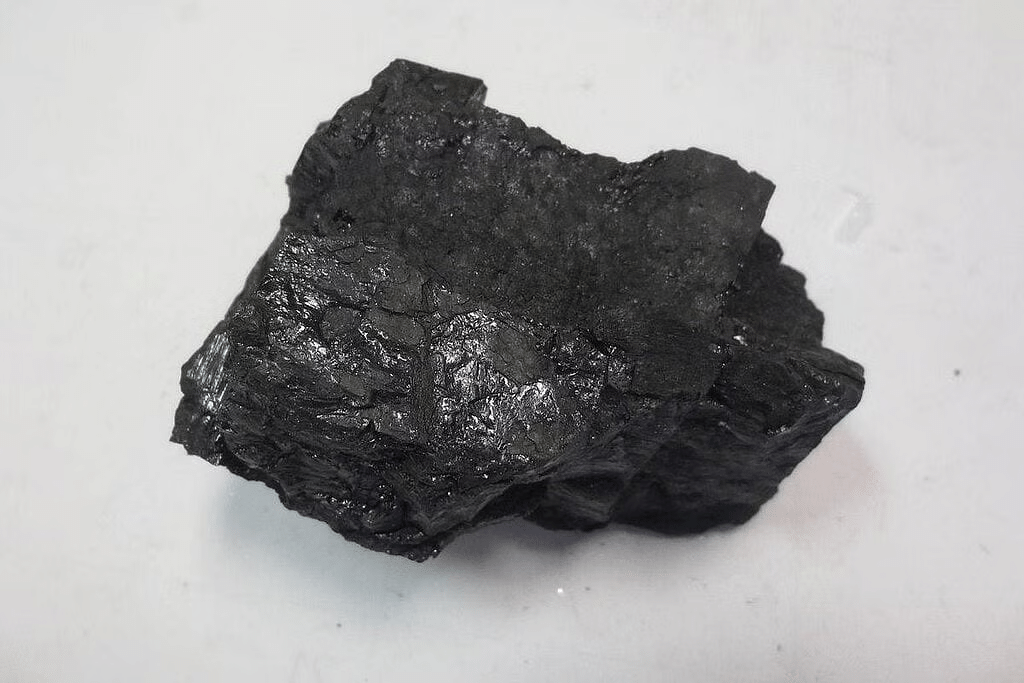 Coal
Coal
- This process created a thick layer of decomposed material.
- As heat and pressure changed the composition, oxygen was removed, leaving behind a carbon-rich substance, leading to the formation of coal.
Types Of Coal
Coal is a readily combustible rock containing more than 50% by weight of carbon. When burned in air, coal produces mainly carbon dioxide. In industry, coal is processed to create useful products like coke, coal tar, and coal gas.
Coke
Coke is a strong, porous, black substance. It is nearly pure carbon. Coke is essential in making steel and extracting various metals.
Coal Tar
Coal tar is a thick, black liquid with a strong smell. It contains around 200 different substances. It is used to create many everyday products, including:
- synthetic dyes
- drugs
- explosives
- perfumes
- plastics
- paints
- roofing materials
- photographic materials
- Naphthalene balls, used to repel moths, also come from coal tar.
Coal Gas
Coal gas is produced during the making of coke from coal. It serves as a fuel for many industries near coal processing plants.
Petroleum
Petroleum is a fossil fuel, a dark, oily liquid found deep underground, used to produce fuels like petrol, diesel, and kerosene.
- Petroleum is formed from the remains of ancient marine organisms like plankton, algae, and other microorganisms that lived millions of years ago.
- Over time, these remains were covered by layers of mud, sand, and other sediments.
- As layers built up, the remains were subjected to high pressure and temperature deep within the Earth.
- Over millions of years, the organic matter transformed into hydrocarbons, forming petroleum due to the absence of oxygen.
- It is found in sedimentary rock layers, often in oil fields under the Earth's surface or beneath the ocean floor.
- Petroleum is extracted by drilling wells into these reservoirs and is then refined to produce various products.
 Petroleum
Refining petroleum thus obtained yields many useful products. Let's have a look at them.
Products of Petroleum
Petroleum products are created through the refining of crude oil in oil refineries. Many valuable substances are derived from petroleum and natural gas, collectively known as petrochemicals. These petrochemicals are essential in making items such as detergents, fibres (like polyester, nylon, and acrylic), polythene, and other synthetic plastics. Because of its significant economic value, petroleum is often referred to as 'black gold'. Below are some products obtained from petroleum:
- Gasoline
- Diesel oil
- Kerosene
- Tar
- Heavy fuel oil
- Petroleum coke
- Lubricants
- Special Naphthas
- Paraffin wax
Uses of Petroleum
Petroleum is one of the most important and widely used fuels in today's time. Some of its advantages are:
- Petrol and diesel serve as fuels for transportation.
- Diesel powers turbines for generating electricity in large industries.
- Kerosene is used for domestic purposes at home.
- Many useful materials are derived from petroleum and natural gas, known as 'Petrochemicals'. These are used to make detergents, fibres (like polyester, nylon, and acrylic), polythene, and various plastics.
- Hydrogen gas from natural gas is essential for producing fertilisers (like urea).
- Petroleum is often called 'black gold' due to its significant commercial value.
- Specific applications include motor fuel, aviation fuel, and solvents for dry cleaning.
 Petroleum Applications
Natural Gas
- Natural gas is an important fossil fuel because it can be easily transported through pipelines.
- It is stored under high pressure as Compressed Natural Gas (CNG).
- CNG is used for direct burning in homes and factories via pipeline networks (for example, in Vadodara and Delhi).
- Natural gas is also a key ingredient in the production of various chemicals and fertilizers.
- In India, natural gas is found in places like Tripura, Rajasthan, Maharashtra, and the Krishna Godavari delta.
- Natural gas is viewed as a cleaner fuel than other fossil fuels.
- Petrochemicals made from natural gas are used to create detergents, fibres, plastics, and other products.
- Natural gas was formed from sea-dwelling organisms. When these organisms died, their remains settled on the sea floor and were covered by layers of sand and clay. Over millions of years, the lack of air, along with high temperature and pressure, transformed them into petroleum and natural gas.
 LPG
LPG
Key Points
- Inexhaustible natural resources like sunlight and air are abundant and won't deplete soon.
- Exhaustible natural resources like coal and petroleum are limited and take a long time to replenish.
- Coal and petroleum are formed from the degradation of ancient plant life millions of years ago.
- Coal forms from plant matter accumulating in swamps, undergoing physical and chemical changes over time.
- Types of coal include lignite, bituminous, and anthracite, varying by carbon content.
- Petroleum is a liquid fossil fuel formed from decomposed organic matter beneath the Earth's surface.
- Crude oil is the natural form of petroleum, varying in color and viscosity.
- Refining petroleum produces many useful products such as petrol, kerosene, and diesel oil.
- By-products of petroleum can produce over 6000 new products, including fertilizers, perfumes, and soaps.
- Gasoline, diesel oil, kerosene, and tar are some products obtained from refining petroleum.
- Petroleum coke, lubricants, and paraffin wax are other products derived from petroleum.
- Aviation gasoline is a specialized fuel obtained from petroleum refining.
- Petroleum is crucial for transportation, powering turbines, and producing electricity.
- Oils from petroleum are used to lubricate high-end machines in various industries.
- Chemical industries use petroleum to produce plastic, dyes, paints, synthetic rubber, and more.
FAQs on NCERT Summary: Coal & Petroleum
| 1. What are the main types of coal? |  |
| 2. How is petroleum formed? | |
| 3. What are the major products derived from petroleum? | |
| 4. What are the primary uses of natural gas? | |
| 5. Why is coal considered an important energy resource? | |