Fund Transfer Services - NEFT, RTGS, IMPS, AEPS & MTSS


Core Banking Services (CBS)
Core Banking Services (CBS) is the centralised processing of customer account information and related database operations over electronic media. Under CBS, customer account data and transaction processing are stored and managed on a central server (data centre) rather than separately at each branch. CBS enables customers to access their accounts and carry out banking transactions from any branch of the same bank or through digital channels. The Reserve Bank of India (RBI) directed banks to implement CBS to improve efficiency, availability and standardisation of banking services.
1.
NEFT
- National Electronic Fund Transfer
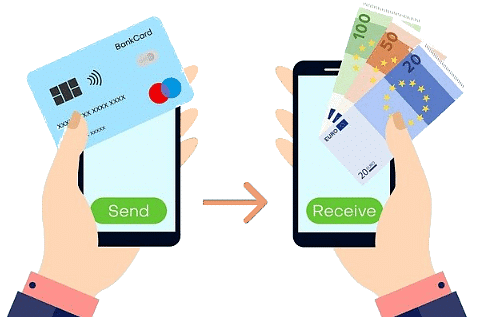
Definition and purpose: NEFT is a nation-wide electronic fund-transfer system that enables one-to-one transfers from any bank account to another bank account in India by electronic means. It is primarily used for transferring small to medium value payments where immediate real-time transfer is not necessary.
- NEFT operates on a deferred net settlement basis where transactions are processed in settlement batches.
- From 10 July 2017, NEFT settlements were run in half-hourly batches from 8:00 AM to 7:00 PM on working days (except 2nd and 4th Saturdays). Banks and customers should note the prevailing RBI timetable and bank notifications for any subsequent changes.
- NEFT is available to account-holders of NEFT-enabled branches and, in certain cases, to non-account holders subject to bank rules and RBI limits.
- NEFT can be used for inward remittances from specified foreign schemes where authorised; banks may permit remittances under arrangements such as the Indo-Nepal facility subject to limits set by RBI.
- Banks may levy service charges or processing fees for NEFT transactions as per their schedule of charges.
- To send funds using NEFT, the remitter must provide beneficiary bank details including beneficiary name, account number and IFSC (Indian Financial System Code) of the beneficiary branch.
Key facts:
- There is no statutory minimum or maximum amount prescribed for NEFT transactions in the input facts; banks may set operational limits for customers and non-account transfers where applicable.
- For non-account holders or special remittance schemes mentioned, RBI had set an upper limit of Rs.50,000 per transaction as per the provided information.
- NEFT requires beneficiary bank branch to be NEFT-enabled.
Typical process for sending funds by NEFT
- Remitter logs into bank branch, internet banking or mobile banking and selects NEFT payment option.
- Remitter enters beneficiary name, beneficiary account number and IFSC code, and the amount to be transferred.
- Bank validates details and places the transaction in the next NEFT settlement batch.
- NEFT clearing processes the batch and forwards transactions to the destination banks for credit to beneficiary accounts.
- Beneficiary bank credits the account and updates the remitter/beneficiary with remittance status.
2.
RTGS
- Real Time Gross Settlement
Definition and purpose: RTGS provides individual, real-time and gross settlement of funds between banks. Each transaction is settled individually and immediately without netting, making RTGS suitable for large-value and time-sensitive payments.
- Instruction processing and settlement occur in real time for each transaction; there are no batch settlements for the transactions themselves.
- RTGS is intended for transfers where immediate credit is required and is typically used for high-value transactions.
- As per the provided information, RBI sets a minimum amount for RTGS transactions at Rs.2 lakh.
- RTGS service is available only to account holders at banks that are RTGS-enabled; there is no provision for non-account holders to use RTGS.
- Customer-facing timing noted in the input: transfers can be made between 7:00 AM and 6:00 PM (timing changed from 26 August 2019 as provided). Customers should check bank notices for further timing extensions or 24x7 availability as applicable.
- Charges stated in the provided facts: for transactions between Rs.2 lakh and Rs.5 lakh banks may charge Rs.25 plus an application time charge of Rs.5 (total Rs.30) per transaction; for transactions above Rs.5 lakh banks may charge Rs.50 plus the application time charge.
Typical process for sending funds by RTGS
- Remitter requests RTGS transfer at branch or via electronic channel, providing beneficiary account number and IFSC.
- Bank verifies details and forwards the instruction to the RTGS system.
- RTGS settles the amount on a gross, real-time basis to the beneficiary bank, and beneficiary bank credits the account immediately.
- Confirmation or transaction reference is provided to remitter for tracking.
3.
IMPS
- Immediate Payment Service
Definition and purpose: IMPS is an instant interbank electronic fund transfer service that enables immediate credit to beneficiary accounts using mobile phones or other electronic channels. IMPS provides 24×7 availability (including bank holidays and Sundays) as an instant payment facility.
- IMPS transactions are processed instantly and do not require settlement batches.
- The service is available 24×7 for interbank transfers as per the provided information.
- Customers must register for IMPS with their bank before using MMID/MPIN credentials if the bank requires such registration.
- On registration the bank may provide MMID (Mobile Money Identifier) and MPIN (Mobile Personal Identification Number) for mobile-based transfers if that addressing method is used.
- As per the facts in the input, the minimum and maximum transaction amounts for IMPS are Rs.1 and Rs.2,00,000 respectively.
Ways to address an IMPS transfer (operational notes)
- Banks may enable IMPS via MMID + mobile number, or via account number + IFSC depending on their platform and customer preference. Customers should check their bank's IMPS instructions for supported addressing modes.
- For security, customers must safeguard their MPIN and other credentials and follow bank guidance for changing MPINs periodically.
4.
AEPS
- Aadhaar Enabled Payment System
Definition and purpose: AEPS allows basic banking transactions to be conducted using an individual's Aadhaar number and biometric authentication linked to a bank account. It is designed to improve financial inclusion by enabling transactions through Business Correspondents (BCs) and micro-service points.
- Customers must link their Aadhaar number to their bank account and the bank must be AEPS-enabled to use these services.
- Services available through AEPS include cash withdrawal, cash deposit, balance enquiry and inter-bank fund transfer using Aadhaar authentication.
- Transactions are typically conducted at BC outlets or AEPS-enabled service centres where biometric devices are available for authentication.
- As per the input facts, the maximum amount per account per day through AEPS is Rs.50,000, subject to bank operational limits and RBI guidelines.
- AEPS transactions require secure biometric authentication (fingerprint) and follow the authentication protocols set by UIDAI and participating banks.
5.
MTSS
- Money Transfer Service Scheme
Definition and purpose: MTSS is a facility for inward remittances from authorised foreign money transfer operators (MTOs) to beneficiaries in India. It is designed for faster credit of personal remittances from abroad into India through participating banks.
- Under MTSS only inward remittances into India are permitted; outward remittances under MTSS are not allowed.
- As provided in the input, a maximum of Rs.50,000 can be remitted inward per transaction (or by value as specified) and a maximum of 30 transactions per calendar year is permitted under the scheme per beneficiary as per the provided facts. Customers must check the latest RBI directions and bank rules for any updates.
- Participating banks act as agents to receive remittances from authorised MTOs and credit beneficiary accounts in India.
6.
Nepal Remittance Scheme
Definition and purpose: The Nepal Remittance Scheme is a one-way cross-border remittance facility enabling transfers from India to Nepal under an authorised arrangement. It facilitates remittance to beneficiaries in Nepal through participating banks and remittance operators.
- Under the scheme, remittances from India to Nepal are permitted up to specified limits; as provided in the input, the maximum amount remittance is INR 50,000 per transaction and beneficiaries receive funds in Nepalese rupees.
- Participating banks convert and remit funds to Nepal through the authorised settlement mechanism; customers must provide accurate beneficiary details and comply with documentation and compliance requirements.
Comparative points: NEFT, RTGS, IMPS, AEPS, MTSS
- Timing and speed: RTGS is real-time gross settlement for high-value transfers; IMPS is instant and available 24×7 for low-to-medium value transfers; NEFT works on settlement batches (half-hourly as provided) and is used for general transfers; AEPS depends on authentication at BCs and is near-instant for the customer; MTSS is for inward foreign remittances and follows the settlement process agreed with MTOs and banks.
- Typical use cases: RTGS for large immediate payments, IMPS for instant small payments and peer-to-peer mobile transfers, NEFT for routine interbank transfers, AEPS for basic financial services using Aadhaar in remote locations, MTSS for inward remittances from abroad.
- Minimum / Maximum: RTGS has a minimum threshold (Rs.2 lakh in the given facts); IMPS maximum in the input is Rs.2,00,000; AEPS daily maximum given is Rs.50,000; NEFT was noted to have no statutory minimum/maximum in the input but special schemes show Rs.50,000 limits for certain non-account or cross-border remittances.
- Eligibility: NEFT and RTGS typically require account holders at enabled branches; IMPS requires registration and credentials; AEPS requires Aadhaar linking and biometric authentication; MTSS is for beneficiaries receiving inward foreign remittances.
Practical notes for customers
- Always verify beneficiary details (name, account number, IFSC) before initiating any fund transfer; incorrect details can delay credit or require returns.
- Keep transaction reference numbers and bank confirmations for tracking and dispute resolution.
- Check your bank's applicable charges and limits for each mode before initiating a transfer.
- For services requiring authentication (AEPS biometric, IMPS MPIN), protect your credentials and follow bank security advisories.
- Be aware of RBI and bank circulars for any changes in operating hours, limits or charges; banks publish updated schedules of charges and operational timings.
End-to-End Example (NEFT)
- Remitter wants to transfer Rs.15,000 to a beneficiary. The remitter logs into internet banking, chooses NEFT, enters beneficiary name, account number and IFSC, and authorises the payment.
- The bank validates the instruction and places it in the next NEFT settlement batch.
- When the batch is settled, the funds are routed to the beneficiary's bank, which credits the beneficiary account and updates the transaction status.
- The remitter receives a confirmation and a transaction reference number to track the payment.
The choice of fund-transfer service depends on the urgency, transaction value, availability of electronic credentials and the channels supported by the remitter's and beneficiary's banks. NEFT suits routine transfers, RTGS is preferred for large time-sensitive payments, IMPS provides instant 24×7 transfers for small and medium amounts, AEPS enables Aadhaar-based banking transactions at BCs, and MTSS is used for inward remittances from abroad. Customers should follow bank requirements for registration and documentation, verify beneficiary details, and observe prescribed limits and charges.
FAQs on Fund Transfer Services - NEFT, RTGS, IMPS, AEPS & MTSS
| 1. What is NEFT and how does it operate? |  |
| 2. What are the key features of RTGS? | |
| 3. How does IMPS differ from NEFT and RTGS? | |
| 4. What is AEPS and what role does it play in fund transfers? | |
| 5. What is MTSS and how is it utilised for fund transfers? | |