Credit Control Methods - Reserve Bank of India (RBI)

RBI's Credit Control Methods
The Reserve Bank of India (RBI), as the central bank, controls the quantity, composition and direction of credit created by the banking system in order to achieve macro-economic objectives such as price stability, economic growth and a stable external position. The tools used by the RBI are broadly classified into quantitative (general) methods, which influence the overall volume of credit; and qualitative (selective) methods, which direct credit for particular purposes or sectors.
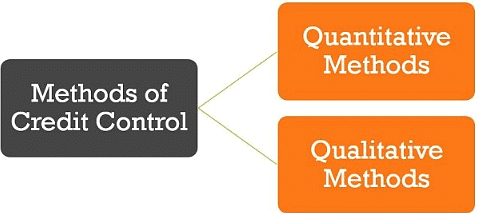
Quantitative Methods
Quantitative methods alter the aggregate supply of money and credit in the economy. They affect all borrowers and lenders generally and are used to control inflationary or deflationary pressures. Major quantitative instruments are listed below with their objectives and working.
- Bank Rate: The bank rate is the rate at which the central bank lends to commercial banks or discounts/rediscounts eligible paper. An increase in the bank rate makes bank borrowing costlier and tends to reduce the supply of bank credit, thereby checking inflation; a reduction in the bank rate has the opposite effect.
- Open Market Operations (OMO): OMOs are purchases and sales of government securities in the open market by the RBI. When the RBI sells government securities, it absorbs liquidity (cash) from the banking system, reducing available credit and helping to check inflation. When the RBI buys securities, it injects liquidity into the banking system, expanding credit availability and countering deflationary pressures.
- Reserve Requirements (Variable Reserve Ratio): Commercial banks are required to keep a portion of their deposits as reserves with the RBI or in specified liquid assets. Two commonly used reserve instruments are:
- Cash Reserve Ratio (CRR): The percentage of a bank's net demand and time liabilities that must be kept as cash with the RBI. Raising the CRR drains liquidity from banks and reduces their ability to lend; lowering the CRR releases liquidity to encourage lending.
- Statutory Liquidity Ratio (SLR): The percentage of net demand and time liabilities that banks must maintain in specified liquid assets such as government securities, cash and gold. Increasing the SLR reduces funds available for commercial lending; decreasing it increases lending capacity.
- Repo and Reverse Repo Operations: Under the repo mechanism, banks borrow funds from the RBI against approved government securities by selling them to the RBI and agreeing to repurchase them at a later date at a predetermined rate (the repo rate). Under reverse repo, banks deposit surplus funds with the RBI and earn the reverse repo rate. Raising the repo rate makes borrowing costlier for banks and restrains credit expansion; lowering it eases liquidity. Reverse repo helps absorb excess liquidity.
- Marginal Standing Facility (MSF): The MSF allows banks to borrow overnight funds from the RBI at a rate higher than the repo rate, against approved government securities, as an emergency window. MSF is a signalling and liquidity management tool.
Example of quantitative action: During an inflationary period the RBI may raise the bank rate, increase the CRR/SLR, sell government securities through OMOs and increase the repo rate. All these measures together lower the liquidity available with banks and reduce the growth of credit and demand in the economy.
Qualitative (Selective) Methods
Qualitative methods are aimed at influencing the allocation and direction of credit rather than its overall volume. These are also called selective credit control methods because they target specific sectors, uses or borrowers.
- Fixation of Margin: When banks lend against securities or commodities, they require a margin - the difference between the market value of the security and the loan amount. The RBI can instruct banks to increase margins for certain types of lending, thereby reducing the loan amount that can be sanctioned against a given security. Increasing margins discourages speculative borrowing; reducing margins encourages lending.
- Regulation of Consumer Credit: The central bank can regulate hire-purchase, instalment credit and other forms of consumer finance by prescribing prudential norms, tightening eligibility or imposing restrictions on tenor and quantum. Such measures help curb excessive consumer demand during inflation or support consumer credit during slowdown.
- Direct Action: If a bank follows unsound practices or violates RBI directions, the central bank may take direct action. This can include issuing warnings, directing reductions in credit for certain sectors, restricting branch expansion, or limiting the bank's lending operations until corrective actions are taken. Direct action is a supervisory and corrective tool.
- Rationing of Credit: The RBI may regulate the purposes for which credit is granted or impose ceilings on certain categories. Two techniques under this are:
- Variable Portfolio Ceilings: A ceiling on the maximum amount of loans and advances that a bank may extend for particular sectors or purposes. This limits credit flow into overheated or speculative sectors.
- Variable Capital-Assets Ratio: The RBI may require banks to maintain a certain ratio between their capital and total assets (or risk-weighted assets). By changing this ratio, the RBI influences banks' capacity to expand their asset base and, therefore, the volume of credit they can create.
- Credit Authorisations and Directives: The RBI can issue guidelines limiting advances for speculative activities (for example, trade in certain commodities or speculative stock market exposures) and encourage lending to priority sectors such as agriculture, small industry or exports by varying prudential norms and special refinance facilities.
Moral Suasion
Moral suasion is a persuasive, non-binding technique used by the RBI to influence the behaviour of banks and financial institutions. The RBI uses meetings, letters, public statements, circulars and recommendations to persuade banks to follow its policy stance - for example, to restrain lending in booming sectors or to expand credit to priority sectors. Moral suasion relies on the RBI's moral authority and the desire of banks to maintain good standing with the central bank.
Comparison and Practical Use
- Quantitative tools (bank rate, OMOs, CRR, SLR, repo/reverse repo, MSF) are broad instruments used to control overall liquidity and inflation/deflation. Their impact is economy-wide.
- Qualitative tools (margin requirements, consumer credit regulation, direct action, rationing) are targeted measures used to direct credit to or away from specific sectors or activities.
- In practice, the RBI uses a mix of both types depending on macro-economic conditions; for instance, during demand-driven inflation a combination of higher policy rates, higher reserve requirements and selective curbs on speculative credit may be used.
Applications and Implications for Banks and Borrowers
- Banks must maintain prudential norms such as CRR and SLR and follow RBI directives on lending practices; changes in these norms immediately affect banks' lending capacity and cost of funds.
- Borrowers face higher or lower borrowing costs depending on policy rates (repo/bank rate) and availability of credit determined by OMOs and reserve requirements.
- Selective measures can shift credit away from speculative activity into priority sectors like agriculture, micro, small and medium enterprises (MSMEs), housing and exports, which has distributional and developmental consequences.
Overall, the RBI's credit control methods constitute a toolkit for macro-economic management. Understanding these instruments helps explain changes in interest rates, credit growth, liquidity conditions and sectoral credit flow in the economy.