Cash Management Services (CMS)


Introduction
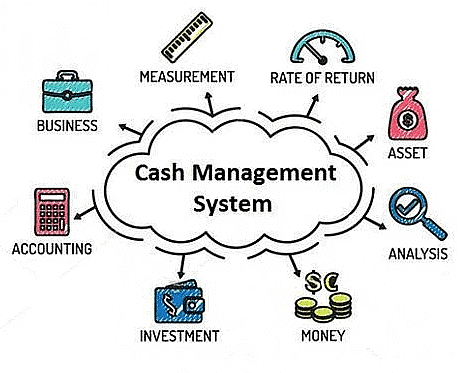
Cash Management Services (CMS) are a set of banking products and operational arrangements that help organisations manage their cash flows efficiently. At its core, CMS covers the processes of collecting receivables, concentrating funds, and disbursing payments so that an organisation's cash balances are optimised, liquidity is improved and operational risks are reduced.
- Leading banks such as ICICI, Bank of India, HDFC and Union Bank of India provide CMS offerings tailored to corporate, government and large retail customers.
- Modern CMS relies on advanced technology, secure networks and a customised Management Information System (MIS) to provide timely information, reporting and controls.
- CMS focuses on three broad areas: cash flows into the system (collections), cash flows within the system (concentration and pooling), and cash flows out of the system (disbursements and payments). It also covers short-term investment of surplus cash.
Why CMS is Needed
- Uncertain cash flows: Sales and receipts may be unpredictable; CMS helps smooth liquidity timing mismatches.
- Complex clearing systems: Collections from multiple locations and instruments need central coordination for faster realisation.
- Preventing cash-related delays: Automated collection and concentration reduce delays due to manual handling.
- Invoice and cheque management: Timely collection of invoices, house cheques and post-dated cheques requires structured processes.
- Cost and risk reduction: Centralised handling reduces logistics, cash in transit risk and reconciliation effort.
Benefits of CMS
- Risk reduction: Less physical movement of cash and improved reconciliation reduce fraud and loss.
- Collections at source: Funds can be captured at the point of origin, reducing float and accelerating availability.
- Faster fund transfers: Technology enables quick routing of funds to the desired location or central account.
- Low transaction costs: Banks typically charge nominal fees/commissions versus the operational cost of manual handling.
- Optimised fund usage: Centralisation allows surplus cash to be invested or used for debt reduction.
- Improved liquidity: Better visibility and control over cash improves working capital management.
- Single account structure: Centralised accounts and pooling reduce the need for multiple operating accounts at many locations.
- Logistics support: Cash pickup and courier services simplify collections across dispersed locations.
- Timely execution: Payment and collection requests are executed promptly with electronic and automated processes.
- Controlled disbursements: Scheduled and authorised disbursements reduce overspending and timing errors.
- Exposure monitoring: MIS and reporting enable monitoring of receivables, payables and intraday positions.
Products and Services under CMS
Collection Products
Banks provide a range of collection services supported by field operations and technology to capture receivables quickly and reliably.
- Local Cheque Collection (LCC): Bank arranges pickup of cheques from the customer's premises instead of the customer visiting the branch.
- Upcountry Cheque Collection (UCC): Cheques from distant locations are picked up periodically, often using courier services and routed to a clearing centre.
- Magnetic Ink Character Recognition (MICR): MICR-enabled processing accelerates cheque clearing through automated recognition and routing.
- Utility Bill Collection Services: Regular bill payments (electricity, water, telecom) are collected and remitted through centralised processes.
- Centralised debit/credit of cheques and mandate processing for recurring receipts.
- Cash pickup and delivery: Bank arranges physical collection or delivery of cash at customer locations with security and reconciliation.
- Electronic collections: Collections through electronic modes such as payment gateways, direct credit, NEFT/RTGS credit instructions and bank APIs.
- Capital Market Collections: Receipts and payments related to capital market transactions are handled under specialised collection services.
- Bulk collection: Large-scale collection from many locations (for example, 300 sites) consolidated using the CMS module.
- Virtual account: A remitter is given a virtual account or reference number so the beneficiary can decode the source without exposing the actual account number; this simplifies reconciliation.
Payment Products
Disbursement solutions enable controlled and timely outward payments by combining electronic and cheque-based methods.
- NEFT/RTGS: Electronic fund transfer systems that provide faster realisation and reduced fraud risk for high-value and retail payments.
- ECS (Electronic Clearing Service): Used for bulk recurring payments or collections such as dividends, interest payments, salaries and utility bills.
- Processing of customer cheques for payments and payroll disbursements.
- Payable-at-par and locally payable cheques: Cheques that are cleared without additional charges at specified centres.
- Physical disbursement of cash where required, with proper controls and documentation.
- Cheque writing and multicity cheques: Banks can print and supply multicity and bulk cheques either at bank premises or at the customer's location to meet payment needs.
How CMS Works: Process and Components
The CMS process typically involves three linked stages-collection, concentration (or pooling) and disbursement-supported by information flows and controls.
Collection
- Receipts (cheques, cash, electronic credits, mandates) are collected from branches, field collection teams or through electronic channels.
- Collections use services such as LCC, UCC, MICR processing, virtual accounts and electronic gateways to accelerate realisation.
- Collected funds are credited to local or intermediary accounts and recorded in the bank MIS for reconciliation.
Concentration and Pooling
- Funds from multiple collection points are consolidated into a central account using physical transfers or electronic sweeps.
- Common pooling arrangements include zero balance accounts (ZBA), physical pooling and notional pooling (where permissible by law and bank policy).
- Concentration enables central treasury to manage liquidity, fund inter-company needs, and invest surplus cash.
Disbursement
- Payments are made from central or authorised accounts via NEFT/RTGS, ECS, multicity cheques or direct debit arrangements.
- Disbursements are scheduled, authorised and controlled through the bank's CMS portal and MIS to prevent unauthorised outflows.
- Bank provides reconciliation statements, exception reports and confirmations for payments executed.
Common Account Structures and Arrangements
- Zero Balance Account (ZBA): Operative accounts at branches that maintain zero balance; funds are swept to/create from a master account to meet payments.
- Concentration Account: A central account where funds from multiple collection accounts are pooled periodically.
- Notional Pooling: A book-keeping arrangement (where permitted) that nets credit and debit positions of group accounts without physical transfers.
- Virtual Accounts: Sub-accounting or reference numbers that simplify reconciliation while retaining a single physical account for clearing.
Technology, Reporting and Controls
- Management Information System (MIS): Provides end-of-day and intraday reports on collections, concentration, balances, and exceptions for treasury and operations teams.
- APIs and Online Portals: Banks provide APIs and web portals for real-time transaction initiation, reporting and reconciliation.
- MICR and Cheque Imaging: Automation technologies speed clearing and reduce manual intervention.
- Security and Authorisation Controls: Multi-level approvals, dual controls, audit trails and restricted access protect against fraud.
- Reconciliation Tools: Automated matching using virtual account numbers, reference codes and clearing information reduces manual effort.
Risks, Controls and Compliance
- Operational risk: Errors in postings, misrouted funds or reconciliation mismatches-mitigated by automated systems and reconciliation processes.
- Fraud risk: Reduced by minimising cash handling, using secure pickups, cheque verification (MICR) and strong authorisation policies.
- Credit and settlement risk: Banks and customers must manage counterparty exposures and settlement timing.
- Regulatory compliance: CMS operations must comply with central bank guidelines on clearing, settlements, KYC/AML and cross-border transfers.
- Audit and controls: Regular internal and external audits, exception reporting and reconciliations strengthen governance.
Charges and Pricing
- Banks normally charge fees for pickup, collection, concentration, reporting, and electronic transactions; pricing depends on volume, value and service levels.
- Fee structures include per-item charges (for cheques/transactions), fixed monthly fees for MIS and setup charges for account structuring.
- Customers should evaluate total cost savings from reduced internal operations, faster float conversion and improved working capital before comparing fees.
Implementation Steps for a Customer
- Assess the organisation's collection and payment patterns, locations and peak periods.
- Design the CMS architecture: choice of accounts (ZBA, concentration), pick-up frequency, electronic channels and reconciliation logic.
- Integrate MIS, APIs and authorisation workflows between the customer ERP and bank systems.
- Pilot the solution at a subset of locations, refine processes and then roll out across the organisation.
- Establish SLAs, exception handling, escalation matrices and regular review mechanisms with the bank.
Applications and Use-cases (including Agriculture)
- Corporate treasury: Centralised liquidity management, short-term investments and intercompany funding.
- Retail collections: Franchises, retail chains and e-commerce businesses benefit from pick-up, virtual accounts and bulk collections.
- Government and utilities: Tax collections, bill collections and subsidy disbursements using ECS and central reconciliations.
- Agriculture sector: Aggregators, cooperatives and agricultural produce markets use CMS to collect payments from multiple mandi locations, channel subsidy flows, manage farmer payments and reconcile subsidies and loan disbursements efficiently.
- Financial institutions and capital markets: Handling subscriptions, dividend payments and client settlements using segmented CMS offerings.
Best Practices for Effective CMS
- Centralise decision-making and reporting while keeping local operations for physical collection where required.
- Use virtual accounts or reference numbers to simplify reconciliation by business unit or branch.
- Automate reconciliation and exceptions to reduce manual errors and speed up reporting.
- Review fee structures periodically and renegotiate based on volumes and service levels.
- Ensure robust authorisation and audit trails are in place to limit operational and fraud risk.
Adoption of effective cash management techniques, supported by technology and disciplined processes, is vital for the growth and operational efficiency of organisations and banks alike.