Contribution of Educational Skills and Values to Prevent Potential Conflicts Among People

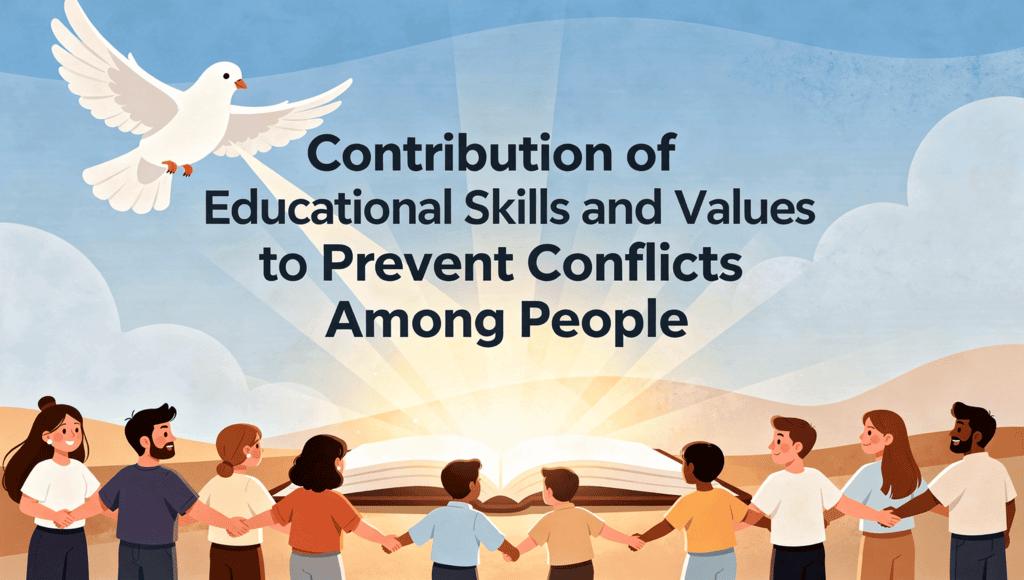
The continued relevance of Mahatma Gandhi's ideas in contemporary times is a powerful testimony to their enduring value. Even in the twenty-first century, Gandhi's philosophy continues to inspire reflection across the world. The principles and action programmes he envisioned for social transformation have not lost their significance. In an age where the world has become a global village, humanity increasingly faces challenges such as intolerance, extremism, and violent conflict. In this context, education emerges as a vital instrument for conflict prevention and the promotion of international peace, in harmony with Gandhi's vision of non-violence.
Education is not merely the transmission of knowledge; it is a moral and social process that shapes human character. It plays a crucial role in inculcating values such as national integration, international understanding, tolerance, and the spirit of world citizenship. These values form the foundation of peaceful coexistence among diverse societies. Through education, individuals learn to respect differences and reject prejudice, which are often the root causes of conflict.
At all levels, education must include programmes that encourage attitudinal and behavioural change against violence and terrorism. Education equips individuals with critical thinking, problem-solving skills, and the ability to engage in peaceful dialogue, enabling them to resolve disputes without aggression. By fostering empathy and rational thinking, education helps individuals resist extremist ideologies and misinformation.
Education also contributes significantly to the development of inner peace, which Gandhi regarded as essential for lasting social harmony. Inner peace nurtures virtues such as compassion, tolerance, and self-restraint. A balanced individual is less likely to engage in physical, social, or structural violence. Education further helps people understand the causes and consequences of violence, promoting peaceful and constructive solutions.
The horrors of the two World Wars revealed the limitations of material progress and highlighted the need for a humanistic approach to education. Gandhi strongly advocated education based on ethical values and non-violence, emphasizing that lasting peace can only be achieved through the transformation of human attitudes. Such education creates responsible individuals who act as agents of change in society.
In conclusion, educational skills and values play an indispensable role in preventing potential conflicts and fostering international peace. In line with Gandhi's vision, education promotes tolerance, moral strength, and global citizenship, thereby contributing to a peaceful world where conflicts are resolved through understanding and cooperation rather than violence.
FAQs on Contribution of Educational Skills and Values to Prevent Potential Conflicts Among People
| 1. How do educational skills contribute to conflict prevention among individuals? |  |
| 2. What role do values play in reducing interpersonal conflicts? | |
| 3. Can conflict resolution be taught through education? | |
| 4. What are some educational methods that promote conflict prevention? | |
| 5. How does cultural awareness in education contribute to preventing conflicts? | |