RBI's Action on the Economic Recovery of the Country in the Post pandemic Era

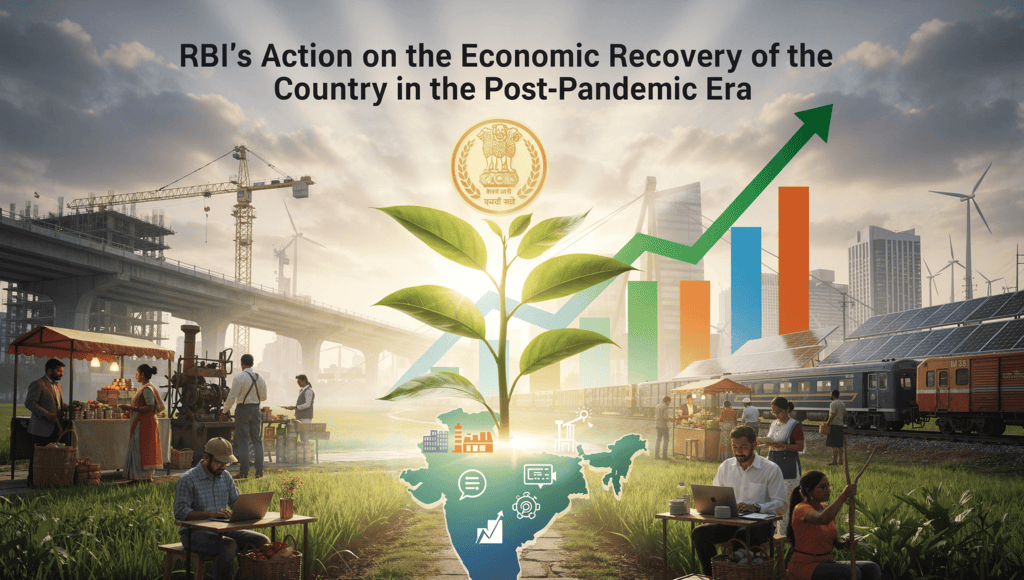
The Reserve Bank of India (RBI) has played a pivotal role in steering the Indian economy through the unprecedented disruption caused by the COVID-19 pandemic. Even as demand began to recover after the initial shock, the RBI consistently emphasized that continued policy support was essential to ensure a durable and inclusive recovery. The pandemic-induced slowdown disproportionately affected the poor and vulnerable sections of society, making sustainable and equitable growth a key priority in the post-pandemic phase.
To revive growth while maintaining stability, the RBI adopted an accommodative monetary policy stance aimed at supporting credit flow and boosting economic activity. Through measures such as repo rate cuts, liquidity infusion, and targeted long-term refinancing operations, the RBI ensured adequate liquidity in the financial system. These steps helped reduce borrowing costs, supported businesses and households, and strengthened confidence in the economy during a period of heightened uncertainty.
At the same time, the RBI underscored the importance of strong macroeconomic fundamentals for long-term recovery. It highlighted the need for medium-term investments, a stable financial system, and structural reforms to achieve sustained growth. In this context, emphasis was placed on channeling resources toward critical sectors such as education, innovation, healthcare, and physical and digital infrastructure, which are essential for enhancing productivity and resilience.
The RBI also recognized that monetary policy alone cannot ensure recovery. Coordinated fiscal policy support was necessary to complement RBI's actions. The implementation of sector-wide fiscal packages was seen as a means not only to revive demand but also to address existing income and wealth inequalities aggravated by the pandemic. While short-term disruptions to international trade were acknowledged, the focus on strengthening a self-reliant Indian economy was viewed as a strategic step toward long-term stability.
Further, measures such as expanding the Public Distribution System (PDS), extending employment guarantee schemes, providing Direct Benefit Transfers (DBT) to affected households, reducing input taxes for stressed industries, and increasing public investment were identified as crucial in restoring livelihoods and stimulating demand. The RBI consistently stressed that recovery would require clear policy intent, timely execution, and reforms in labour and product markets to enhance competitiveness and economic dynamism.
In conclusion, the RBI's actions in the post-pandemic era have been instrumental in stabilizing the economy and laying the foundation for recovery. Through proactive monetary measures, emphasis on macroeconomic stability, and advocacy for structural reforms and fiscal support, the RBI has contributed significantly to India's journey toward a resilient, inclusive, and sustainable economic recovery.
FAQs on RBI's Action on the Economic Recovery of the Country in the Post pandemic Era
| 1. What measures has the RBI taken to support economic recovery post-pandemic? |  |
| 2. How has the RBI's monetary policy influenced inflation control during the recovery phase? | |
| 3. What role does the RBI play in ensuring financial stability in the post-pandemic recovery? | |
| 4. How did the RBI address the challenges faced by specific sectors in the economy? | |
| 5. What is the significance of the RBI's communication strategy during the economic recovery phase? | |