Notes: Tools of Research

What are Research Tools?
Research tools are instruments, software, or methods used to collect, analyze, organize, and interpret data during a research process. They help researchers gather reliable information and draw valid conclusions.
- Research tools come in different forms and serve various purposes, such as databases, search engines, reference managers, and statistical software like SPSS, R, or programming languages like Python with its libraries.
- Each research tool has its own design, functionality, and complexity of features. Some tools may have advanced capabilities, while others are more straightforward and user-friendly.
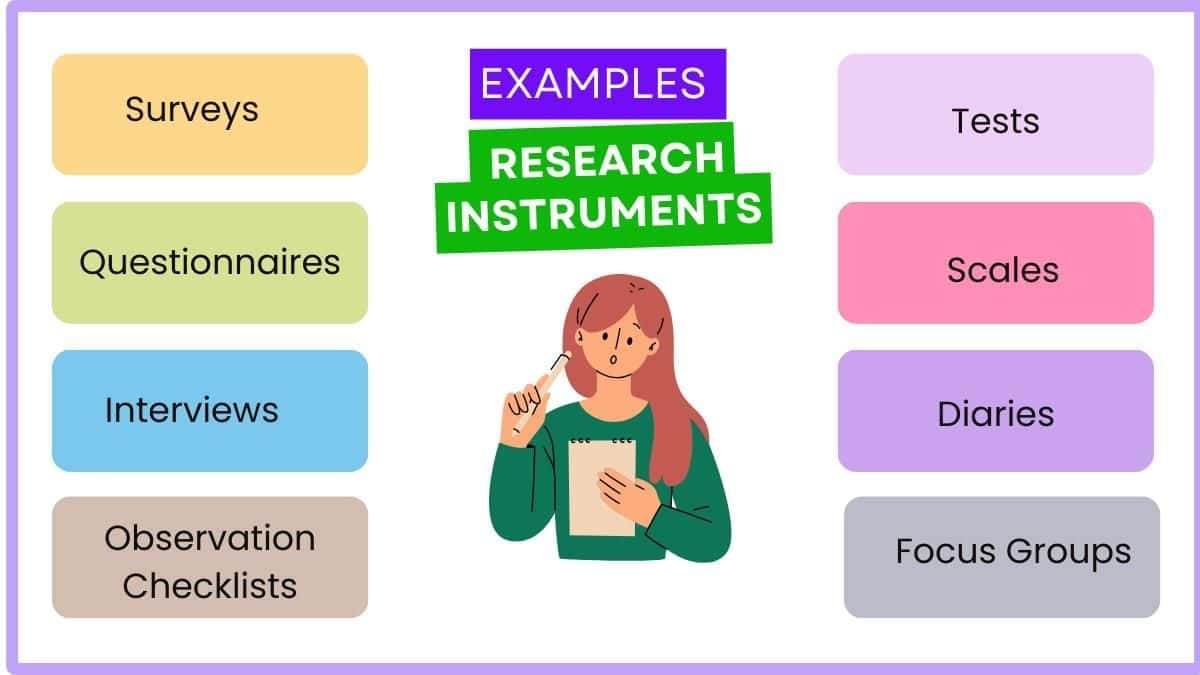
- When conducting research, individuals may have the option to choose from a list of available tools, depending on their specific needs and the type of data they are collecting.
- Different tools are suited for collecting different types of data. Researchers need to select the appropriate tool based on the nature of the data they intend to gather.
- Once the data is collected using these tools, it can be analysed to draw meaningful conclusions and make generalisations based on the findings.
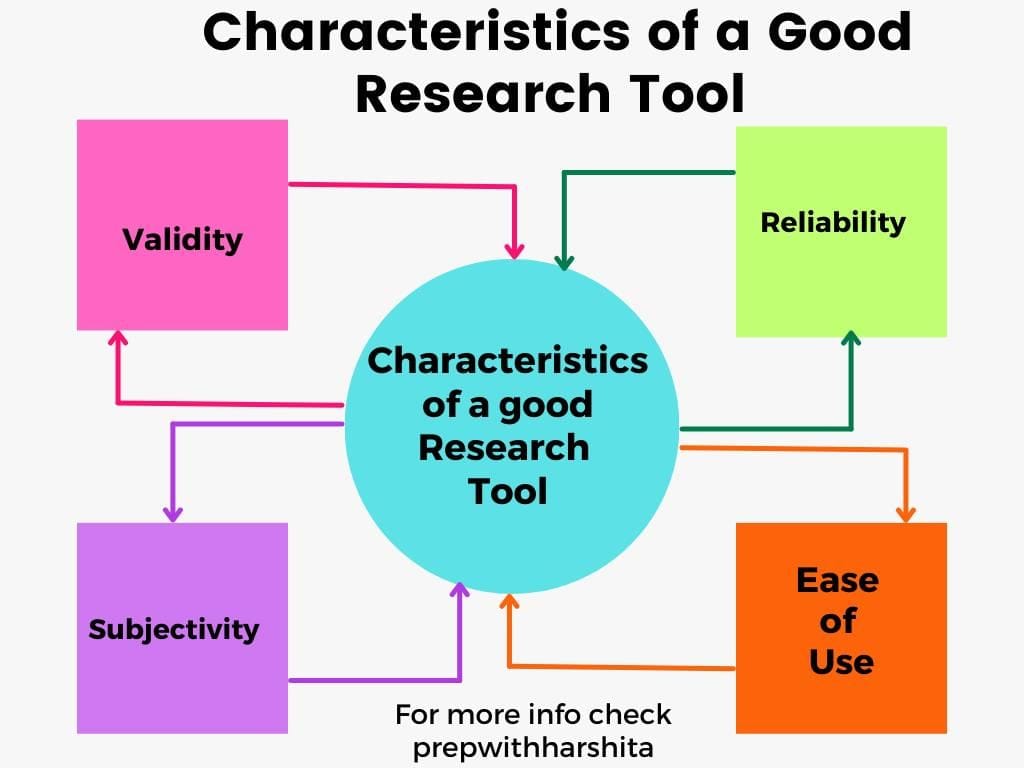
Types of Research Tools
There are majorly five types of research tools:
1. Paper
A research paper is a type of academic writing that involves analysing and interpreting research findings on a specific topic.
 Research Paper
- Writers are required to gather information, present a stance, and support it with evidence in a structured document.
- It can also refer to a scholarly article presenting original research or assessing others' work.
- Scholarly articles typically undergo peer review before publication in academic journals.
- Research papers involve analysis, interpretation, and evidence.
- Scholarly articles undergo peer review for publication.
Examples:
- A research paper analysing the effects of climate change on agricultural practices.
- A scholarly article discussing the impact of technology on education, based on original research.
2. Workshop
A workshop is an interactive and hands-on session that typically lasts a full day or more, bringing together clients, researchers, and other participants to collaboratively address a specific issue or question.
 Workshop
- Workshops incorporate elements of qualitative research, brainstorming, and problem-solving, aiming to engage participants in a more dynamic and participatory manner.
- Unlike standard group discussions, workshops involve a larger number of participants and often require multiple moderators or facilitators to guide the process effectively.
Key Features of Workshops:
(a) Interactive Engagement: Workshops are designed to foster active participation and interaction among attendees through structured activities, promoting hands-on learning and collaboration.
(b) Extended Duration: These sessions are usually longer than typical meetings or discussions, allowing ample time for in-depth exploration and resolution of issues.
(c) Diverse Participation: Workshops bring together a varied group of individuals, including clients, researchers, and stakeholders, creating a vibrant environment for idea generation and knowledge sharing.
(d) Qualitative Research Emphasis: Incorporating qualitative research methods within a workshop setting helps gather nuanced insights and perspectives from participants, enhancing understanding of the topic at hand.
(e) Brainstorming Opportunities: The workshop format encourages brainstorming sessions where participants can freely share ideas, explore possibilities, and collectively develop innovative solutions.
(f) Collaborative Problem-Solving: Workshops focus on specific challenges or questions, providing a platform for collaborative problem-solving where participants can analyse issues and devise effective strategies together.
(g) Need for Moderation: Given the larger participant base, workshops often require multiple moderators or facilitators to ensure smooth facilitation, manage discussions, and guide activities effectively.
Illustrative Example: Consider a marketing workshop where professionals from different departments come together to develop a targeted advertising strategy. Through interactive activities such as brainstorming sessions and qualitative research exercises, participants collaborate to create a comprehensive strategy. Multiple moderators oversee the process to ensure diverse perspectives are considered and the final campaign reflects the collective input of the group.
3. Seminar
A seminar is a gathering where people come together to discuss and learn about specific topics. It serves as a method of academic teaching, commonly found in universities or organised by professional groups.
- Participants in a seminar meet regularly in small groups, focusing on a particular topic during each session. Active participation from all attendees is encouraged.
- In a seminar, the instructor prepares concepts and techniques for presentation, utilising visual aids and interactive tools to facilitate discussion and engagement.
Key Elements:
- Seminar: Group discussion and learning
- Occurs at universities or professional organisations
- Regular meetings, active participation, focus on specific subjects
- Instructor-led, utilises visual aids and interactive tools
Examples:
- At a university, a psychology seminar may involve students and professors gathering to discuss recent research findings and their implications.
- A marketing seminar organised by a professional association could focus on innovative strategies for digital advertising, with participants actively engaging in case studies and group activities.
4. Conference
A conference is a formal meeting where participants exchange views on various topics.
- A conference is a planned meeting where delegates come together to discuss a range of topics.
- Conferences serve as platforms for sharing knowledge, networking, and collaborating across different fields.
These events can be held in various areas and are not limited to academic purposes.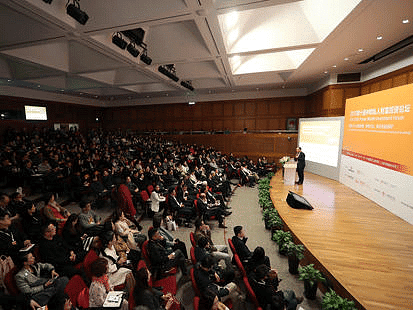 ConferenceExamples of conferences include:
- Sports conferences
- Trade conferences
- Journalist conferences
- Doctors' conferences
- Conferences of research scholars
5. Symposium
A symposium is a structured and formal gathering aimed at discussing a specific academic or professional topic in depth. It serves as a platform for experts to come together, share their insights, and engage in detailed conversations about specialised subjects. Unlike larger conferences that cover a broad range of topics, symposia create a more intimate setting conducive to focused discussions and interactions among participants.
 Symposium
- Definition: A symposium is a formal meeting held in an academic context where experts gather to discuss a specific topic.
- Participants: Typically, participants are specialists or experts in the relevant field.
- Purpose: The primary purpose is for experts to share their perspectives and insights on a particular subject.
- Scale: A symposium is similar to a small conference, with a limited number of delegates allowing for more in-depth discussion.
Key Elements
- Formal Gathering: Symposia are formal events often held in academic settings.
- Expert Opinions: The focus is on experts sharing their views and insights on a specific topic.
- Small-Scale Conference: A symposium is comparable to a small conference with a limited number of participants.
Examples:
- Neuroscience Symposium: Leading researchers present their findings on advancements in brain imaging technologies.
- Literary Symposium: Renowned authors discuss the impact of postmodernism on contemporary literature.
FAQs on Notes: Tools of Research
| 1. What are the main tools of research used in UGC NET exam preparation? |  |
| 2. How do questionnaires and interviews differ as research tools in academic studies? | |
| 3. What is the purpose of using observation schedules and rating scales in research methodology? | |
| 4. Which research tools are best for collecting quantitative versus qualitative data? | |
| 5. How do validity and reliability affect the selection of research tools for my UGC NET exam? | |