Notes: Sources, Acquisition & Classification of Data

Introduction to Data
Data refers to quantitative or qualitative values representing variables.
It includes numbers, images, words, facts, or ideas. Quantitative data are measurable (e.g., scores, quantities), while qualitative data are descriptive (e.g., words, images).
Purpose and Utility: Data forms the foundational unit for generating information and insights. It requires interpretation and analysis to derive meaning and support decision-making processes across various fields.
Importance: Raw data lacks inherent meaning until it undergoes processing. Statistical analysis and research methodologies transform data into actionable information, crucial for empirical studies and evidence-based practices.
Sources of Data
1. Primary Data:
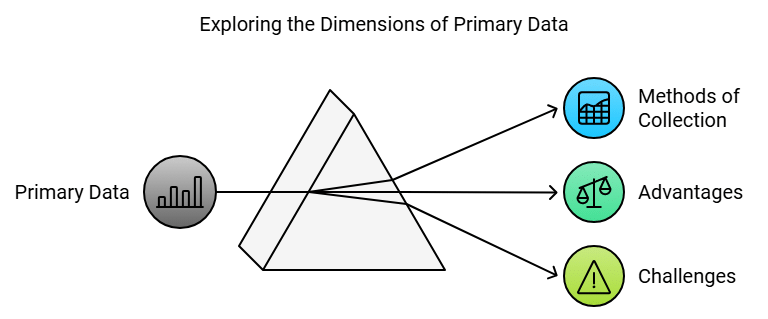
Definition: Primary data refers to information collected firsthand by researchers directly from their source of interest. This data is specifically gathered to address the research objectives at hand.
Methods of Collection:
- Surveys: Questionnaires administered through various mediums such as face-to-face interviews, telephone interviews, online surveys, or mailed surveys.
- Experiments: Controlled studies designed to manipulate variables and observe outcomes under controlled conditions.
- Observations: Systematic recording and interpretation of behaviors, events, or phenomena in their natural settings.
- Interviews: Structured or semi-structured interviews conducted to gather in-depth insights from respondents.
Advantages:
- Relevance: Data collected is directly pertinent to the research objectives.
- Control: Researchers have direct control over data collection methods and processes.
- Authenticity: Ensures data authenticity and accuracy as it is collected firsthand.
- Specificity: Allows customization of data collection methods to suit research needs.
Challenges:
- Cost and Time: Primary data collection can be resource-intensive in terms of time, effort, and financial resources.
- Bias: Potential for bias in data collection methods or respondent responses.
- Logistics: Coordination and logistics involved in reaching and gathering data from targeted respondents.
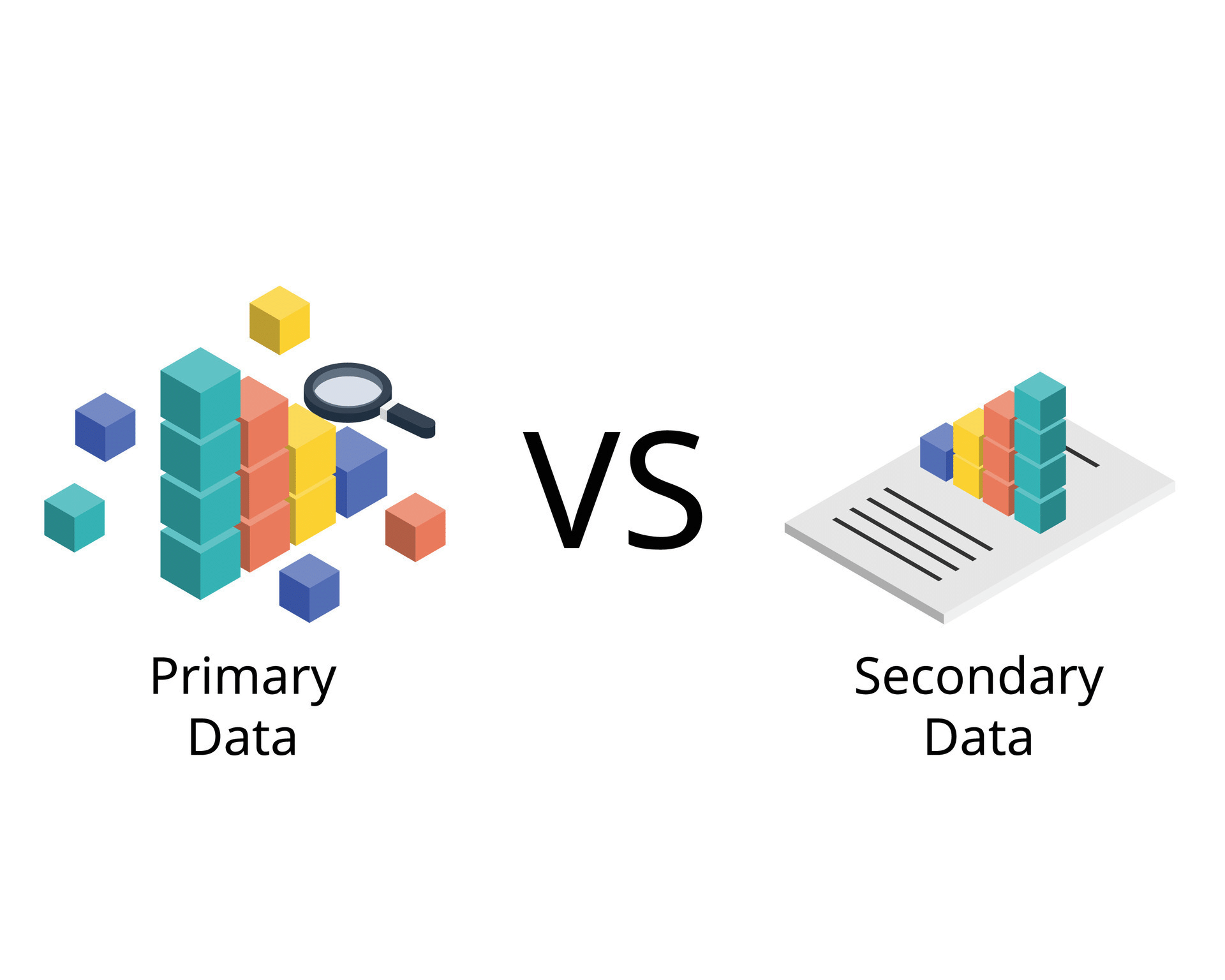
2. Secondary Data:
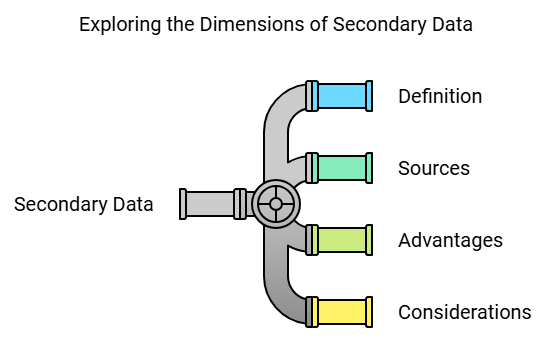
Definition: Secondary data refers to information that has been previously collected, published, or produced for other purposes by external sources or organizations.
Sources:
- Government Publications: Census data, economic reports, demographic statistics, and administrative records published by government agencies.
- Academic Journals and Books: Peer-reviewed articles, research papers, and academic publications that summarize findings from original research studies.
- Industry Reports: Market research reports, industry surveys, and analyses conducted by private research firms.
- Databases and Repositories: Online databases, data warehouses, and repositories containing structured data sets available for research purposes.
- Archival Records: Historical documents, records, and datasets preserved in libraries, archives, or specialized collections.
Advantages:
- Cost-effective: Access to existing data saves time and resources compared to primary data collection.
- Comprehensive: Provides a broad scope of information covering diverse topics and time periods.
- Longitudinal Analysis: Historical data allows for trend analysis and longitudinal studies.
- Comparative Studies: Facilitates comparisons across different regions, time periods, or populations.
Considerations:
- Reliability: Assessing the reliability, validity, and currency of secondary data sources is crucial.
- Fit for Purpose: Ensuring the data aligns with the specific research objectives and methodologies.
- Limitations: Data may be generalized or not tailored to specific research questions.
- Ethical Issues: Proper attribution and ethical considerations in using data from third-party sources.
Acquisition of Data
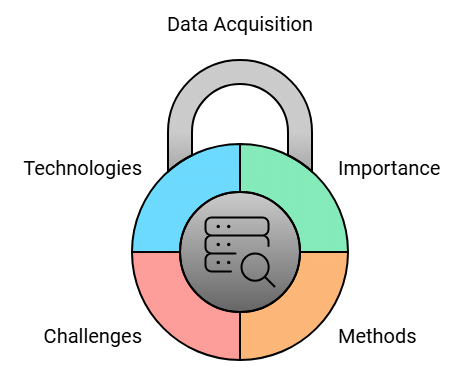
1. Importance of Data Acquisition:
Foundation of Research: Data acquisition forms the foundational step in any research or analytical endeavor, providing the raw material for analysis and interpretation.
Informing Decision-Making: It enables researchers, businesses, and policymakers to make informed decisions based on empirical evidence rather than assumptions.
Supporting Evidence-Based Practices: Data acquisition supports evidence-based practices by validating theories, identifying trends, and measuring outcomes.
2. Methods of Data Collection:
Primary Data Collection:
Surveys: Administering structured questionnaires or interviews to gather responses directly from respondents.
Experiments: Conducting controlled studies to manipulate variables and observe outcomes under controlled conditions.

Observations: Systematically recording behaviors, events, or phenomena in real-world settings to gather qualitative insights.
Interviews: Conducting face-to-face or virtual interviews to obtain in-depth qualitative data from key informants.
Secondary Data Collection:
Literature Review: Reviewing existing academic journals, books, and publications to gather relevant data and insights.
Databases and Repositories: Accessing online databases, data warehouses, and repositories containing structured data sets.
Government Reports: Utilizing census data, economic reports, and administrative records published by government agencies.
Industry Reports: Accessing market research reports, industry surveys, and analyses conducted by private research firms.
3. Challenges in Data Acquisition:
Quality Assurance: Ensuring data accuracy, reliability, and completeness through rigorous validation and verification processes.
Ethical Considerations: Adhering to ethical guidelines regarding participant consent, confidentiality, and privacy during data collection.
Logistical Issues: Overcoming logistical challenges such as access to remote areas, language barriers, and technical constraints in data gathering.
4. Technologies and Tools:
Data Mining: Using automated algorithms and tools to extract patterns and insights from large datasets.
Remote Sensing: Utilizing satellite imagery, GPS technologies, and remote sensors for environmental monitoring and data collection.
Digital Surveys: Deploying online surveys, mobile applications, and web-based platforms to gather real-time data from diverse populations.
Classification of Data
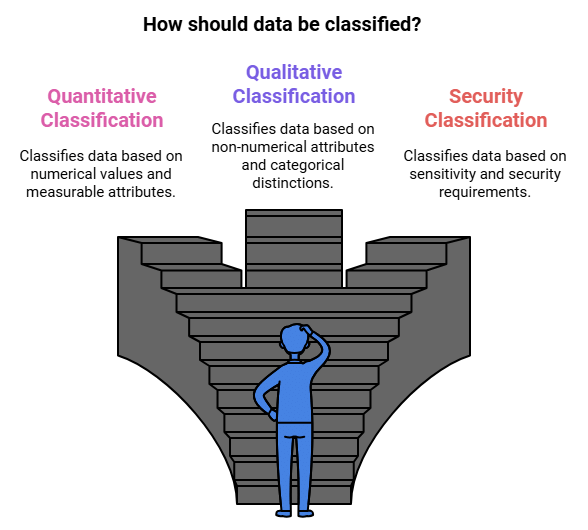
1. Quantitative Classification:
Purpose: Quantitative classification organizes data based on numerical variables, facilitating statistical analysis and measurement. It aims to categorize data into discrete groups or intervals defined by numerical values.
Examples: Age groups (e.g., 0-18 years, 19-35 years), income levels (e.g., low, middle, high income), test scores (e.g., below 50%, 50-70%, above 70%), production quantities (e.g., units produced per month).
Utility: This classification method is essential for quantitative comparisons, trend analysis, and making statistical inferences. By categorizing data into measurable units, researchers and analysts can derive insights into patterns, relationships, and trends within the dataset.
2. Qualitative Classification:
Purpose: Qualitative classification categorizes data based on attributes or qualities, focusing on subjective experiences, behaviors, or descriptive categories. It aims to capture nuances and complexities that numerical data may not fully represent.
Examples: Cultural norms (e.g., attitudes towards marriage), organizational behaviors (e.g., leadership styles), descriptive categories (e.g., types of customer complaints).
Applications: This method enhances understanding through thematic analysis and narrative interpretation. Qualitative data classification is commonly used in social sciences, market research, and qualitative studies to explore meanings, perceptions, and contexts that influence human behavior and decision-making.
3. Security Classification:
Purpose: Security classification categorizes data based on its sensitivity and the potential impact if compromised. It ensures appropriate protection measures are applied to safeguard data integrity, confidentiality, and availability.
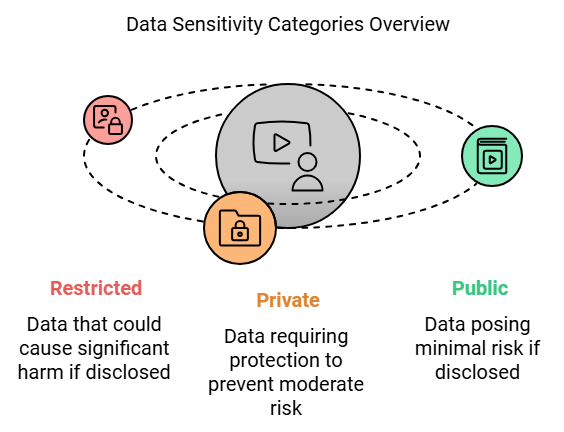
Categories:
Restricted (high sensitivity): Data that, if disclosed, altered, or destroyed without authorization, could cause significant harm or risk to individuals or organizations. Examples include personally identifiable information (PII), financial records, and classified documents.
Private (moderate sensitivity): Data that requires protection against unauthorized access or disclosure to prevent moderate risk or harm. This includes proprietary business information, employee records (excluding sensitive personal data), and sensitive research data.
Public (low sensitivity): Data that poses minimal risk if disclosed or accessed without authorization. This category includes publicly available information, press releases, and non-sensitive research findings.
This comprehensive overview underscores the multifaceted nature of data, emphasizing its role in research, decision-making, and information management across diverse disciplines. Effective data acquisition, classification, and interpretation are pivotal for generating meaningful insights, supporting evidence-based practices, and addressing complex challenges in contemporary research and organizational contexts.
FAQs on Notes: Sources, Acquisition & Classification of Data
| 1. What's the difference between primary and secondary data sources for research? |  |
| 2. How do I classify data types in statistics for UGC NET exam preparation? | |
| 3. Why is data acquisition important before starting any research project? | |
| 4. What are the main methods of data collection used in social science research? | |
| 5. How should I organize and prepare raw data for analysis in research studies? | |