CBSE Class 5  >  Class 5 Notes  >  Science   >  Differences between Living & Non-Living things

Differences between Living & Non-Living things

Things you'll learn: 

  • Difference between living and non-living things

  • Criteria for differentiating living things from non-living things
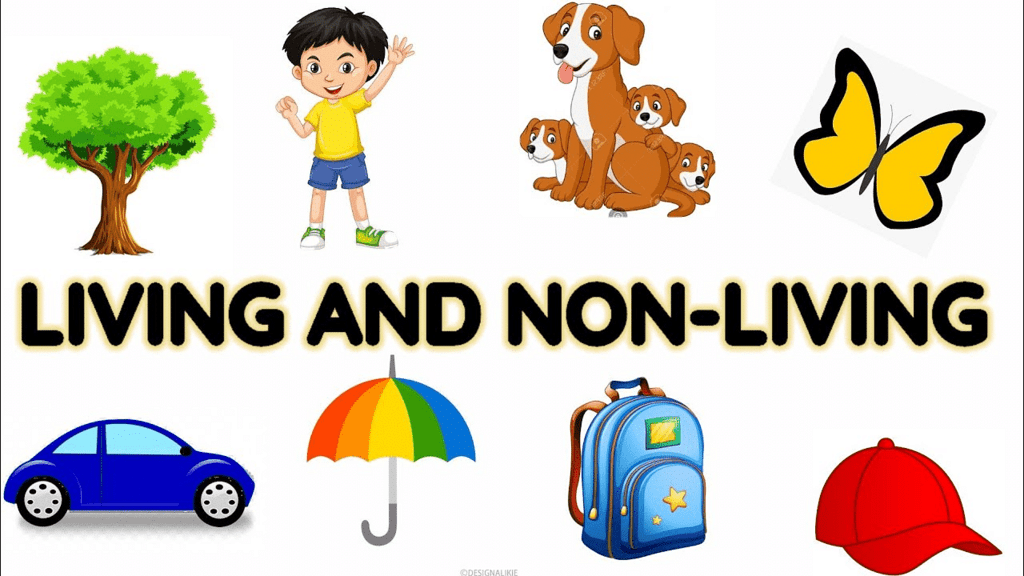
Differences between Living & Non-Living things

Difference between living and non-living things
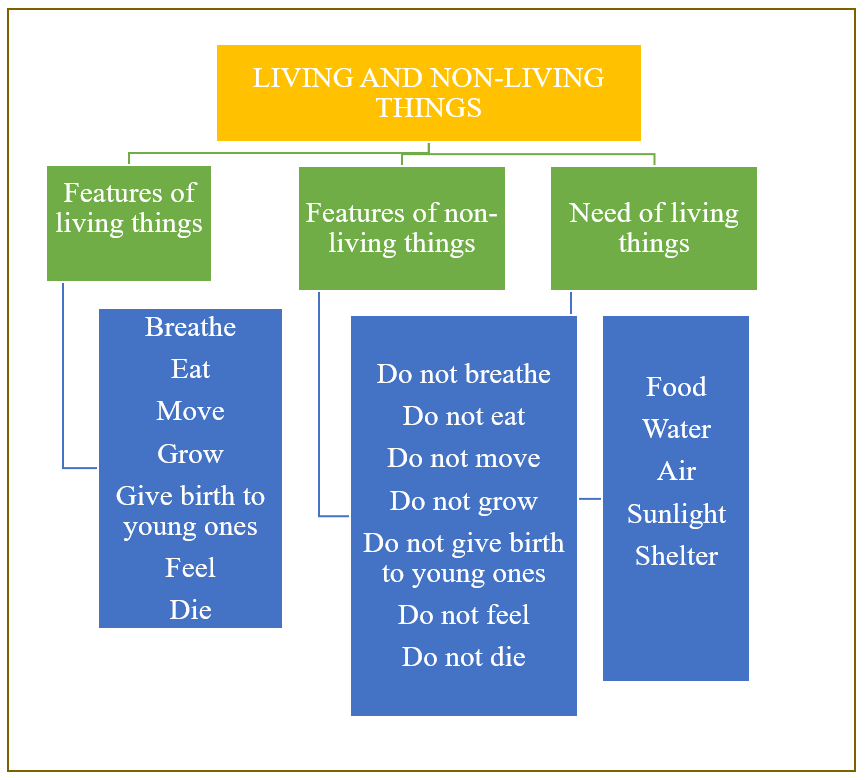
Difference between living and non-living things

Criteria for differentiating living things from non-living things:

For easy differentiation between living things and non-living things, scientists have come up with traits or characteristics that are unique to them. The criterion for classification is necessary to avoid the wrong grouping. Hence, science developed a basis for classification. Anything that has life is considered a living being.

For example- humans, trees, dogs, etc.
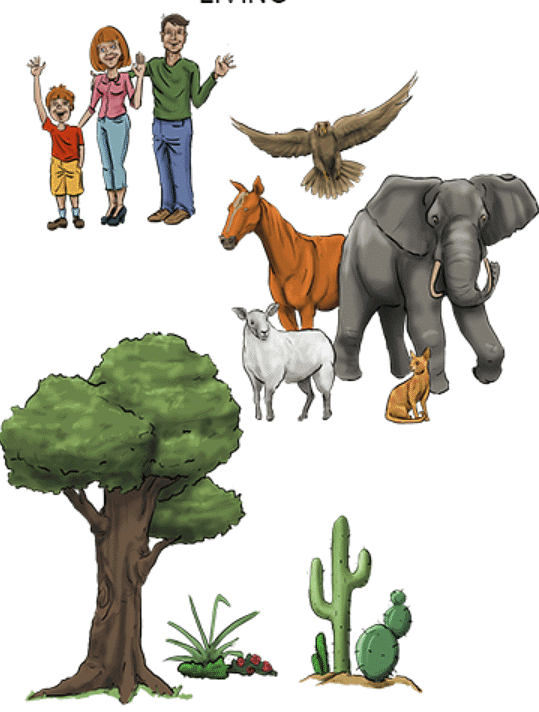
Criteria for differentiating living things from non-living things:

Things which have no life in them are considered non-living.

For example- stone, mountain, watch, etc.
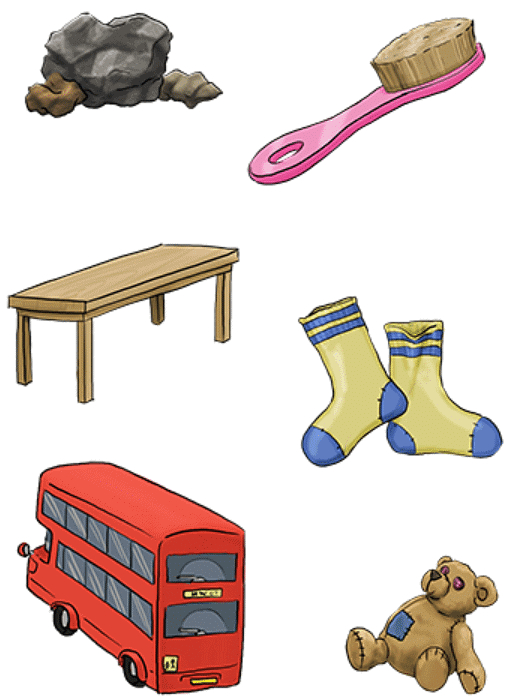
Criteria for differentiating living things from non-living things:

Scientists have discovered a few criteria for differentiating living things from non-living things.
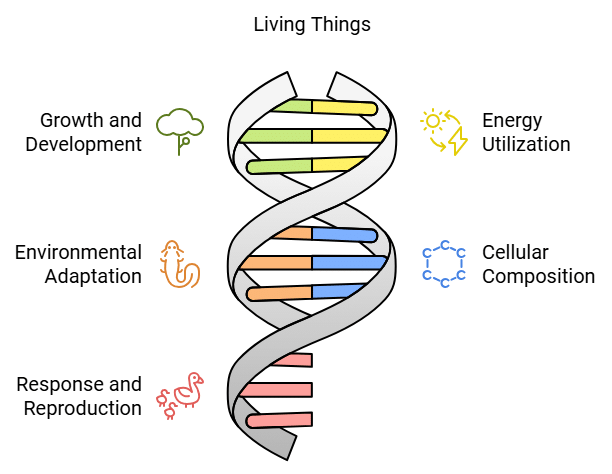
Criteria for differentiating living things from non-living things:

Here are some of them:

  1. Living beings can grow and develop.

  2. Living beings obtain and use energy.

  3. Living beings adapt to their environment.

  4. All living beings are made of one or more cells.

  5. Living beings respond to their environment or stimuli.

  6. All living things excrete to remove waste material from the body.

  7. Living beings have the ability to give birth to their young ones through the process of reproduction.

  8. All living beings require energy to perform different metabolic activities, and they gain energy from food/ nutrition.

  9. All living beings, apart from plants, move from one place to another. This type of movement is called locomotion.

If something obeys a few of the rules, it cannot be categorized as a living thing. It has to follow all the given rules stringently. For example, an icicle, although it grows (increases its mass or length), is still a non-living thing since it cannot reproduce or respond to stimuli.

Non-living things do not have any of the life processes, unlike living beings.

The document Differences between Living & Non-Living things is a part of the Class 5 Course Science Class 5.
All you need of Class 5 at this link: Class 5

FAQs on Differences between Living & Non-Living things

1. What are the main characteristics that make something a living thing?
Ans. Living things possess the ability to grow, reproduce, respire, and respond to their environment. They consume food for energy, excrete waste, and maintain movement-either visible or internal. All organisms, from plants to animals, exhibit these life processes that distinguish them from non-living objects, making them fundamentally different in CBSE Class 5 science curriculum.
2. How can you tell the difference between a living organism and a non-living object in everyday life?
Ans. Living organisms show growth, reproduction, and sensitivity to stimuli like light and heat, while non-living things remain static and unchanging. A plant responds to sunlight, but a stone does not. Non-living objects lack metabolism and cannot create offspring independently. Understanding these distinctions helps students identify living versus non-living things in their surroundings effectively.
3. Why do plants need water and sunlight if they're living things?
Ans. Plants require water and sunlight because they perform photosynthesis-a vital life process for creating food and energy. Water transports nutrients through roots, while sunlight powers chemical reactions essential for growth and survival. This interdependence demonstrates that all living organisms depend on their environment to sustain life processes, a key concept in CBSE Class 5 biology.
4. Can non-living things like robots or cars ever become alive?
Ans. No, robots and cars cannot become living despite performing functions. Living things possess inherent consciousness and reproduce naturally, while machines operate through programmed instructions without independent thought or reproduction capability. Non-living objects lack metabolism, self-repair through growth, and the ability to sense environmental changes autonomously-core characteristics separating living from non-living entities.
5. What's the difference between growth in living things and changes in non-living objects?
Ans. Living things grow through internal biological processes, increasing in size and complexity from within. Non-living objects change only through external forces-a rock breaks when struck, ice melts from heat. Growth in organisms involves cell division and metabolism, whereas changes in non-living things simply alter their physical state without creating new structures or developing functionality independently.
Explore Courses for Class 5 exam
Get EduRev Notes directly in your Google search
Related Searches
Exam, MCQs, ppt, mock tests for examination, practice quizzes, Differences between Living & Non-Living things, video lectures, study material, Differences between Living & Non-Living things, Extra Questions, Differences between Living & Non-Living things, Summary, Previous Year Questions with Solutions, Sample Paper, shortcuts and tricks, Important questions, Semester Notes, Viva Questions, past year papers, Objective type Questions, pdf , Free;