Chapter Notes- Sense Organs


Introduction
- Have you ever thought about how you can see the bright blue sky, hear your favourite song, smell a beautiful flower, taste a sweet candy, or feel the warmth of the sun?
- This is all because of our sense organs!
- These special parts of our body help us understand and experience the world around us.
- Without them, we wouldn't be able to enjoy the colours, sounds, smells, tastes, and textures that make life exciting!

What are Organs?
Our body is made up of many important parts, and some of these parts are called organs. Organs help us do different things to stay healthy and active.
- Some organs work inside our body, like the heart, which pumps blood, and the lungs, which help us breathe.
- Some organs help us understand the world around us, like our eyes, ears, nose, tongue, and skin. These are called sense organs because they help us sense things.
 Organs like the heart, brain, kidney are super heroes.
What are Sense Organs?
Sense organs are special parts in our bodies, like eyes, ears, nose, tongue, and skin, that help us see, hear, smell, taste, and touch the amazing world around us. They work together with other organs to make sure we experience and understand everything.
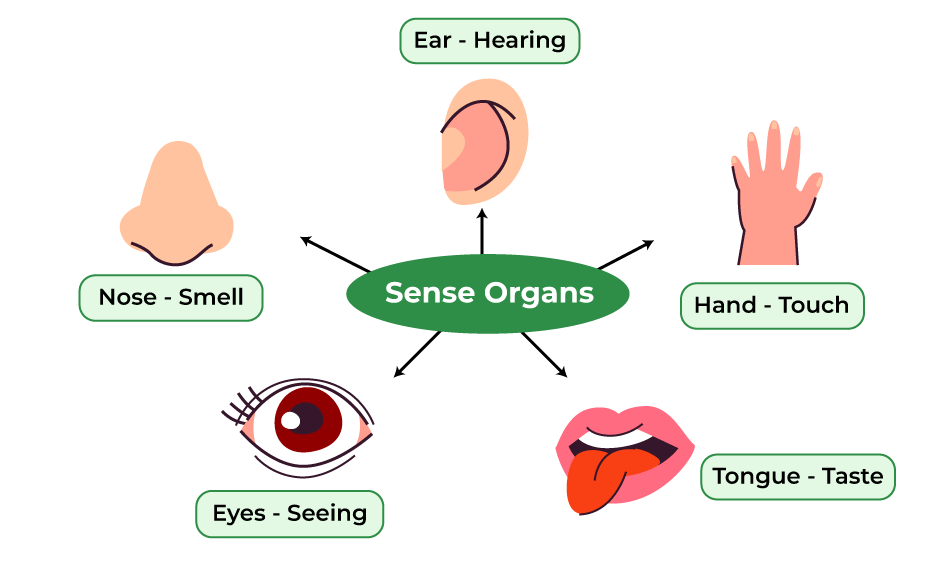 Five Sense Organs
The brain is like a smart boss that helps our eyes, ears, nose, tongue, and skin work together so we can see, hear, smell, taste, and touch all the cool things around us!
The Five Sense Organs
We have five main sense organs:
1. Eyes
Imagine your eyes are like magic windows. Eyes help you see all the cool and colourful things around you, like your favourite toys and the bright blue sky.
 Eyes
Eyes
2. Ears
Ears help you hear. They let us hear the laughter of friends, the buzzing of bees, and even our favourite songs.
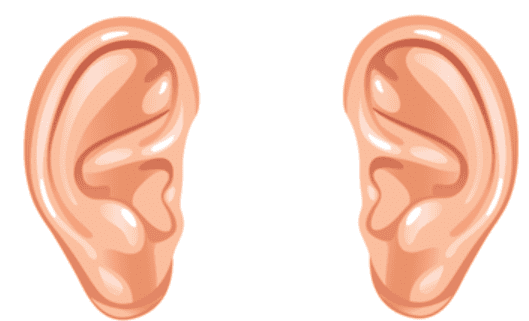 Ears
Ears
3. Nose
The nose helps us to smell. It helps you sniff and enjoy the yummy smells of cookies, flowers, and all sorts of good things.
 Nose
Nose
4. Tongue
Your tongue helps you eat and taste delicious foods like ice cream and fruits. It also lets you talk and sing.
 Tongue
5. Skin
The skin lets you feel the softness of your teddy bear, the warmth of the sun, and the cool breeze on your face.
 Skin
Skin
Sometimes, your sense organs work together, like when you taste a yummy ice cream cone. Your eyes see the colours, your nose smells the sweetness, and your mouth tastes the deliciousness!

Taking Care of Our Sense Organs
Sense organs are sensitive and delicate parts of our body. Hence, one should take care of them properly.
Eyes:
- Do not rub your eyes too much and keep sharp things away from them.
- Wash your eyes with clean water often.
- Watching TV for a long time or from too close can harm your eyesight.
- Eat yellow fruits like papaya and mango, and iron-rich vegetables like spinach to keep your eyes healthy.
Ears:
- We should not put anything or sharp objects in our ears.
- Our ears should be cleaned by an adult using a cotton plug.
Skin:
- Our skin protects our body.
- We should take a bath every day to keep our skin clean and healthy.
- If we get hurt, we should tell an adult and get it treated quickly.
- We should not scratch our skin with nails or sharp objects.
Nose:
- Use a handkerchief to clean your nose.
- Never put your finger in your nose to clean it.
- Never put any object in your nose.
Tongue:
- Clean your tongue every day.
- Do not eat food that is too hot, as it can burn your tongue.
Video Explanation
Now, let's have a look at a video about sense organs:
FAQs on Chapter Notes- Sense Organs
| 1. What are the five sense organs and what does each one do? |  |
| 2. How do sense organs help us stay safe in our daily life? | |
| 3. Why does my tongue have different areas that taste different flavours? | |
| 4. What's the difference between how ears and eyes work as sense organs? | |
| 5. Can we live without one sense organ, or do we need all five for Class 1 CBSE? | |