Chapter Notes: Numbers from Ten to Twenty


Welcome to the exciting world of tens, where counting gets super cool! We'll learn all about "bundles of ten," a secret trick to counting bigger numbers easily.
Imagine you have a bunch of yummy grapes: 1, 2, 3, 4, 5, 6, 7, 8, 9, 10! Counting them can be tricky, right? But hold on, we have a magic trick!
Let's Bundle Up!

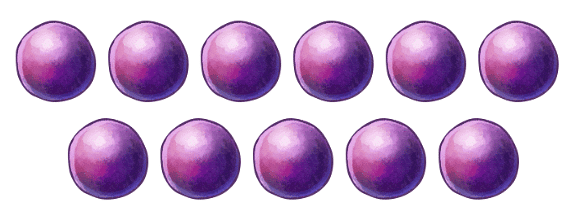
Instead of counting each grape, we can group 10 of them together. Look! This bunch is now our "bundle of ten". It's like a superhero team of grapes, all working together!
Now, how many bundles do we have?
Count the bundles: We have only one bundle, right? Even though we have 10 grapes, counting them in a bundle makes it quicker and easier!
What is a Bundle of Ten?
It's like a team of ten marbles working together. Counting ten things is easier when they're in a bundle. Imagine ten marbles all together in a bag. That's a bundle of ten!

Counting from 10 to 20
Imagine you had 9 toffees. Yummy, right? Now, what if we add one more toffee? Boom! We have 10 toffees!
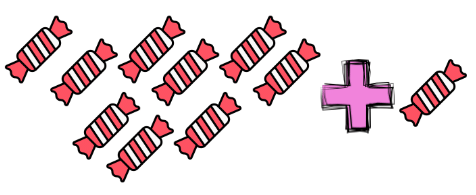
Now, we have 2 bags, and each bag can hold 10 toffees. Let's put 10 toffees into one bag. That bag now becomes a special bundle of 10 toffees.
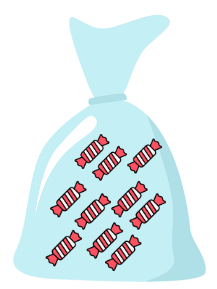
11 Toffees: We add one more toffee to our 10. Now we have 1 bundle of toffees (10) plus 1 more toffee, making a total of 11 toffees.
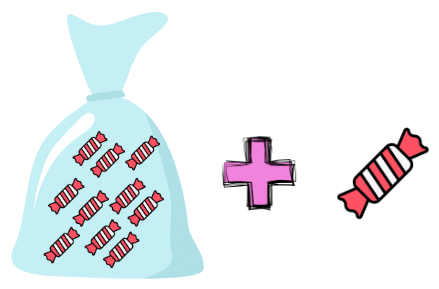
12 Toffees: Another toffee joins the fun! We still have our bundle of 10, and we added 2 more, making it 12 toffees.
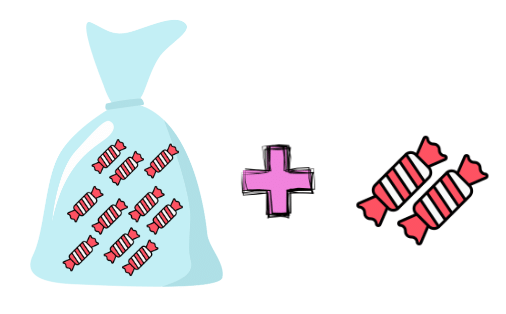
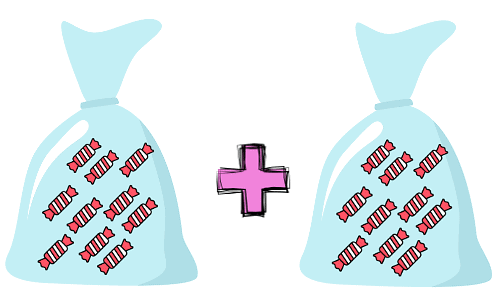
If we keep adding one toffee at a time until you reach 19. Each time, remember the bundle of 10 stays with you as you add more toffees and Ta-da! We reached :
20 toffees
Now we have 2 bundles of 10 toffees! Bundles make counting super easy. No need to count each toffee; just count the bundles and the extra toffees.
Why Bundles Make Counting Easy:
- Bundles help us organize and see big numbers more clearly.
- Instead of counting one by one, we can count by bundles. It's like having teams of toffees - each bundle is a team, and it makes counting a breeze.
Make a group of 10 and write the numbers
Can you see those yummy and juicy mangoes?
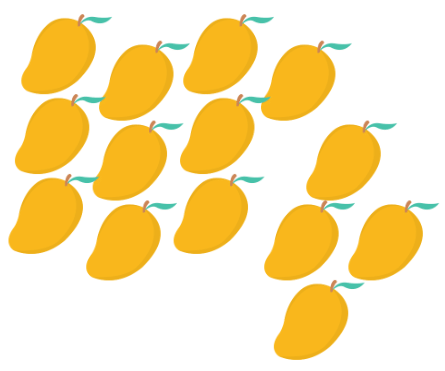
There are a bunch of mangoes. Let's gather 10 of them and write a 1 in the tens place. Now, we have left 4 mangoes. We put down 4 in ones place.
 What does that tell us? It means we have a total of 14 mangoes!
Bigger or Smaller?
When we talk about "bigger" and "smaller," we're comparing amounts. If something has a larger amount, we say it's "bigger." If something has a smaller amount, we say it's "smaller."
Example: Let's look at two groups of balloons:
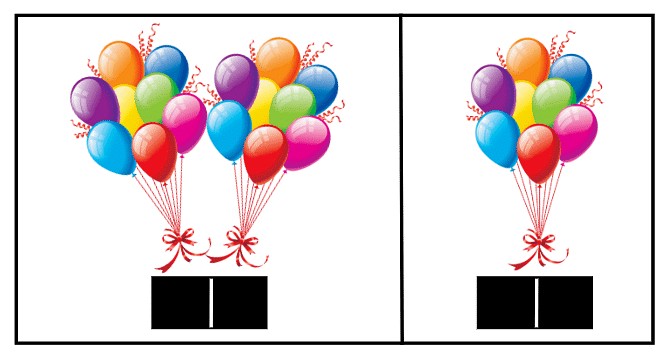
In the first group, there are 16 balloons, and in the other group, there are 8 balloons. Now, which group has a bigger number of balloons? That's right, the left group with 16 balloons has more balloons, making it the bigger group.
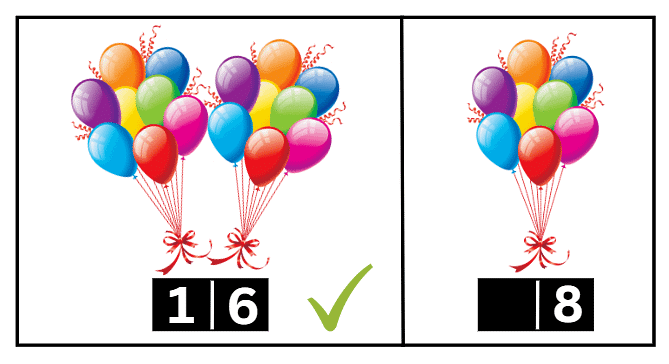
This way, we can easily figure out which group or set has a larger or smaller amount by comparing the numbers.
Addition
Example: Let's say we want to add 6 + 7.
To make it easier, we can imagine that we have two groups of sticks. We have 6 sticks in one group and 7 sticks in another group.
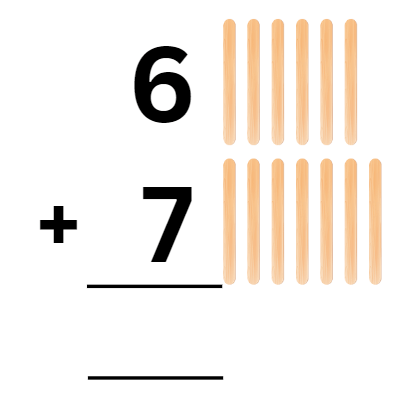
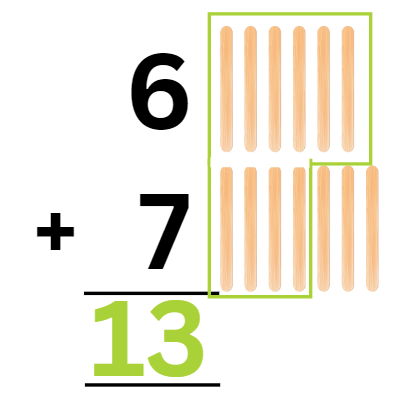
Now, we can bundle the sticks into a group of 10. We take 6 sticks and add 4 more to make a bundle of 10. We write down the number 1 in the tens place (the column on the left) to show that we have one bundle of 10. Then, we write down the number of sticks we have left in ones place (the column on the right). In this case, we have 3 sticks left over.
Subtraction
Example: imagine you have 19 yummy bananas, and we want to see how many we have left if we eat 6 of them.
You have a pile of bananas. One pile has 19 bananas. Now, let's pretend we eat the pile with 6 bananas.

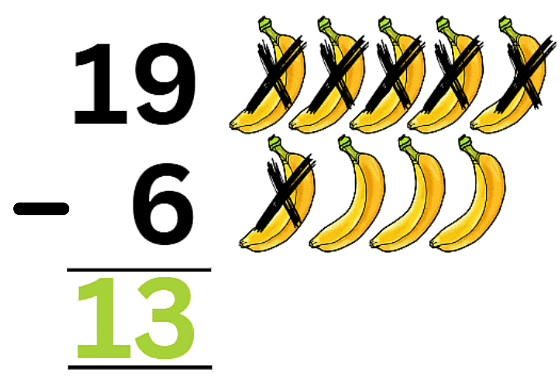
After eating those bananas, we have 13 bananas left in the pile. So, when we take away 6 bananas from 19, we have 13 bananas left to enjoy!
Counting, comparing, ordering and estimating
It is important to understand what each of the numbers mean.

You can use what you know about numbers to decide which pack of marbles to buy.
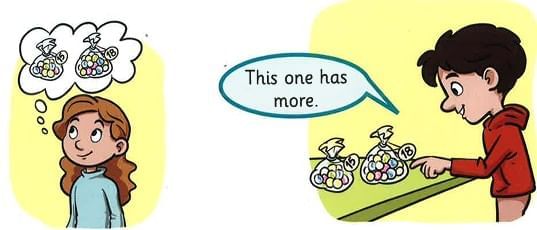
Example: How many?
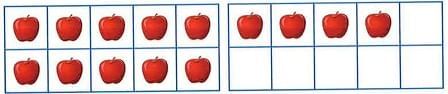
Ans: 14
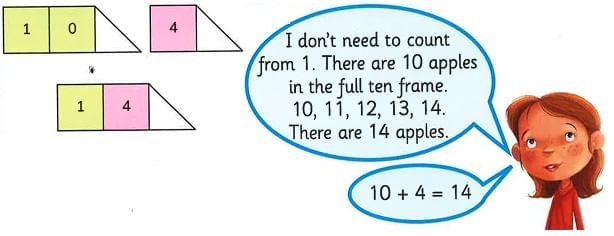
Number patterns
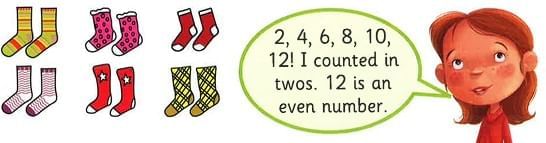
There are many different patterns in number. Some patterns are made by counting in twos or tens. Some patterns are so well known they have their own names, like odd and even numbers.
FAQs on Chapter Notes: Numbers from Ten to Twenty
| 1. What is a Bundle of Ten? |  |
| 2. How do you write the numbers from 10 to 20 in groups of ten? | |
| 3. Is a bundle of ten bigger or smaller than a bundle of five? | |
| 4. How can addition be related to a bundle of ten? | |
| 5. How can subtraction be related to a bundle of ten? | |