Chapter Notes: Social Justice

How do We Define 'Justice'?
Justice is a fundamental moral and political idea. It is intuitively felt by people across cultures yet difficult to define precisely. Justice shapes how a society organises public life, allocates resources, and treats its members. Because it affects who receives opportunities, rewards and protections, ideas of justice are central to political thought and public policy.
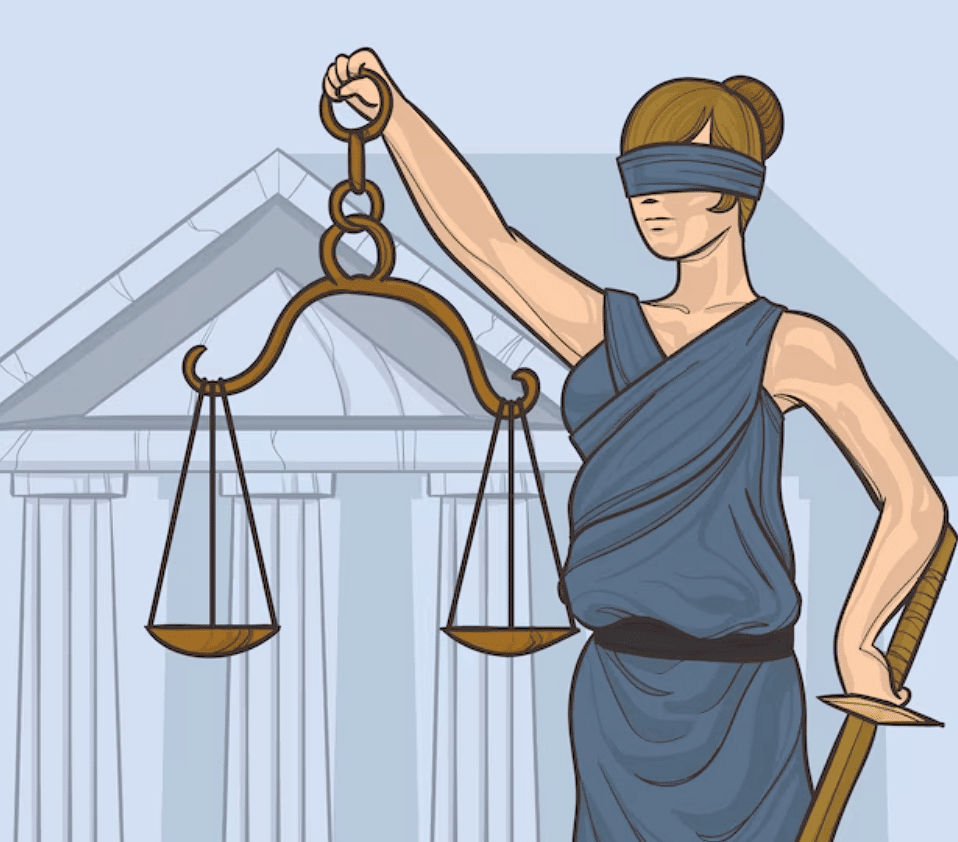
What is Justice?
- Different cultures and philosophical traditions have offered distinct understandings of justice-for example, the concept of dharma in ancient India, which denoted duties and a just social order.
- Confucian thought in China emphasised that rulers must maintain justice by punishing wrongdoers and rewarding the virtuous so society remains orderly.
- In ancient Greece, Plato's The Republic is a major work that debates what justice means. Socratic dialogues asked whether being just is always desirable, especially when unjust people sometimes appear to prosper.
- Socrates argued that widespread injustice-such as lying, rule-breaking and betrayal-damages everyone by creating insecurity and undermining social cooperation.
- Justice, therefore, concerns the well-being of all members of society rather than partial favouritism; it is comparable to a doctor's impartial care for patients rather than favouring friends.
- A just ruler or legal system seeks to ensure that each person receives what is their due, promoting fairness and social stability.
- Modern philosophers like Immanuel Kant have emphasised respect for human dignity and equal moral worth, which underpins the idea that people should have equal opportunities to pursue their life plans.
Try yourself: What does social justice entail?
Equal Treatment for Equals
- One basic idea of justice is that people who are similar in relevant respects should be treated equally; deciding what counts as "relevant" is often complex.
- Treating equals equally means recognising everyone's basic human rights-civil rights (for example, life and liberty), political rights (for example, voting) and social rights (for example, equal access to opportunities).
- Justice requires that discrimination not be based on irrelevant characteristics such as class, caste, race or gender.
- People should be judged by their work and competence rather than by group identity-for instance, equal pay for equal work.
- Unequal pay or access to jobs and education solely because of caste or gender is unjust and violates this principle.
Proportionate Justice
- Equal treatment is not always sufficient. Proportionate justice recognises that people differ in effort, responsibility, skills and the risks they take, and rewards may reflect those differences.
- For example, giving every student identical marks would ignore differences in effort, ability and quality of work.
- Justice can therefore mean rewarding people in proportion to their contribution, skill or the danger involved in their work.
- While everyone should begin with equal fundamental rights, distribution of rewards and benefits may justifiably reflect differing demands of different roles.
- Occupations involving danger, specialised skill or heavy responsibility-such as mining or policing-often warrant higher pay than less demanding work.
- Justice seeks a balance between absolute equality and proportionate recognition of effort and responsibility.

Recognition of Special Needs
- Another element of social justice is recognising special needs-that identical treatment can perpetuate inequality when people start from very different positions.
- People with disabilities, the elderly, or those deprived of education and basic healthcare may require additional support so they can compete on equal terms.
- Factors such as physical disability, chronic illness, age or long-term social exclusion justify special measures to achieve fairness.
- Treating people identically when access to basic needs differs will produce inequitable outcomes.
- In India, historical caste-based discrimination led to affirmative measures like reservations (quotas) in jobs and education for Scheduled Castes and Scheduled Tribes to correct persistent disadvantage.
- A just state must balance equal treatment, proportionate rewards and targeted measures for those with special needs.
Just Distribution
- Social justice requires fair laws and a just distribution of goods and services so that all citizens have reasonable opportunities to pursue their goals.
- Where economic and social inequalities are deep and persistent, some form of redistribution-through taxation, welfare, land reforms or public services-may be necessary to restore basic fairness.
- Equal opportunities, together with minimum standards of living, health and education, enable citizens to develop their capabilities.
- In India, the Constitution abolished untouchability to secure access to public places, jobs and basic necessities, thereby removing a legal basis for social exclusion.
- State-led measures such as land reforms have aimed to redistribute productive resources like land to reduce inequality.
- Debates over distribution-such as quotas, subsidies or welfare schemes-can provoke strong political responses because they affect people's interests.
- John Rawls argued that policies benefiting the least privileged are rational and justified in designing a fair society; redistribution can be defended on such grounds.
Try yourself: What is the responsibility of a democratic government towards its citizens?
John Rawls: Theory of Justice
- John Rawls proposed a method for choosing fair principles of social cooperation by using an imaginative device called the veil of ignorance.
- The veil of ignorance asks decision-makers to choose principles of justice without knowing their own place in society-their class, caste, gender, abilities, wealth or social status.
- Because they could end up anywhere in society, rational individuals behind the veil will adopt principles that protect the interests of the worst-off.
- Rawls' theory recommends two core principles: equal basic liberties for all, and social and economic inequalities arranged so that they are both to the greatest benefit of the least advantaged (the difference principle) and attached to offices and positions open to all under conditions of fair equality of opportunity.
- Under the veil, people do not need to act from self-sacrifice; instead, rational self-interest leads them to secure guarantees for the least advantaged because they might occupy that position.
- Rawls emphasises impartiality, fair equality of opportunity and institutional arrangements that secure basic goods like education, health and cover against deprivation.
- The aim is a system of fair laws and policies that protect basic liberties while justifying limited inequalities only when they improve the condition of the worst-off.
Try yourself: What is the 'veil of ignorance' theory put forward by John Rawls?
Pursuing Social Justice
- Social justice is seen as absent when there are persistent and significant divisions between those with wealth, property and power and those who are excluded and deprived.
- Social justice does not require identical living conditions for everyone, but it does require that basic needs and opportunities are secured so citizens can lead dignified lives.
- International organisations and governments use various measures to determine necessary standards; for example, the World Health Organization provides guidelines for public health standards.
- Providing citizens with fundamental necessities-such as basic healthcare, education, food and shelter-is generally regarded as a responsibility of democratic governments.
- Delivering these standards for all citizens can create a heavy fiscal burden, especially in populous and low-income countries; this makes policy choices and prioritisation important.
- Political groups in India and elsewhere differ on methods to assist marginalised groups and debate the relative merits of alternative schemes for rural and urban poor.
- Where inequalities are serious, redistributive policies may be necessary to create a fairer environment for everyone.
- The Constitution's ban on untouchability and other legal protections are examples of state action to remove discrimination and extend basic civic rights to historically excluded groups.
- Even when there is agreement on the need for assistance to the disadvantaged, disagreements remain about the best instruments-direct transfers, affirmative action, public goods, or market-oriented measures.
Try yourself: What is politics about in a democratic society?
Free Markets versus State Intervention
- Supporters of free markets argue that private ownership, free pricing and competition produce efficient outcomes and reward merit, effort and talent.
- They claim free markets create incentives for innovation and productivity and allow individuals the freedom to choose occupations and contracts.
- Some proponents of markets accept limited state intervention to provide a safety net and ensure minimal conditions for fair competition.
- Private providers can deliver services such as health and education, while the state plays a role in enabling access-through vouchers, subsidies or income support.
- However, private agencies may avoid unprofitable regions or groups, leaving rural areas and disadvantaged communities underserved or supplied with low-quality services.
- Free markets tend to favour incumbents and the wealthy, which can perpetuate inequality and limit opportunities for marginalised groups.
- State intervention is therefore often necessary to ensure universal access to basic services like education and health, and to correct market failures.
- In India, debates between market-oriented reform and redistributive policies reflect the challenge of balancing efficiency, liberty and social justice.
Competency-Based Questions
Q1. Riya and Zahid work in the same company, have equal qualifications, and perform similar tasks. However, Zahid is paid less because he belongs to a minority community. (a) Which principle of justice is being violated here? (b) Suggest a just course of action using any theory from the chapter.
Ans:
(a) The principle of equal treatment for equals is being violated. Both employees have the same qualifications and similar work, yet Zahid receives unequal pay on the basis of his community.
(b) Using John Rawls' Theory of Justice and the veil of ignorance, employers acting without knowledge of employees' social identities would adopt rules that ensure equal pay for equal work. Therefore, Zahid should be given the same salary as Riya to correct the discriminatory practice.
Q2. A government decides to distribute flood relief funds equally among all citizens of a district, regardless of individual loss. Some citizens argue that those who have lost homes and livelihoods should receive more. (a) Which principle of justice supports their argument? (b) Justify your answer using Rawls' theory of justice.
Ans:
(a) The principle of recognition of special needs and proportionate justice supports their argument.
(b) Rawls' difference principle holds that inequalities are justifiable only if they benefit the least advantaged. Those who suffered greater loss are worse off and therefore should receive greater compensation to restore a fairer baseline.
Q3. "Equal treatment does not always ensure justice." Explain this statement with reference to: (a) Proportionate justice (b) Recognition of special needs
Ans: Equal treatment presumes similar starting points, which is often false. Treating everyone identically can therefore maintain or deepen existing inequalities.
(a) Proportionate justice contends that rewards or recognition should correspond to effort, responsibility and risk. For instance, a surgeon's higher pay compared to a clerk may be justified by greater skill and responsibility.
(b) Recognition of special needs recognises that disadvantaged people (for example, persons with disabilities or those from socially backward groups) may require additional support to reach the same opportunities as others. Identical treatment of unequal people can therefore be unjust.
Q4. A committee must choose one student to receive a government scholarship: • Student A has very high marks but comes from a privileged background. • Student B has moderate marks but comes from a socially and economically disadvantaged family. Who should receive the scholarship? Justify your answer using any two principles of justice.
Ans: Student B should receive the scholarship because:
1. Under the recognition of special needs principle, disadvantaged students need additional support to access educational opportunities and overcome structural barriers.
2. According to Rawls' difference principle, social and economic policies should benefit the least advantaged; supporting Student B helps correct inequality and promotes fair equality of opportunity.
Q5. "Free markets ensure justice by rewarding merit, while state intervention limits individual freedom." Do you agree or disagree? Provide two arguments in favour of or against the statement.
Ans: Arguments in favour of free markets:
1. Free markets can reward individuals according to merit, effort and talent, aligning with the idea of proportionate justice.
2. Markets allow individual choice and competition, giving people freedom to pursue occupations and contracts.
Arguments in favour of state intervention:
1. Markets often favour the already wealthy and can deny equal opportunities to the disadvantaged, thereby perpetuating inequality.
2. State intervention can secure basic needs-such as public education and healthcare-ensuring a minimum standard of living and thereby enhancing fairness.
A balanced approach suggests that a combination of free markets and state intervention is necessary to achieve justice.
For more such Questions, visit:
FAQs on Chapter Notes: Social Justice
| 1. What is social justice and why does it matter in society? |  |
| 2. How does social stratification relate to inequality and social injustice? | |
| 3. What are the main principles of social justice that governments should follow? | |
| 4. How do caste systems and gender discrimination create barriers to social justice? | |
| 5. What role do constitutional provisions play in ensuring social justice for marginalised communities? | |