Chapter Notes: Rights


Introduction
- In a democracy, people possess a range of rights that enable participation in public life-for example, the right to vote, to form political parties, and to run for public office.
- Beyond traditional political and civil rights, citizens increasingly claim rights such as access to information, clean air, and safe drinking water.
- Rights apply not only to public and political spheres but also to social and personal relationships, influencing everyday life and socio-cultural practices.
- Claims for rights may be made on behalf of different subjects: adults, children, the unborn, and even non-human beings such as animals.
- The concept of rights is used in different ways by different people and in different contexts; its meaning can therefore vary with political theory, culture and public policy.
What are Rights?
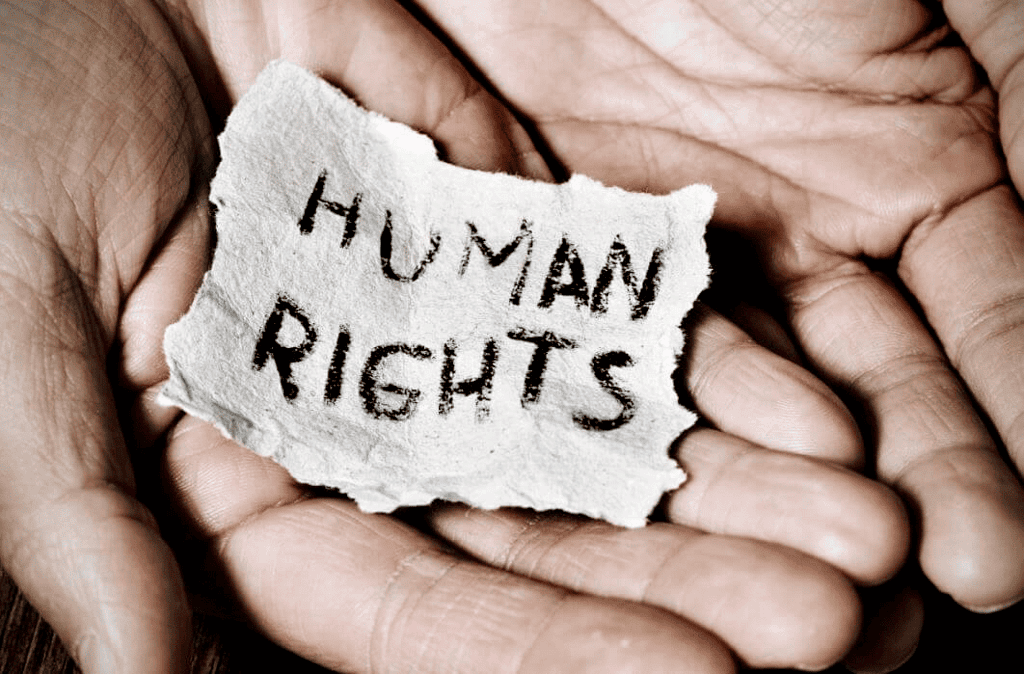
At its simplest, a right is an entitlement or a justified claim that an individual or group may make against others, including the state. Rights mark what a person is owed in order to live with respect and dignity.
- Not every desire or need counts as a right; a right is a claim that others are expected to recognise and, where appropriate, enforce.
- Rights support well-being and personal development-for example, the right to education enables learning and social mobility.
- Some rights protect individuals from harm (for example, restrictions on cruel treatment), while others require positive action (for example, provision of basic services).
- Actions that are harmful to health or social welfare (for example, drug abuse or practices that endanger others) are not regarded as rights.
Where do Rights Come From?
Different political and moral theories explain the origin of rights in different ways.
Early political theorists of the seventeenth and eighteenth centuries argued from natural law that certain rights are given by nature or by God and therefore belong to human beings from birth. Among these theorists, John Locke is well known for asserting that individuals possess certain inalienable rights.
- Right to life
- Right to liberty
- Right to property
Later traditions and contemporary usage rely more on the language of human rights than on the older term natural rights. The shift reflects changing attitudes toward the source of rights, emphasising universal moral claims and collective recognition rather than divine or strictly natural foundations.
- Human rights have been used by oppressed groups and social movements to challenge discrimination and demand equality regardless of race, caste, religion or gender.
- As societies change, the list of rights people claim also expands-for example, environmental concerns have given rise to claims for the right to clean air, clean water and sustainable development.
- The growing recognition of rights reflects the evolving understanding of what is required for a minimally decent life and for human dignity.
Try yourself: Which of the following is NOT considered a fundamental right?
Legal Rights and the State
Claims for Human Rights
- Claims for human rights appeal first to our moral self; they are moral demands for respect and fair treatment.
- Practical success of these claims, however, depends on government support and legal recognition, since the state enforces laws and administers public services.
Legal Recognition
- Legal recognition is crucial: when rights are written into law they acquire mechanisms for protection and enforcement.
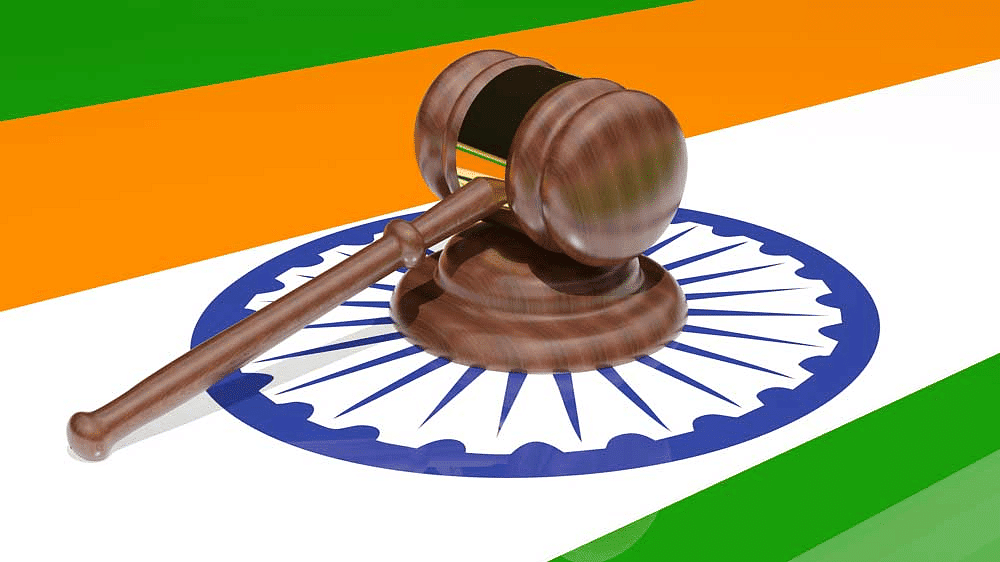
- Many countries protect important rights by placing them in their Constitution-often called a Bill of Rights or Fundamental Rights.
- Because a constitution is the supreme law, rights enshrined there enjoy a special status.
Constitutional and Legal Framework
- Other laws and government policies must generally respect the rights guaranteed by the constitution; they give detail to how rights are implemented.
- Rights recognised by law are influenced by historical and cultural contexts; legal measures may be used to correct social wrongs rooted in tradition.
- Example: In India, the Constitution bans untouchability (see Article 17) as a response to longstanding social exclusion.
Evolution of Rights
- Legal endorsement can give a right greater force in practice, but rights also develop through social movements, judicial interpretation and changing public opinion.
- Over time, rights have expanded to include groups and claims that earlier legal systems may have excluded.
- Contemporary rights reflect broader ideas of dignity, social justice and equality.
State's Role in Rights
- Many rights create demands upon the state: the state must refrain from violating certain liberties and must also take positive steps to fulfil other rights.
- For example, the right to education requires the state to provide access to basic schooling; while civil liberties like freedom from arbitrary arrest require the state to limit its powers.
- Society and non-state actors (schools, charities, families) contribute, but the state usually holds primary responsibility for large-scale provision and protection.
Obligations on the State
- Rights define both what the state must do (for example, protect life and provide essential services) and what it must not do (for example, unlawfully curtail liberty).
- Examples:
1. The right to life obliges the state to protect individuals from avoidable harm and to create conditions for a reasonable quality of life.
2.The right to liberty requires lawful procedures for arrest and detention and the availability of judicial review.
Purpose of Rights
- Rights serve to limit state power so that authority is exercised without undermining individual life and liberty.
- The state's primary purpose is to promote the well-being of its people; rights help hold rulers accountable.
- Rights therefore act both as protection for individuals and as standards by which state action is judged.
Kinds of Rights
Political Rights
- Most democracies establish a set of political rights at the outset to ensure public participation and accountability.
- Typical political rights include equality before the law, the right to vote, the right to elect representatives, the right to contest elections, and the right to form or join political parties.
- Civil liberties-such as the right to a fair trial, freedom of expression, and the right to peaceful protest-complement political rights by protecting individuals from state overreach.
- Political rights are foundational for a democratic system because they allow citizens to influence government and demand accountability.
Economic Rights
- Political rights are meaningful only when people's basic needs are met; hence democracies increasingly acknowledge economic rights.
- Economic rights concern access to essentials-food, shelter, clothing, health care-and policies to secure them, such as social security, minimum wages and public health systems.
- States sometimes adopt explicit welfare measures or employment guarantee schemes (for example, schemes like MGNREGA in India) to reduce poverty and make political participation real and effective for all citizens.
Cultural Rights
- Modern democracies recognise cultural claims such as the right to primary education in one's mother tongue, and the right of communities to establish institutions for preserving their language and culture.
- Cultural rights expand the range of recognised rights beyond life, liberty and political participation to include the protection and promotion of cultural identity.
Rights and Responsibilities
- Rights impose obligations not only on the state but also on individuals: citizens must contribute to the common good and respect the rights of others.
- Protecting shared resources-such as the ozone layer, air and water quality, green cover and ecological balance-requires individual restraint and public action to secure rights for present and future generations.
- Exercising a right (for example, freedom of expression) carries the responsibility to avoid harming others or inciting violence; rights must be exercised in a way that recognises others' rights.
- Rights sometimes conflict (for example, the right to freedom of expression versus the right to privacy); such conflicts must be balanced through law, policy and dialogue.
- Citizens must be vigilant about limitations on rights. Governments may restrict rights for reasons such as national security, but such restrictions should be lawful, proportionate and subject to judicial oversight.
- Even when a person is arrested or detained, legal safeguards-access to legal counsel and the opportunity to present a defence-must be respected to protect civil liberties.
- While rights are not absolute, preserving them is essential for sustaining a democratic society and the well-being of individuals.
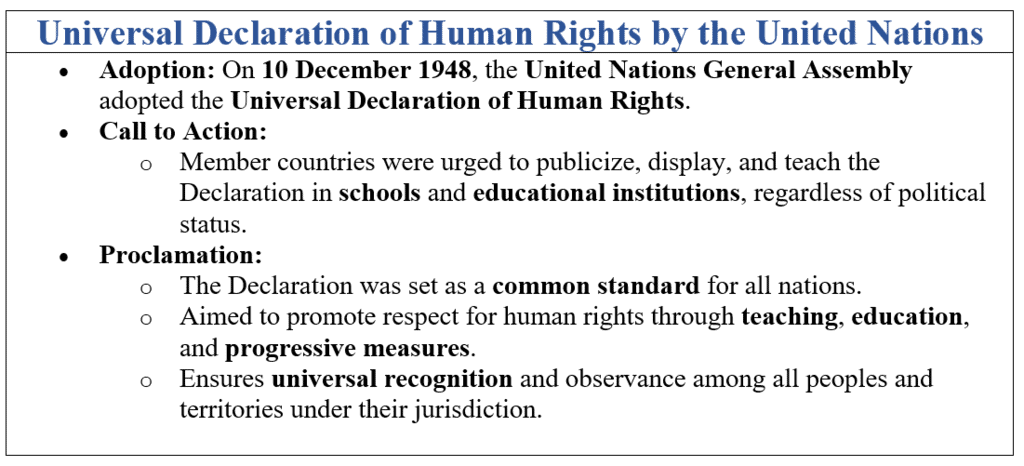 Universal Declaration of Human Rights by the United Nations
 Conclusion
Rights are more than abstract ideas; they are practical tools that shape relationships between individuals and the state. They require both protection by public institutions and responsible exercise by citizens. By recognising rights, enforcing them through laws and institutions, and balancing rights with duties, societies can promote dignity, equality and well-being for all. Vigilance against abuses of power and thoughtful negotiation of conflicting rights help ensure that rights continue to serve as foundations of just and democratic life.
FAQs on Chapter Notes: Rights
| 1. What exactly are rights and why do we need them in society? |  |
| 2. What's the difference between civil rights and political rights in Class 11 Political Science? | |
| 3. How do constitutional rights differ from legal rights under Indian law? | |
| 4. Can the government actually take away our rights, or are they permanent? | |
| 5. What are duties and how do they connect to our rights in a democracy? | |