Stages of Human Growth

The Human Life Cycle
- A life cycle is a series of changes in form that an organism undergoes during a course of time. Not all animals have clearly demarcated phases in their life: moreover among mammals, humans have more such phases than do other species and these phases are well marked by biological transitions.
- The Human Life Cycle said to be beginning with fertilization and then proceed through prenatal growth and development, birth, postnatal growth and development, maturity, senescence and death.
- At individual level, old cells die and degrade and the molecular constituents of these dead cells recycled into new cells formed by mitosis. While at the population level, people born, grow, mature, age and die. Fertilization can be marked as the beginning of life and the cycle continue passing through fixed stages ending the cycle at the last stage i.e death.
- The Human life cycle involves the following stages:
(i) Prenatal stage
(ii) Postnatal stage
Prenatal Stage
Prenatal stage begins at conception with the union of a man's sperm and a woman's egg to form a single cell embryo. (The process of fusion of sperm and egg to form a zygote is called fertilization.)
Fertilization mark the beginning of prenatal stage of growth which can be further divided into following stages:
1. Embryonic stage/ 1st Trimester (conception - 8th week)
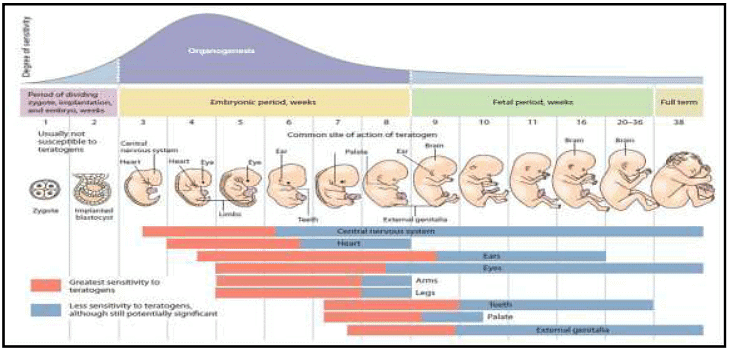
- The embryonic stage last from conception to first 8 weeks of pregnancy. The cells of the embryo repeatedly divide as the embryo moves through the embryo embeds itself into the wall of the womb, begins by the end of the third week and is completed during the fourth week of pregnancy.
- By 5 weeks, development of the brain, spinal cord, and heart is well underway. The heart starts beating is visible by ultrasound almost immediately. By 6 weeks, the heart is pumping the embryo's own blood to his or her brain and body. All four chambers of the heart are present and more than 1 million heartbeats have occurred. The head, as well as the chest and abdominal cavities, have formed and the beginnings of the arms and legs are easily seen. The 6-week embryo measures less than ¼ of an inch long from head to rump.
- Rapid brain development continues with the appearance of the cerebral hemispheres. The embryo reflexively turns away in response to light touch on the face at 7½ weeks. Fingers are beginning to form on the hand.
2. Early Foetal stage / 2nd Trimester (9th - 24th week)
- As the early foetal stage started movement of hands, neck turns, and hiccups begin. The heart is nearly fully formed. Girls now have ovaries and boys have testes. By 10 weeks kidneys begin to produce and release urine, and intermittent breathing motions begin. All fingers and toes are free and fully formed, and several hundred muscles are present. Experts estimate the 10-week embryo possesses approximately 90% of the 4,500 body parts found in adults. This means that approximately 4,000 permanent body parts are present just eight weeks after conception. Incredibly, this highly complex 10-week embryo weighs about 1/10th of announce and measures slightly less than 1¼ inches from head to rum. After 10 weeks, the developing human is called a fetus, which means "little one" or "unborn offspring."
- By 11 Thumb sucking and swallowing amniotic fluid begin. Girls' ovaries now contain reproductive cells which will give rise to eggs later in life. Also in girls, the uterus is now present. Fingerprints start forming at 12 weeks while fingernails and toenails begin to grow. Gender differences emerge at 16 weeks when girl fetuses move their jaws more often than boys. A pregnant woman may begin to feel fetal movement at this time.
- Around 17 weeks blood cell formation moves to its permanent location inside the bone marrow and the fetus begins storing energy in the form of body fat. By 18 weeks formation of the breathing passages, called the bronchial tree, is complete. By 20 weeks the larynx or voice box begins moving in a way similar to the movement seen during crying after birth. The skin has developed sweat glands and is covered by a greasy white substance called "vernix," which provides protection from the amniotic fluid. At 21 weeks breathing patterns, body movements, and heart rate begin to follow daily cycles called circadian rhythms. By 22 weeks the sense of hearing begins to function and the fetus starts responding to various sounds. The cochlea, the organ of hearing, reaches adult size. All skin layers and structures are complete.
- Between 20 and 23 weeks rapid eye movements begin. These eye movements are similar to those seen when children and adults have dreams. By 24 weeks more than 30 million heartbeats have occurred. The 24-week fetus weighs about 1¼ pounds and measures about 12 inches from head to heel.
3. Late Foetal stage / 3rd Trimester (25th week - birth)
- Late foetal stage started by 25th week of pregnancy. By 26 weeks sudden, loud noises may trigger a blink-startle response, which may increase movement, heart rate, and swallowing. The lungs produce a substance necessary for breathing after birth. By 29 weeks, pupils of the eyes react to light.
- By 34 weeks true alveoli, or "air pocket" cells, begin developing in the lungs. By 37 weeks the fetus has a firm hand grip and the heart has beat more than 50 million times. The 38-week fetus weighs about 6¾ pounds and measures about 19 inches from head to heel.
- At term, the umbilical cord is typically 20 to 24 inches long. Labor is initiated by the fetus, ideally around 40 weeks, leading to childbirth. At full-term birth, newborn babies typically weigh between 6 and 9 pounds and measure between 18 and 21 inches from head to heel.
Postnatal Stage
The 28 days post birth delineated by rapid growth and adaptation to extra uterine environment. The new born is detached from the mother's placenta and now relies on their own circulatory, digestive and excretory system. They maintain their body temperature within very narrow limit. Inadequate growth and development during prenatal period disposes the new born to vulnerability especially for the duration of 24 after birth and is the pioneer factor contributing to high neonatal mortality rate.
1. Infancy
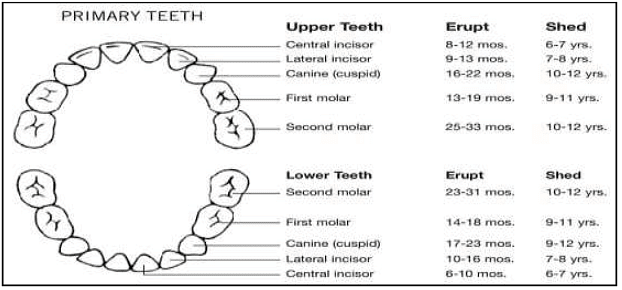
- Infancy is defined as the period during which nursing takes place, typically lasting about four years in humans. The first year is characterized by rapid physical growth. A normal baby doubles its birth weight in six months and triples it in a year. During that time, there is great expansion of the head and chest, thus permitting development of the brain, heart, and lungs, the organs most vital to survival.
- The bones, which are relatively soft at birth, begin to harden, and the fontanelles, the soft parts of the newborn skull, begin to calcify, the small one at the back of the head at about 3 months, the larger one in front at varying ages up to 18 months. Brain weight also increases rapidly during infancy: by the end of the second year, the brain has already reached 75% of its adult weight.
- The development of the skeleton, musculature and the nervous system accounts for motor and cognitive advancements. The human brain grows more rapidly during infancy than any other tissue or organ of the body. Rapid motor skills development is mostly intended for the development of the upright posture and independent locomotion. The gradual attainment of control over head, upper trunk and upper extremities is allied with accomplishment of sitting posture and proficiency in walking skills by the age of 4 years.
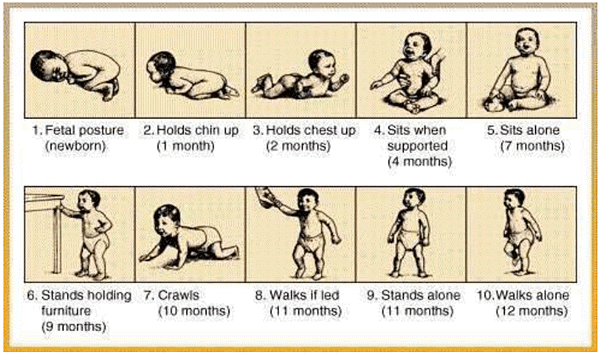
- Emergence of deciduous dentition allows the infants to switch from dependence on breast/infant food feeding to eating appropriate weaning foods. Infants will erupt five deciduous teeth in each quadrant of their mouth, the central incisior, lateral incisior, canine, first molar and second molar.
- The emergence of last deciduous teeth, usually M2 signals the end of infancy. This is noteworthy that deciduous teeth of boys emerge about one month earlier than girls, as in other aspects of physical growth and maturation girls are, on an average ahead of boys. The hypothallamus, a center of neurological and endocrine control
2. Childhood
- Early childhood: As the childhood approach the rate of growth decreases or slows down. The constraints of immature dentition, small digestive system and rapid growth of brain among children necessitate specially prepared foods. Susceptibility to disease and procurement of food incline them to be dependent on elder people. The neurological development enhances psycho-motor skills and by the end of this phase, child is able to comprehend language accompanied by social, physical and cultural norms. Learning ability which was launched in the 1st year becomes faster as the child is exposed to environment and slow physical and cognitive growth facilities efficiency of learning. (Tanner, 1962)
Teeth eruption started in this stage of growth and it was also observed that boys are taller than girls with respect to physical growth. Attention span is short at this stage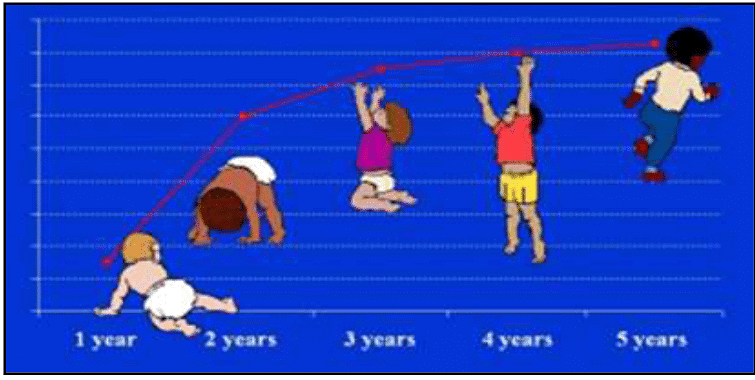
- Middle Childhood: This growth stage in human cycle is supposed to be most stable period characterized by differential rate of growth in different body parts and changes in body proportion by the age of 9 years. Physical growth proceeded in two directions during the childhood and prior stages of growth which are
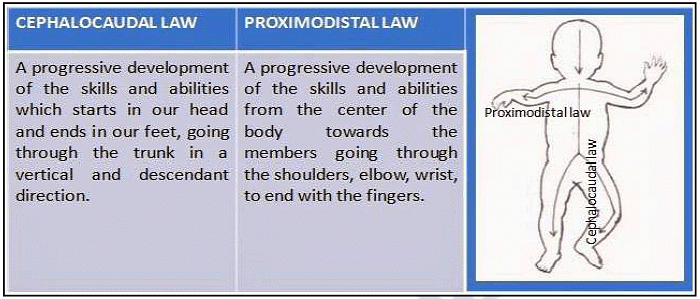 With the acquisition of proficiency in locomotion, child is able to walk like adults efficiently by the age of 7 years. The mid growth spurt, a short-term acceleration in height and weight is experienced by children several years before the onset of adolescent growth spurt. It has also been observed in other body dimension but with considerable variability in intensity of spurt. The mid-growth spurt usually occurs between 6.5-8.5 years. A sex difference in the timing of maximum velocity of the spurt is not apparent, but it occurs more frequently in boys than in girls ( Malina and beunen, 2007). Replacement of milk teeth by permanent teeth is almost complete, with the exception of the 2nd molars.
 - Late Childhood: Late childhood is influenced by growth of sex hormones. It can be called as pre-pubertal stage in which linear rapid growth took place. It marks the beginning of adolescent growth spurt and sexual dimorphism in body size and proportion during pre-pubertal stage. Understanding of abstract concepts, enhanced reading, writing and speech skills were also at its best. All these indicators show that the physically dependent child is moving on to independence.
3. Adolescence
- During the teen years, adolescents experience changes in their physical development at a rate of speed unparalleled since infancy. The beginning of biological growth and development during adolescence is signified by the onset of puberty, which is often defined as the physical transformation of a child into an adult. A myriad of biological changes occur during puberty including sexual maturation, increases in height and weight, completion of skeletal growth accompanied by a marked increase in skeletal mass, and changes in body composition.
- The succession of these events during puberty is consistent among adolescents; however, there may be a great deal of deviation in the age of onset, duration, and tempo of these events between and within individuals. For this reason, adolescents of the same chronological age can vary greatly in physical appearance. This has direct relevance for the nutrition requirements of adolescents. A 13-year-old male who has nearly completed the linear growth spurt associated with puberty and has experienced significant muscular development will have remarkably different energy and nutrient needs than those of a 13-year-old male who has not yet experienced puberty. Consequently, sexual maturation should be used to assess the extent of biological growth and development and the individual nutritional needs of adolescents in place of chronological age.
- The maturation is signaled by a rapid acceleration in the growth velocity of virtually all skeletal tissues-the adolescent growth spurt. An increase in growth velocity marks the commencement of adolescent spurt. The growth rate which eventually reaches a maximum, articulated as a peak height velocity (PHV) and gradually decline. The rate of growth and age at PHV indicate the intensity and timing of adolescent spurt respectively. The rise to PHV is relatively slower than after peak. Age at peak height velocity is an individual characteristic and is commonly used as maturity indicator.
- The boys gain their adolescent growth spurt on an average between 12.5 and 15.5 years of age with PHV between ages 13.5-14.5 years. Girls enter puberty 2 years earlier than boys and attain the PHV between ages 11.5-12.5 years. The linear growth at peak height velocity is slightly higher among boys (8.2 to 10.3cm) than girls (7.1-9.1cm). Consequently, though the females are taller than their male counterparts up to eleven years the adolescent boys are typically taller than girls. Adolescent in human life cycle is characterize by the pubertal growth spurt in height and weight; completion of permanent teeth eruption(except third molar, which erupts between 17 to 25 years); development of secondary sexual traits, including sex-specific alterations to fat and muscle distribution; psychological and behavioral changes related to sexual and social maturation.
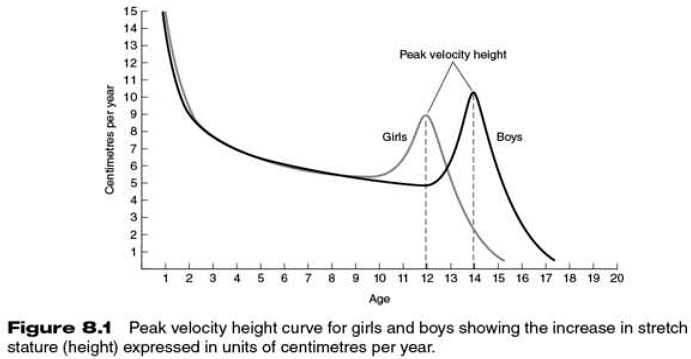
- Sexual maturation is the most important part of adolescent which include following characteristics:
(i) Girls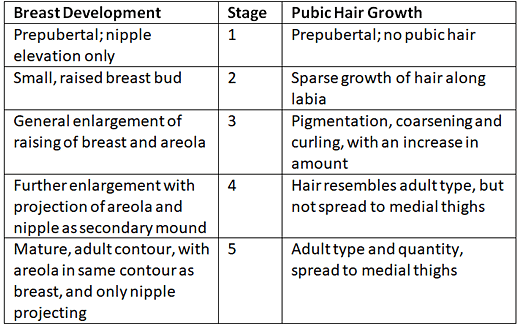
(ii) Boys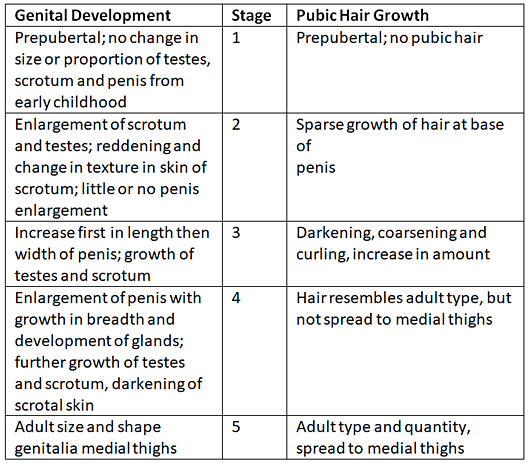
4. Adulthood
- Just as it is difficult to determine precisely when adolescence begins and ends, determining exactly when adulthood commences proves elusive. Adulthood is, for most people, the time of peak physical capacity. The body reaches full height by the late teens, and physical strength increases into the late 20s and early 30s (Whitbourne, 2001). The attainment of adult stature and sexual maturation are the indication of transition from adolescence to adulthood. Height stops as the long bones of the body like femur lose their ability to increase in length. (Bogin 2001).
- A process called epiphyseal union in which growing end of the bone fuses with the diaphysis, the shaft of the bone under the stimulation of gonadal hormones has been take place to attain skeletal maturation.
- While the children without gonads or whose gonads are not functional never experience epiphyseal union but they do stop growing, signify that the change in the sensitivity to growth stimuli of cartilage and bone tissue in the growth plate region leads to the loss of hyperplastic growth potentials in cells.
- This phase of human life cycle is considered as the child bearing phase of life. Also in context of sexual maturation, the production of viable spermatozoa in boys and oocytes in girls is achieved during adolescence but these events mark only the early stages, not the completion of reproductive maturation.
- Thus, transition to adulthood is marked by dramatic events such as the cessation of height and attainment of full reproductive maturity. However the most striking feature of the adulthood stage is its stability, or homeostasis and its resistance to pathological influences, such as infectious disease and physiological stress (Timris, 1972).
5. Senescence
- Senescence is also known as declining stage or negative growth. Senescence is all those manifestations in structure and function of various organs of the body which are of declining and deteriorating nature which take place during the later period of life. In humans, ageing takes the form of a morphological and functional involution as a progressive and irreversible change, which affects most of the organs and leads to a gradual decline in all the activities of the individual. Although ageing is a continuous process of change throughout the life span of an individual but with increasing age organs weaken fractionally.
- All individuals follow the same human cycle i.e. growth, reproductive maturity, senescence and death. The pattern of activity from birth to death roughly follows the path of a parabola. In ontogenesis, most of the properties of man exhibit progressive changes in youth and regressive ones in old age. However, the latter are not reversal to the previous conditions but an emergence of the new qualities; hence they represent a development, but a regressive one (Nagele, 1981).
- Following are important points regarding senescence: At the age of 60+ there is a decrease in stature because of compression of vertebral disc- memory loss can occur and reasoning ability can diminish- mineralization increases; bones become brittle and more susceptible to fracture- decrease in functional ability- teeth loosen- decrease in water content- immune system becomes weaker- muscles deteriorate.
Summary
- Human undergoes different stages of development. It a series of developments of the physical, social, psychological, intellectual, emotional and other attributes of man.
- There are different stages of these development; these are the Pre-natal Stage, the Infancy or Babyhood Stage, the Early Childhood Stage, the Late Childhood Stage, the Adolescence Stage, the Early Adulthood Stage and the Old age Stage.
- The Pre-Natal stage starts in the conception wherein the ovum is fertilized by the spermatozoon. The fertilization will eventually produce a fertilized egg. It will continue to develop until the time of birth.
- The Infancy or Babyhood stage happens from the birth up to two years of age. This stage is considered as the foundation age in which behavior pattern are organized. This is also the stage in where the ontogenetic skills emerge.
- The Early Childhood stage happens from two up to six years of age. This stage is considered as the exploration, questioning as well as the Pre-gang stage. The initial socialization is also experienced in this stage as well as the child's elementary reasoning is developed.
- The Late Childhood stage happens from six up to twelve years of age. This stage is considered as the gang age and the development of social life. Here, the creativity of a child started to show as well as the child's skills in play and in school. Self-help is also established.
- The Adolescence stage happens from thirteen up to nineteen years of age. The Adolescence is considered as the transition stage between the childhood and adulthood stage. In this stage, the sex maturation happens and physical developments rapidly occur; the individual feels, think and act differently.
- The Early Adulthood stage happens from nineteen to forty years of age. This stage is the adjustment to the new patterns of life. Here, and individual adjusts to the new way of living as he or she has its own role to play such as being a parent, being a spouse or being in a high position in society and other else.
- The Middle Age stage happens between the ages of forty up to the retirement. This stage in life is the transition stage and physical adjustment stage. In here, an individual may experience initial decline of physical and mental attributes.
- The Old Age stage happens from the retirement to death. In this stage, an individual could experience rapid physical and mental decline as well as psychological and physical illnesses might be experienced.




