Grade 10 Exam > Grade 10 Notes > Physics > Heating Effects of Electric Current
Heating Effects of Electric Current

Introduction
- When electricity passes through a component, such as a resistor, some of the electrical energy is turned into heat, therefore, increasing its temperature
- The heat that is produced will dissipate (spread out) into the environment via thermal conduction, convection and radiation
- When electricity passes through a component, there is energy transferred to heat
- This is due to collisions between:
- Electrons flowing in the conductor, and
- The lattice of atoms within the metal conductor
- Electricity, in metals, is caused by a flow of electrons
- This is called the current
- Metals are made up of a lattice of ions
- As the electrons pass through the metal lattice they collide with ions
- The ions resist the flow of the electrons
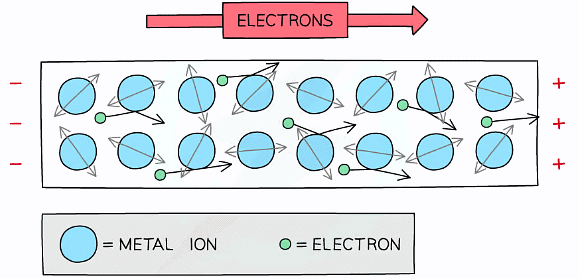 As electrons flow through the metal, they collide with ions, making them vibrate more
- The ions resist the flow of the electrons
- When the electrons collide, they lose some energy by giving it to the ions, which start to vibrate more
- As a result of this, the metal heats up
- This is used to an advantage to generate heat for appliances such as electric hobs
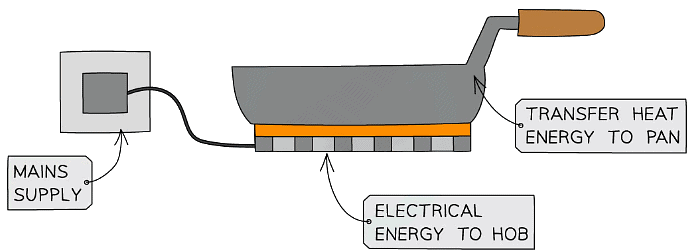 The heating effect of current can be used for many applications such as electric hobs
Power Dissipation
- When an electrical current does work against electrical resistance:
- Electrical energy is dissipated as thermal energy in the surroundings
- The heat that is produced will dissipate via thermal conduction, convection and radiation
- The amount of heat produced depends on two factors:
- Current: The greater the current, the more heat that is produced
- Resistance: The higher the resistance, the more heat that is produced (for a given current)
- Note that reducing the resistance can cause the current to increase
- This could actually increase the amount of heat produced
- In mechanics, power P is defined as the rate of doing work
- The potential difference is the work done per unit charge
- Current is the rate of flow of charge
- Therefore, the electrical power is defined as the rate of change of work done:
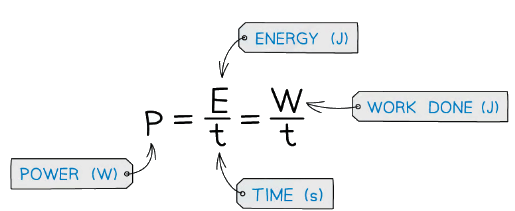
- The work done is the energy transferred so the power is the energy transferred per second in an electrical component
- The power dissipated (produced) by an electrical device can also be written as
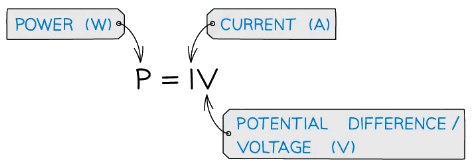
- Using Ohm's Law V = IR to rearrange for either V or I and substituting into the power equation, means power can be written in terms of resistance R
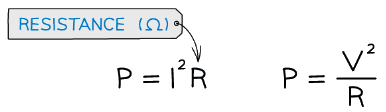
- This means for a given resistor if the current or voltage doubles the power will be four times as great.
- Which equation to use will depend on whether the value of current or voltage has been given in the question
- Rearranging the energy and power equation, the energy can be written as:
E = VIt - Where:
- E = energy transferred (J)
- V = voltage (V)
- I = current (A)
- t = time (s)
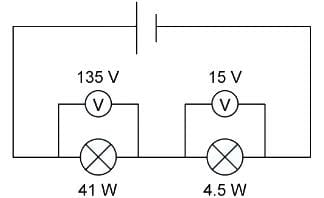
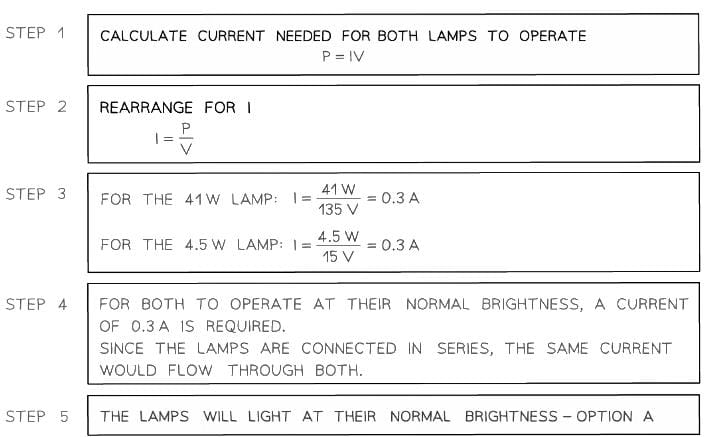
Try yourself: Two lamps are connected in series to a 150 V power supply. Which statement most accurately describes what happens?MULTIPLE CHOICE QUESTION
The document Heating Effects of Electric Current is a part of the Grade 10 Course Physics for Grade 10.
All you need of Grade 10 at this link: Grade 10
About this Document

4.61/5 Rating

Apr 29, 2026 Last updated
Related Exams
Document Description: Heating Effects of Electric Current for Grade 10 2026 is part of Physics for Grade 10 preparation. The notes and questions for Heating Effects of Electric Current have been prepared according to the Grade 10 exam syllabus. Information about Heating Effects of Electric Current covers topics like and Heating Effects of Electric Current Example, for Grade 10 2026 Exam. Find important definitions, questions, notes, meanings, examples, exercises and tests below for Heating Effects of Electric Current.
Introduction of Heating Effects of Electric Current in English is available as part of our Physics for Grade 10 for Grade 10 & Heating Effects of Electric Current in Hindi for Physics for Grade 10 course. Download more important topics related with notes, lectures and mock test series for Grade 10 Exam by signing up for free. Grade 10: Heating Effects of Electric Current
Description
Heating Effects of Electric Current of Physics covers all the important topics, helping you prepare for the Grade 10 exam on EduRev. Start for free!
Information about Heating Effects of Electric Current
In this doc you can find the meaning of Heating Effects of Electric Current defined & explained in the simplest way possible. Besides explaining types of Heating Effects of Electric Current theory, EduRev gives you an ample number of questions to practice Heating Effects of Electric Current tests, examples and also practice Grade 10 tests



Related Searches
Previous Year Questions with Solutions, Sample Paper, pdf , study material, ppt, Summary, past year papers, Heating Effects of Electric Current, mock tests for examination, Heating Effects of Electric Current, Extra Questions, Heating Effects of Electric Current, Free, video lectures, Important questions, Semester Notes, Exam, practice quizzes, Objective type Questions, Viva Questions, shortcuts and tricks, MCQs;