Notes: Static Electricity | Famous Books for UPSC Exam (Summary & Tests) PDF Download

Introduction
An atom consists of a nucleus (containing positively charged protons and neutral neutrons) orbited by negatively charged electrons.
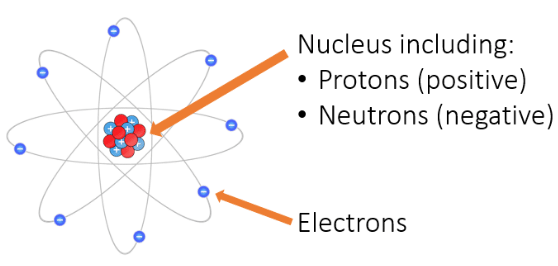
Electricity is the movement of these electrons.
Charged objects can experience a non-contact force because they are surrounded by an electric field. The field lines point away from a positive source and towards a negative source.
A second charged object entering that field will experience a force.
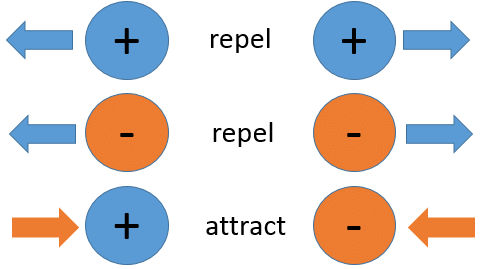
- Like charges repel.
- Unlike charges attract.
Friction can cause electrons to move from one object to another. If the objects are conductors, the electrons will just flow back to where they came from, but if the objects are insulators, the electrons can not flow back. In this case the objects have become charged.
- The object that gains electrons becomes negatively charged
- The object that loses electrons becomes positively charged
Induced Charge
If a charged object is brought near to a neutral object, it can induce a charge. Electrons are repelled from a negative object, protons are attracted. If the object has a low mass, the force of attraction/repulsion may move the object.
Van der Graaff Generator
The Van der Graaff generator is a classic demonstration of static electricity. A belt rubs on the inside of a metal sphere and the friction causes electrons to move onto the sphere. The sphere is supported by a plastic (insulating) stand and so the electrons build up on the sphere.
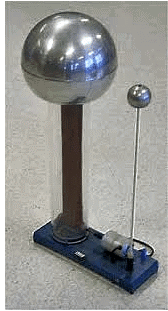
This means that the sphere builds up a negative charge. This charge will remain on the sphere until a conducting object comes close enough to allow the electrons to discharge (flow to the earth). If you reached out to touch the sphere while it was charged, the electrons would discharge through you and you would experience an electric shock.
If you are touching the sphere (as it is turned on), you also build up the charge.
Negatively charged objects will repel each other and so each negatively-charged hair on your head will repel the negatively-charged hair next to it. As a result, your hair stands on end!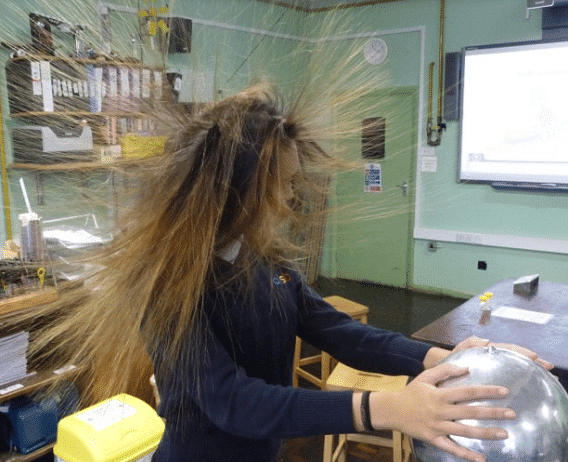
|
745 videos|1444 docs|633 tests
|




Summary
,Viva Questions
,Notes: Static Electricity | Famous Books for UPSC Exam (Summary & Tests)
,Semester Notes
,Extra Questions
,Previous Year Questions with Solutions
,Notes: Static Electricity | Famous Books for UPSC Exam (Summary & Tests)
,Free
,study material
,Sample Paper
,ppt
,shortcuts and tricks
,mock tests for examination
,Exam
,practice quizzes
,Objective type Questions
,Important questions
,past year papers
,Notes: Static Electricity | Famous Books for UPSC Exam (Summary & Tests)
,video lectures
,MCQs
;




Notes: Static Electricity Free PDF Download
Importance of Notes: Static Electricity
Notes: Static Electricity
Notes: Static Electricity UPSC Questions
Study Notes: Static Electricity on the App
|
© EduRev
|
Education Revolution
|


|




