Human Defence Systems


Non-Specific Defences
- The human body has a number of mechanisms that are the first line of defence against an infection
- The non-specific defence systems of the human body against pathogens include:
- The skin
- The nose
- The trachea and bronchi
- The stomach
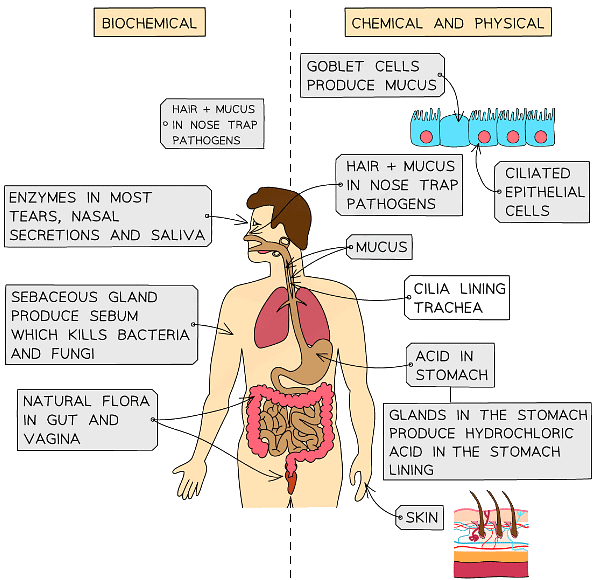 The different mechanisms can be divided into biochemical and physical defences
The Immune System
- The immune system of the body is highly complex, with white blood cells being the main component
- Once a pathogen has entered the body the role of the immune system is to prevent the infectious organism from reproducing and to destroy it
- White blood cells help to defend against pathogens by:
- Phagocytosis
- Production of antibodies
- Production of antitoxins (these are special types of antibody)
Phagocytosis
- Phagocytes engulf and digest pathogens, this can be non-specific or helped by antibodies which cause agglutination (clumping) of pathogens
- The phagocyte surrounds the pathogen and releases enzymes to digest and break it down to destroy it
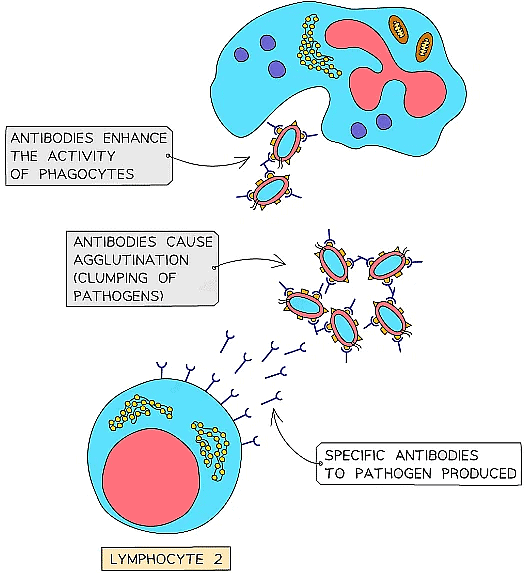 Phagocytes engulf and digest all the pathogens that they come across, they can be enhanced by antibody production
Production of antibodies
- Lymphocytes produce antibodies
- Antibodies are Y-shaped proteins - each individual has the potential to make millions of different types of antibodies, each with a slightly different shape
- The aim of antibody production is to produce the antibody that is specific (complementary) to the antigens on the surface of the pathogen
- This is a specific type of immune response as the antibodies produced are specific to each pathogen's antibodies
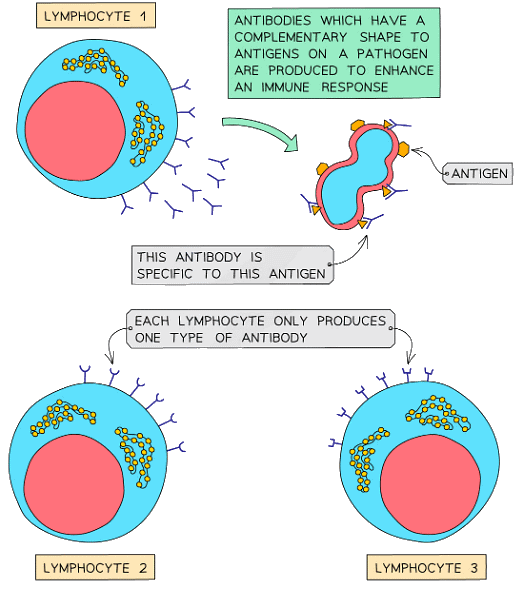 The lymphocytes produce antibodies that are specific to the antigen on the pathogen
- This is a specific type of immune response as the antibodies produced are specific to each pathogen's antibodies
- It can take a few days to make the antibodies that are specific to a pathogen and this may give the pathogen causing the infection enough time to make you feel unwell (as its numbers in the body, and consequently the damage caused by them, increases
- Memory cells are lymphocytes that remain in the body after an initial infection with a particular pathogen; they produce the specific antibodies against its antigens so that if you get infected by the same pathogen again in the future (and the antigens are the same) you can produce antibodies much quicker against it before its numbers increase and it can cause damage to the tissues of the body
Production of antitoxins
- Some pathogens (usually bacteria) can produce substances which act as toxins which make you feel unwell
- Lymphocytes can produce antibodies against these substances - in this case, they are called antitoxins
- The antitoxins neutralise the effects of the toxin
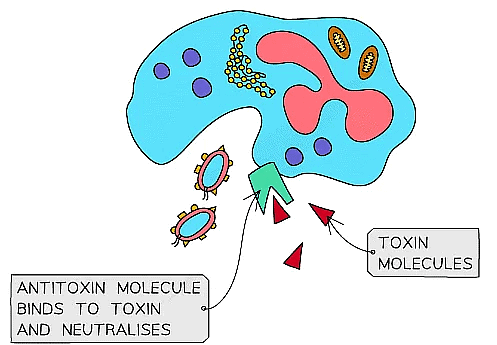 Lymphocytes produce specific antitoxins to specific pathogens
Exam Tip
- Make sure you know the difference between antigen, antibody and antitoxin:
- An antigen is a molecule found on the surface of a cell
- An antibody is a protein made by lymphocytes that is complementary to an antigen and, when attached, clumps them together and signals the cells they are on for destruction
- An antitoxin is a protein that neutralises the toxins produced by bacteria
Non-specific Human Defence Systems Against Disease
The body is constantly defending against attacks from pathogens. The first line of defence against infection stops the pathogens from entering your body. These first lines are general defences, and are not specific to fight against certain types of pathogen. They are called non-specific, and they can be physical or chemical barriers.
Skin
The skin covers almost all parts of your body to prevent infection from pathogens. If it is cut or grazed it immediately begins to heal itself, often by forming a scab, which prevents infection as the skin acts as a physical barrier. Parts of the body that do not have skin have developed other ways to prevent infection. For example, the eyes produce tears, which contain enzymes, and these are chemical barriers.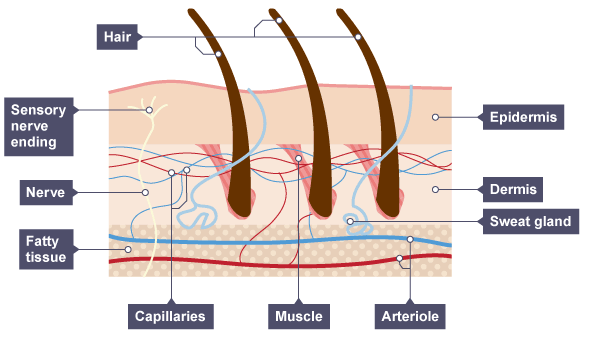 A cross-section of skin
Nose
The nose has internal hairs, which act as a physical barrier to infection. Cells in the nose produce mucus. This traps pathogens before they can enter the lungs. When the nose is blown, mucus is removed and any pathogens are trapped within it.
Trachea and bronchi
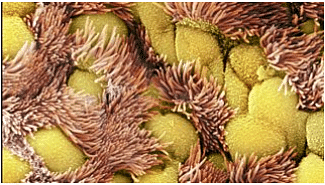 Cilliated cells reduce the amount of mucus and pathogens entering the lungs
The trachea runs from the nose towards the lungs. The cells that line the trachea also have hairs called cilia, which are much smaller than those in the nose. These are called ciliated cells. The ciliated cells waft their hairs and move mucus and pathogens upwards towards the throat where it is swallowed into your stomach. Other cells called goblet cells create the mucus in order to trap pathogens. The production of mucus in your airways is a physical barrier.
Stomach
Stomach acid does not break down food. It is part of the body's non-specific first line of defence. It is hydrochloric acid and while it does us no harm, it is strong enough to kill any pathogens that have been caught in mucus in the airways or consumed in food or water. Stomach acid is a chemical barrier against infection.




