CBSE Class 5  >  Class 5 Notes  >  Science   >  Worksheet: Food, Nutrition, Health & Diseases - 1

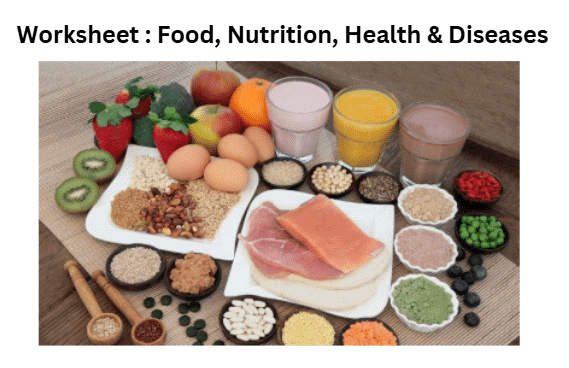
Worksheet: Food, Nutrition, Health & Diseases - 1

Worksheet: Food, Nutrition, Health & Diseases - 1

Q1: Multiple Choice Questions (MCQs).


(i) Which of the following is a source of carbohydrate?
(a) Rice
(b) 
Fish
(c) 
Egg
(d) 
Milk

(ii) Which of these food items is a source of protein?
(a) 
Potato
(b) 
Bread
(c) 
Pulses
(d) 
Sugar

(iii) Which of these vitamins is essential for good vision?
(a) 
Vitamin A
(b) Vitamin B
(c) Vitamin C
(d) Vitamin D

(iv) Which mineral is important for healthy bones and teeth?
(a) 
Calcium
(b) 
Iron
(c) 
Sodium
(d) 
Potassium

(v) Which of these diseases is caused by a deficiency of Vitamin C?
(a) 
Scurvy
(b) 
Rickets
(c) 
Beriberi
(d) 
Night blindness

Q2: Fill in the Blanks.


(i) The process of taking in and using food by our body is called ________.

(ii) The disease caused by deficiency of Vitamin A is ________.

(iii) The energy-giving nutrients are ________ and ________.

(iv) The deficiency of Vitamin D in children causes ________.

(v) The nutrient which helps in building and repairing body tissues is ________.

Q3: Match the Column.
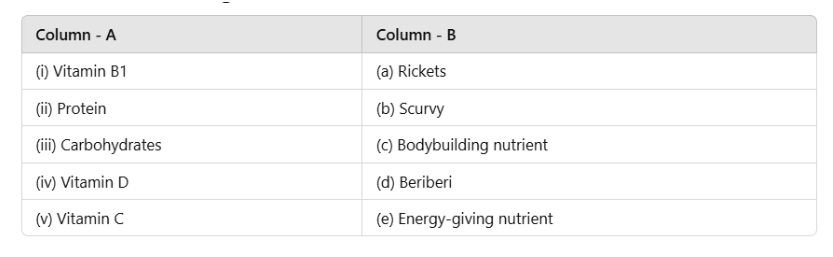
Q3: Match the Column.

Q4: True or False.


(i) Eating a balanced diet is important for maintaining good health.

(ii) Fruits and vegetables are rich sources of vitamins and minerals.

(iii) Goitre is caused by deficiency of Vitamin C.

(iv) Polio is a Non- Communicable Disease.

(v) Drinking contaminated water can cause diseases like cholera and diarrhoea.

Q5: Short Answer Questions.


(i) What are the three main types of nutrients in food?

(ii) Why is it important to have a balanced diet?

(iii) What are the two types of vitamins? Give one example of each type.

(iv) Name two diseases caused by a deficiency of vitamins.

(v) Why is it important to drink clean water and maintain personal hygiene?

You can find Worksheets Solutions here: Worksheet Solutions: Food, Nutrition, Health & Diseases - 1 

The document Worksheet: Food, Nutrition, Health & Diseases - 1 is a part of the Class 5 Course Science Class 5.
All you need of Class 5 at this link: Class 5

FAQs on Worksheet: Food, Nutrition, Health & Diseases - 1

1. What are the different types of nutrients and why do we need them?
Ans. Nutrients are substances in food that help our body grow, stay healthy, and have energy. There are six main types: carbohydrates (energy), proteins (growth), fats (energy storage), vitamins (disease prevention), minerals (strong bones and teeth), and water (digestion). Each nutrient has a specific role, so we need all of them for proper nutrition and overall health.
2. How can I tell the difference between healthy food and junk food for Class 5?
Ans. Healthy foods contain essential nutrients like whole grains, fruits, vegetables, milk, and lean proteins that nourish the body. Junk food has excessive sugar, salt, and unhealthy fats but lacks nutritional value. Healthy choices boost immunity and energy; junk food leads to obesity and diseases. Reading food labels and choosing home-cooked meals helps identify nutritious options.
3. What diseases are caused by poor nutrition and how can we prevent them?
Ans. Malnutrition causes diseases like anaemia, scurvy, rickets, and kwashiorkor. Obesity-related illnesses such as diabetes and heart disease develop from eating excess junk food. Prevention requires a balanced diet rich in fruits, vegetables, whole grains, and proteins. Regular exercise, proper hygiene, and clean drinking water also strengthen immunity against nutritional deficiency diseases.
4. What should a balanced diet include for kids my age?
Ans. A balanced diet for Class 5 students includes carbohydrates (rice, wheat), proteins (eggs, dal, chicken), fats (oil, nuts), vitamins (citrus fruits, leafy greens), minerals (milk, salt), and water. The right proportions depend on age and activity level. A balanced meal plate typically has half vegetables, one-quarter protein, and one-quarter grains. Consult nutrition flashcards and mind maps on EduRev for visual breakdowns.
5. Why is personal hygiene important for preventing diseases and staying healthy?
Ans. Personal hygiene prevents the spread of germs and bacteria that cause diseases like diarrhoea, typhoid, and infections. Washing hands before eating, bathing regularly, keeping nails clean, and using clean drinking water block disease transmission. Good hygiene habits combined with proper nutrition strengthen immunity. These practices are essential for maintaining health and preventing foodborne illnesses and communicable diseases.
Explore Courses for Class 5 exam
Get EduRev Notes directly in your Google search
Related Searches
Nutrition, Objective type Questions, Nutrition, Sample Paper, Health & Diseases - 1, MCQs, Health & Diseases - 1, Exam, Health & Diseases - 1, Viva Questions, Worksheet: Food, Extra Questions, past year papers, pdf , mock tests for examination, shortcuts and tricks, Worksheet: Food, ppt, Semester Notes, Nutrition, practice quizzes, Free, Important questions, Previous Year Questions with Solutions, video lectures, Worksheet: Food, study material, Summary;