CBSE Class 5  >  Class 5 Notes  >  Science   >  Worksheet: Safety and First Aid - 1

Worksheet: Safety and First Aid - 1

Q1: Multiple Choice Questions (MCQs).


Choose the correct option for each question.
(i) Which of the following is NOT a type of burn?
(a)
Chemical burn
(b) Electrical burn
(c) Thermal burn
(d) Static burn

(ii) What should you do if someone is choking?
(a)
Give them water to drink
(b) Perform the Heimlich maneuver
(c) Tell them to cough harder
(d) Do nothing, let them handle it
Q1: Multiple Choice Questions (MCQs).

(iii) What is the first step in treating a minor cut or scrape?
(a)
Apply pressure to stop bleeding
(b) Clean the wound with soap and water
(c) Put a bandage on it
(d) Apply an antibiotic ointment

(iv) What is the purpose of a sling in first aid?
(a) 
To support a broken or dislocated arm
(b) To hold ice packs in place
(c) To wrap around a sprained ankle
(d) To cover a wound

(v) In case of a fire, what should you do if you are inside a building?
(a)
Hide under a table
(b) Run as fast as you can
(c) Stay low and crawl to the nearest exit
(d) Climb onto the roof

Q2: Fill in the Blanks.

(i) ________ is the immediate help given to an injured person.

(ii) A person who is not breathing can be saved by using ________.
Q2: Fill in the Blanks.

(iii) If someone has swallowed poison, they should be made to ________.

(iv) Touching a live electric wire can cause a person to experience an ________.

(v) The emergency phone number for an ambulance is ________.

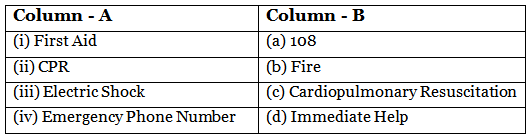
Q3: Match the Column.
Q3: Match the Column.

Q4: True or False.


(i) First aid can only be given by a doctor or a nurse.

(ii) A person with a minor injury should be taken to the hospital immediately.

(iii) If someone is choking, you should perform the Heimlich maneuver.

(iv) You should pour water on a person who has caught on fire.

(v) It is safe to touch a person who is experiencing an electric shock.

Q5: Short Answer Questions.


Answer the following questions in one or two sentences.
(i) What is first aid, and why is it important?

(ii) How can you prevent accidents from happening at home?

(iii) What should you do if you get a nosebleed?

(iv) What are some common signs of a fractured bone?

(v) What should you do if you encounter a wild animal while outdoors?
Q5: Short Answer Questions.

Q6: Long Answer Questions.


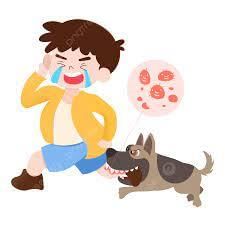
(i) What is Rabies?

(ii) What should be done when a poisonous snake bites a person?

(iii) How can we put out a fire caused by electricity?

(iv) Why should water not be used to put out a fire caused due to kerosene?

(v) What should be done when a person's clothes catch fire?
Q6: Long Answer Questions.


You can find Worksheets Solutions here: Worksheet Solutions: Safety and First Aid - 1 

The document Worksheet: Safety and First Aid - 1 is a part of the Class 5 Course Science Class 5.
All you need of Class 5 at this link: Class 5

FAQs on Worksheet: Safety and First Aid - 1

1. What are the main safety rules I should follow at home to prevent accidents?
Ans. Home safety involves keeping floors clean and dry, storing sharp objects safely, keeping medicines and chemicals locked away, ensuring electrical outlets are covered, and never playing with fire or matches. Teaching children about hazard identification and prevention strategies helps reduce common household injuries significantly. Regular safety checks in bathrooms and kitchens are essential for protecting family members from preventable accidents.
2. How do I give first aid for minor cuts and wounds correctly?
Ans. First aid for cuts requires washing the wound with clean water immediately, applying gentle pressure with a clean cloth to stop bleeding, and covering it with a sterile bandage. Disinfecting the area with antiseptic solution prevents infection. For deeper wounds or excessive bleeding, seek medical help promptly. Understanding basic wound care techniques empowers students to handle minor injuries confidently and safely.
3. What should I do if someone gets a burn injury at home?
Ans. Immediate burn treatment involves cooling the affected area under running water for 10-15 minutes, removing tight jewellery or clothing, and covering with a clean, dry cloth. Never apply ice directly or use oils. For severe burns causing blistering or deep tissue damage, call emergency services immediately. Knowing proper burn response procedures prevents complications and reduces pain significantly.
4. How can I recognize choking and help someone who can't breathe properly?
Ans. Choking signs include inability to speak, cough, or breathe, along with panic and loss of consciousness. The Heimlich manoeuvre-quick upward thrusts on the abdomen-dislodges obstructions in conscious individuals. For unconscious victims, call emergency services and begin rescue breathing. Learning choking recognition and emergency response techniques for Class 5 students builds life-saving awareness appropriate to their age and capability.
5. What first aid steps should I take if someone faints or loses consciousness suddenly?
Ans. When someone faints, lay them flat on their back, elevate their legs slightly, loosen tight clothing, and ensure fresh air circulation. Check for responsiveness and breathing; if unresponsive and unresponsive, call emergency services immediately. Never give water or food until fully conscious. Understanding recovery position and unconsciousness protocols ensures proper care until medical professionals arrive at the scene.
Explore Courses for Class 5 exam
Get EduRev Notes directly in your Google search
Related Searches
Free, MCQs, Previous Year Questions with Solutions, mock tests for examination, Viva Questions, Exam, Summary, ppt, video lectures, study material, Extra Questions, pdf , Worksheet: Safety and First Aid - 1, past year papers, Worksheet: Safety and First Aid - 1, shortcuts and tricks, Important questions, Semester Notes, Worksheet: Safety and First Aid - 1, practice quizzes, Sample Paper, Objective type Questions;