Worksheet Solutions: Safety and First Aid - 1

Q1: Multiple Choice Questions (MCQs).
Choose the correct option for each question.
(i) Which of the following is NOT a type of burn?
(a) Chemical burn
(b) Electrical burn
(c) Thermal burn
(d) Static burn
Ans: (d)
Explanation: A static burn is not a recognised medical term for burns. The three standard types of burns in first aid and medicine are chemical burns (caused by strong acids or alkalis), electrical burns (caused by electric current), and thermal burns (caused by heat or flame).
(ii) What should you do if someone is choking?
(a) Give them water to drink
(b) Perform the Heimlich maneuver
(c) Tell them to cough harder
(d) Do nothing, let them handle it
Ans: (b)
Explanation: The Heimlich manoeuvre (abdominal thrusts) is a first aid technique used to dislodge a solid object blocking the airway. If the person can cough or speak, encourage coughing; if they cannot breathe, give back blows and abdominal thrusts and seek emergency help immediately.
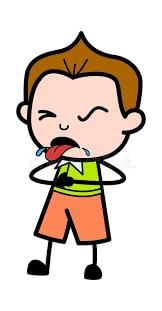
(iii) What is the first step in treating a minor cut or scrape?
(a) Apply pressure to stop bleeding
(b) Clean the wound with soap and water
(c) Put a bandage on it
(d) Apply an antibiotic ointment
Ans: (a)
Explanation: The immediate priority for a minor cut or scrape is to stop the bleeding by applying gentle pressure with a clean cloth. Once bleeding has stopped, clean the wound with soap and water, dry it gently and cover with a clean bandage to prevent infection.
(iv) What is the purpose of a sling in first aid?
(a) To support a broken or dislocated arm
(b) To hold ice packs in place
(c) To wrap around a sprained ankle
(d) To cover a wound
Ans: (a)
Explanation: A sling supports and immobilises an injured arm, reducing pain and preventing further damage in cases of fractures or dislocations. After using a sling, seek medical help for proper assessment and treatment.
(v) In case of a fire, what should you do if you are inside a building?
(a) Hide under a table
(b) Run as fast as you can
(c) Stay low and crawl to the nearest exit
(d) Climb onto the roof
Ans: (c)
Explanation: Smoke rises, so staying low and crawling helps you avoid inhaling smoke and toxic gases while moving to the nearest safe exit. Do not use lifts, and follow the building's evacuation plan or fire wardens' instructions.
Q2: Fill in the Blanks.
(i) ________ is the immediate help given to an injured person.
Ans: First aid is the immediate help given to an injured person.
(ii) A person who is not breathing can be saved by using ________.
Ans: A person who is not breathing can be saved by using CPR.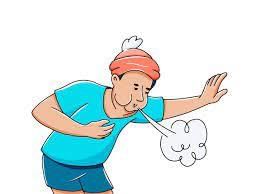
(iii) If someone has swallowed poison, they should be made to ________.
Ans: If someone has swallowed poison, they should be made to vomit.
(iv) Touching a live electric wire can cause a person to experience an ________.
Ans: Touching a live electric wire can cause a person to experience an electric shock.
(v) The emergency phone number for an ambulance is ________.
Ans: The emergency phone number for an ambulance is 108.
Q3: Match the Column.
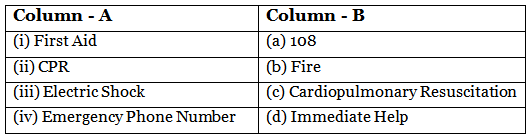
Ans: (i) First Aid - (d) Immediate Help
(ii) CPR - (c) Cardiopulmonary Resuscitation
(iii) Electric Shock - (b) Fire
(iv) Emergency Phone Number - (a) 108
Q4: True or False.
(i) First aid can only be given by a doctor or a nurse.
Ans: False
Explanation: Anyone with basic first aid knowledge can give first aid. Immediate help by a bystander can save lives before professional medical help arrives.
(ii) A person with a minor injury should be taken to the hospital immediately.
Ans: False
Explanation: Many minor injuries can be treated with simple first aid at home. If signs of serious injury, severe pain, increased bleeding, or signs of infection appear, seek medical attention.
(iii) If someone is choking, you should perform the Heimlich manoeuvre.
Ans: True
Explanation: When breathing is blocked by a lodged object and the person cannot breathe or speak, abdominal thrusts (Heimlich manoeuvre) and back blows can help dislodge the object; call for emergency help if needed.
(iv) You should pour water on a person who has caught on fire.
Ans: False
Explanation: Pouring water may spread some types of fire and can worsen the situation. Use the "Stop, Drop, and Roll" method, a fire blanket, or a suitable fire extinguisher and call for help.
(v) It is safe to touch a person who is experiencing an electric shock.
Ans: False
Explanation: Do not touch a person in contact with a live electrical source. First, switch off the power if it is safe to do so, or use a non-conductive object to separate them from the source; then give first aid and call for medical help.
Q5: Short Answer Questions.
Answer the following questions in one or two sentences.
(i) What is first aid, and why is it important?
Ans: First aid is the immediate care given to a person who is injured or suddenly ill. It is important because it can save lives, prevent the condition from getting worse, and help recovery.
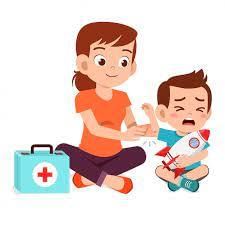
(ii) How can you prevent accidents from happening at home?
Ans: To prevent accidents at home, keep the house tidy and clutter-free, store sharp objects and chemicals out of children's reach, install safety devices such as smoke detectors and window guards, and always supervise young children.
(iii) What should you do if you get a nosebleed?
Ans: If you get a nosebleed, sit up straight, lean the head slightly forward, pinch the nostrils together with thumb and index finger for about 10 minutes, and avoid tilting the head back or lying down.
(iv) What are some common signs of a fractured bone?
Ans: Common signs of a fractured bone include pain, swelling, bruising, deformity of the limb, difficulty or inability to move the area, and sometimes a sound at the moment of injury.
(v) What should you do if you encounter a wild animal while outdoors?
Ans: If you encounter a wild animal while outdoors, stay calm, do not approach or provoke the animal, make yourself appear larger, back away slowly without turning your back, and avoid direct eye contact; seek help if the animal behaves aggressively.
Q6: Long Answer Questions.
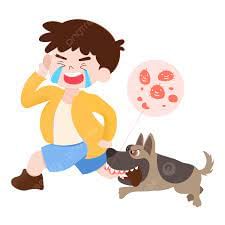
(i) What is Rabies?
Ans: Rabies is a viral disease that affects the central nervous system of mammals, including humans. It is usually transmitted through the bite or scratch of an infected animal, especially dogs and bats. The virus attacks the brain and spinal cord, causing severe symptoms and, if not treated promptly, it is almost always fatal. Rabies can be prevented by vaccinating pets and by seeking immediate medical care after any suspected animal bite.
(ii) What should be done when a poisonous snake bites a person?
Ans:
- Stay Calm: The person should remain as calm and still as possible to slow the spread of venom.
- Seek Medical Help: Call for emergency medical assistance or go to the nearest hospital immediately.
- Keep Still: Keep the bitten limb still and at or below heart level to reduce circulation of venom.
- Remove Constrictive Items: Take off tight clothes, rings or bracelets from the bitten limb because swelling may follow.
- Do Not Try to Suck or Cut the Bite: Avoid traditional methods like cutting the wound or trying to suck out venom; these can make the situation worse.
- Do Not Apply Ice: Do not use ice on the bite area.
(iii) How can we put out a fire caused by electricity?
Ans:
- Do Not Use Water: Never use water on an electrical fire because water conducts electricity and can cause shock.
- Cut Off the Power: If it is safe, switch off the power supply to the electrical equipment.
- Use a Fire Extinguisher: Use a Class C (or appropriate electrical) fire extinguisher that is safe for electrical fires.
- Use a Fire Blanket: For small appliance fires, a fire blanket can suffocate the flames and cut off the oxygen supply.
- Call for Help: Even after the fire is out, call the fire service to inspect for hidden danger and to ensure it is fully extinguished.
(iv) Why should water not be used to put out a fire caused due to kerosene?
Ans:
- Ineffectiveness: Water does not mix with oil and cannot cool or extinguish an oil-based fire effectively.
- Risk of Spreading: Water can cause burning oil to splash and spread the fire.
- Explosions: Water can vapourise rapidly on hot oil, causing a splattering or explosive effect that spreads flames.
To put out a kerosene or other flammable-liquid fire, use a Class B fire extinguisher or smother the flames with a fire blanket.
(v) What should be done when a person's clothes catch fire?
Ans:
- Stop: Immediately stop moving to prevent the fire from spreading over the body.
- Drop: Drop to the ground carefully.
- Roll: Roll over and over, covering the face with hands, to smother the flames by cutting off oxygen.
- Cool the Burns: After flames are out, cool burnt areas with running water for 10-20 minutes to reduce heat and pain.
- Seek Medical Attention: Get medical help promptly even if burns seem minor to assess and treat the injuries properly.
FAQs on Worksheet Solutions: Safety and First Aid - 1
| 1. What are the basic first aid steps for treating a minor cut? |  |
| 2. How can I help someone who is choking? | |
| 3. What should I do if someone faints? | |
| 4. How do I treat a burn at home? | |
| 5. What are the signs of a serious allergic reaction? | |