Introduction: Trees in Competitive Programming

Competitive programming requires strong algorithmic and data structure knowledge to solve complex problems efficiently. One powerful tool in a programmer's arsenal is the use of trees. Trees are versatile data structures that can be used to model a wide range of problems. In this article, we will explore the concept of introduction trees in competitive programming. We will discuss their structure, algorithms, and provide examples to illustrate their usage.
What are Introduction Trees?
Introduction trees, also known as centroid trees or height-balanced trees, are a special type of tree used to decompose a given tree into smaller, more manageable subtrees. The concept of introduction trees is often employed to solve problems related to tree queries efficiently.
Structure of an Introduction Tree
An introduction tree is derived from a given tree by repeatedly finding the centroid of the current tree and recursively constructing the introduction trees of its children. The centroid of a tree is the node whose removal will result in subtrees with sizes at most half of the total nodes in the tree.
To construct an introduction tree, we start with the root of the original tree and find its centroid. We then remove the centroid and recursively construct introduction trees for each of its children. The centroid is connected to its children by creating edges in the introduction tree.
Algorithms for Introduction Trees
Finding the Centroid
To find the centroid of a tree efficiently, we can use a depth-first search (DFS) algorithm. The steps for finding the centroid are as follows:
- Perform a DFS on the tree to calculate the subtree sizes for each node.
- Start from the root node and traverse the tree in a bottom-up manner.
- At each node, find the child with the largest subtree size. If there is a tie, choose the child with the smallest node index.
- If the largest subtree size is less than or equal to half the total number of nodes in the tree, the current node is the centroid.
- If the largest subtree size is greater than half the total number of nodes, move to the selected child and repeat the process.
Constructing the Introduction Tree
Once we have found the centroid of the tree, we can recursively construct the introduction trees for its children. The steps for constructing the introduction tree are as follows:
- Find the centroid of the original tree using the centroid finding algorithm described above.
- Remove the centroid from the original tree.
- Recursively construct the introduction trees for each child of the centroid.
- Connect the centroid to its children by creating edges in the introduction tree.
Example: Introduction Tree Construction
Let's illustrate the construction of an introduction tree with an example. Consider the following tree:
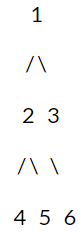
- Start with the root node (node 1) as the current tree.
- Find the centroid of the current tree (node 1) using the centroid finding algorithm.
- Remove the centroid (node 1) from the original tree and recursively construct the introduction trees for its children.
- Repeat the process for each child of the centroid.
- Connect the centroid (node 1) to its children (nodes 2 and 3) by creating edges in the introduction tree.
- The resulting introduction tree would be:
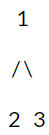
- Repeat the above steps for the introduction trees of nodes 2 and 3.
- The introduction tree for node 2 would be:
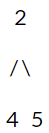
- The introduction tree for node 3 would be:
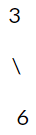
Conclusion
Introduction trees provide a powerful technique for solving tree-related problems efficiently in competitive programming. By decomposing a tree into smaller subtrees, we can perform queries and computations in a more manageable and optimized manner. The process of finding the centroid and constructing introduction trees allows us to leverage the properties of trees and optimize our algorithms effectively.
