CBSE Class 1 > Class 1 Notes > General Knowledge for Young Learners > Facts on Trees
Facts on Trees

Facts on Trees
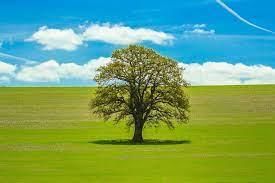
Trees are tall, woody plants that grow from the ground and usually have a single main stem called a trunk. They live for many years and are very important for animals, people and the Earth. The points below explain what trees are, their parts, how they live, and many interesting facts you can remember and share.
Parts of a tree
- Roots - hold the tree in the soil and take water and minerals from the ground.
- Trunk - the main stem that supports branches and carries water and food between roots and leaves.
- Branches - grow from the trunk and hold leaves, flowers and fruit.
- Leaves - make food for the tree using sunlight, water and carbon dioxide (this process is called photosynthesis).
- Flowers - many trees make flowers; flowers help make seeds for new trees.
- Fruits and seeds - fruits protect seeds and help them travel so new trees can grow.
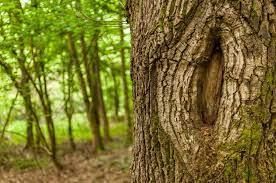
- Bark - the protective outer layer of the trunk and branches; it keeps the tree safe from weather, insects and animals.
How trees reproduce and grow
- Phanerogams - most trees are phanerogams, which means they reproduce by seeds. Phanerogams have visible reproductive parts such as flowers and fruits.
- Seeds can travel in different ways: by wind, water, animals or by exploding from the fruit. When a seed lands on good soil and gets water and sunlight, it can sprout into a new tree.
Types, shape and adaptations
- Trees and bushes - both are woody plants, but bushes (shrubs) are usually smaller and branch out close to the ground. Trees normally form one main trunk that grows tall.
- Bark differences - trees that grow in the shade often have thinner bark, while trees that grow in sunny, exposed places often develop thicker bark.
- Leaves and environment - trees in humid places or near large bodies of water usually have broad, big leaves to catch sunlight and help cooling. Trees in dry regions often have small, hard leaves to reduce water loss.
- Palms - by the botanical definition, many palms are not true trees but are large, woody herbs; they look like trees but are classified differently by botanists.
Interesting and unusual facts
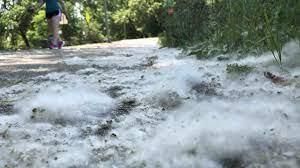
- Cottonwood seeds can stay in the air for days. These light seeds travel a long way on the wind so new trees can start far from the parent tree.
- The manchineel tree (native to parts of Florida and other regions) is one of the most poisonous trees in the world. Its fruit can be dangerous to eat. Standing under the tree in rain can cause skin blisters, and smoke from a burning manchineel tree can hurt your eyes.
- In 2012, a Florida woman named Sarah Barnes accidentally burned down a very old hollow tree known as Senator when she tried to light a fire inside it. Senator was believed to be about 3,500 years old.
- In 1987, the actor Mr. T cut down more than 100 oak trees on his estate in Lake Forest, Illinois. This event angered neighbours and became known locally as the Lake Forest Chainsaw Massacre.
- A bristlecone pine tree called Methuselah is believed to be one of the oldest non-clonal trees in the world; its exact location is kept secret to protect it.
- The world's oldest known clonal tree colony is Pando, a group of quaking aspens in Utah, USA. DNA testing shows that the trees are one organism connected by a single root system and their age is estimated to be about 80,000 years. Pando is also extremely heavy - estimated at thousands of tons.
- In some cultures, trees are used in special rituals. For example, members of the Tana Toraja tribe in Indonesia have used hollow living trees to place the bodies of babies who die before teething; as the tree grows it can enclose the small body.
- Oaks are often called the "king of trees" because they adapt well to many environments and are symbols of strength, wisdom and loyalty in many cultures.
- In 1938, in a part of northeastern Germany, a group of larch trees were planted in the shape of a swastika to mark Adolf Hitler's birthday; the pattern becomes visible in spring and autumn when leaf colours contrast with surrounding forest.
- General Sherman, a giant sequoia in California's Sequoia National Park, is the largest tree in the world by volume at about 52,508 cubic feet.
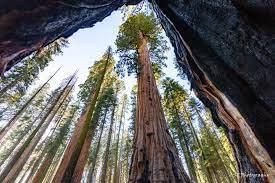
- Hyperion is the world's tallest known tree at about 380 feet tall. Its location is kept secret to protect it. The second tallest known tree is a 331-foot eucalyptus named The Centurion in Tasmania.
- The English phrase "knock on wood" comes from old beliefs that helpful or protective spirits lived in trees; people would knock on trunks to wake or call a spirit for protection.
- The Arbol del Tule is a Montezuma cypress in Mexico that has the greatest trunk girth known - about 38 feet in diameter.
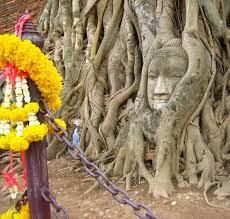
- A tree in India is said to have been planted about 288 BC and believed to be propagated from the original fig tree under which the Buddha sat; this tree, Ficus religiosa, is one of the most sacred trees for many people.
- The sandbox tree has spiky bark, poisonous sap and fruit that can explode when ripe. It is nicknamed the "Dynamite Tree" because its fruit can shoot out hard seeds at high speed over a wide radius.
- There are about 3.04 trillion trees on Earth - roughly 422 trees for every person on the planet.
- Since human civilisation began about 11,700 years ago, the total number of trees on Earth has fallen by around 46%.
- About 15 billion trees are lost each year because of deforestation, forest management, agriculture and changes in land use.
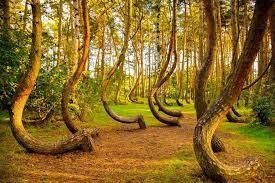
- A group of about 400 trees in Poland called the Krzywy Las or "Crooked Forest" have identical, mysterious J-shaped bends near the base of their trunks. Scientists think the trees were all bent by the same force or human action when they were young, but the exact cause remains uncertain.
How trees help people and nature
- Trees give us oxygen by producing it during photosynthesis and help clean the air by taking in carbon dioxide.
- Trees provide shade, keep places cool, and protect soil from being washed away by rain.
- Trees give us food (fruits, nuts), wood for building and fuel, and habitats for birds and animals.
- Trees help keep water and soil healthy and support many other living things in forests and towns.
- Some trees can communicate chemical signals: for example, when willows are attacked by pests such as webworms, they release chemicals that tell nearby willows to make more tannins so the leaves become harder for the pests to eat.
The document Facts on Trees is a part of the Class 1 Course General Knowledge for Young Learners.
All you need of Class 1 at this link: Class 1
FAQs on Facts on Trees
| 1. What are the main types of trees? |  |
Ans. The main types of trees can be categorised into two broad groups: deciduous trees and evergreen trees. Deciduous trees shed their leaves seasonally, typically in autumn, and include species such as oak, maple, and birch. Evergreen trees, on the other hand, retain their leaves throughout the year, with common examples including pine, spruce, and fir.
| 2. How do trees contribute to the ecosystem? | |
Ans. Trees play a vital role in the ecosystem by providing oxygen through photosynthesis, improving air quality by absorbing pollutants, and offering habitat and food for various wildlife species. Additionally, trees help in soil conservation by preventing erosion, maintaining the water cycle, and contributing to climate regulation by storing carbon dioxide.
| 3. What is the importance of tree planting? | |
Ans. Tree planting is crucial for environmental restoration and urban development. It helps combat climate change by sequestering carbon dioxide, enhances biodiversity by providing habitats for wildlife, and improves community health by offering shade, reducing noise pollution, and enhancing the aesthetic value of landscapes. Furthermore, trees can help mitigate flooding and improve soil quality.
| 4. How do trees grow and develop over time? | |
Ans. Trees grow through a process called secondary growth, which occurs in the cambium layer, allowing them to increase in diameter as they age. This growth is influenced by factors such as soil quality, water availability, and sunlight. As trees mature, they develop a complex structure with roots, trunks, branches, and leaves, which all contribute to their overall health and longevity.
| 5. What threats do trees face in the modern environment? | |
Ans. Trees face numerous threats in the modern environment, including deforestation for agriculture and urban development, climate change leading to extreme weather conditions, and pests or diseases that can weaken or kill trees. Additionally, pollution can adversely affect tree health, making it essential to implement conservation measures to protect these vital organisms.
About this Document

2.4K Views

4.96/5 Rating

Apr 29, 2026 Last updated
Document Description: Facts on Trees for Class 1 2026 is part of General Knowledge for Young Learners preparation. The notes and questions for Facts on Trees have been prepared according to the Class 1 exam syllabus. Information about Facts on Trees covers topics like and Facts on Trees Example, for Class 1 2026 Exam. Find important definitions, questions, notes, meanings, examples, exercises and tests below for Facts on Trees.
Introduction of Facts on Trees in English is available as part of our General Knowledge for Young Learners for Class 1 & Facts on Trees in Hindi for General Knowledge for Young Learners course. Download more important topics related with notes, lectures and mock test series for Class 1 Exam by signing up for free. Class 1: Facts on Trees
Description
Facts on Trees of GK covers all the important topics, helping you prepare for the Class 1 exam on EduRev. Start for free!
Information about Facts on Trees
In this doc you can find the meaning of Facts on Trees defined & explained in the simplest way possible. Besides explaining types of Facts on Trees theory, EduRev gives you an ample number of questions to practice Facts on Trees tests, examples and also practice Class 1 tests



Related Searches
Summary, shortcuts and tricks, Facts on Trees, pdf , Facts on Trees, Important questions, study material, Sample Paper, Free, MCQs, past year papers, video lectures, Objective type Questions, Previous Year Questions with Solutions, ppt, Exam, Extra Questions, Viva Questions, Facts on Trees, mock tests for examination, practice quizzes, Semester Notes;