Mnemonics: Plant Kingdom | Biology Class 11 - NEET PDF Download
| Table of contents |

|
| Algae |
|
| Bryophytes |
|
| Pteridophytes |
|
| Gymnosperms |
|
| Angiosperms |
|

This document will help you remember important information about plants in a fun and easy way. Inside, you'll find mnemonics—memory tricks—that will make it easier for you to remember key concepts, examples, and classifications related to plants.
 Whether you're studying for an exam, preparing for a quiz, or simply looking to enhance your understanding of plant classification, these mnemonics will serve as valuable memory tools. Utilize them alongside your regular study routine to reinforce your knowledge and increase your recall ability.
Happy mnemonic learning!
Algae
PCR
- Phaeophyceae
- Chlorophyceae
- Rhodophyceae
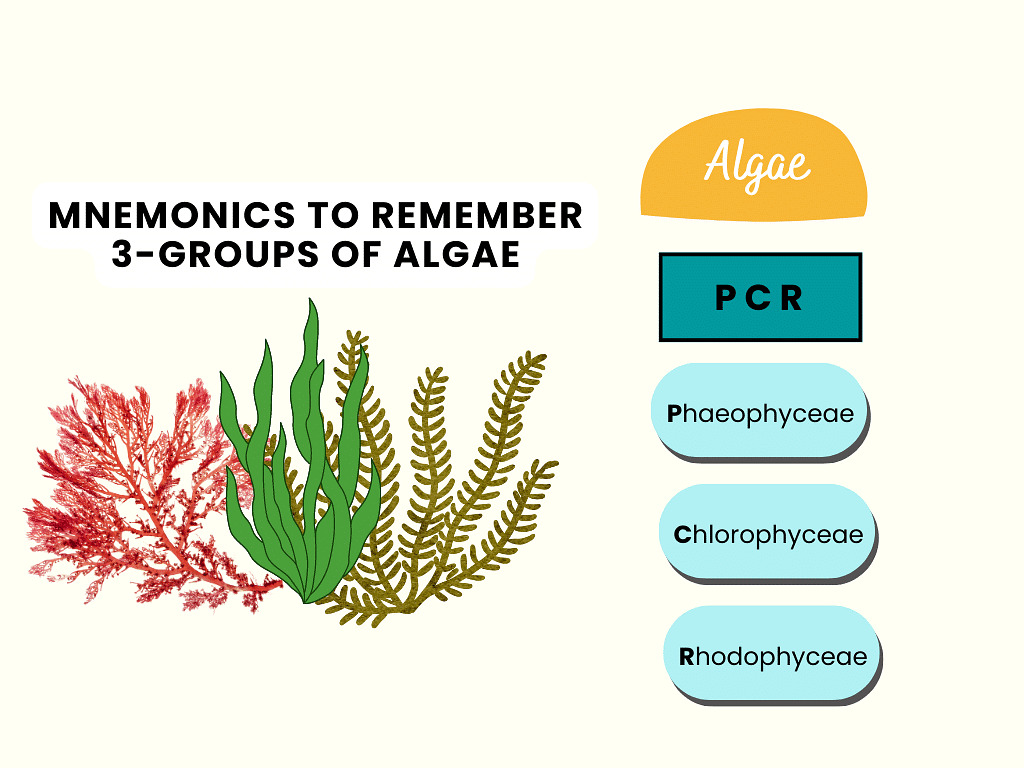
Mnemonic Explanation: Algae is divided into three major groups. The mnemonic represents the initials of each group: Phaeophyceae (brown algae), Chlorophyceae (green algae), and Rhodophyceae (red algae).
(a) Phaeophyceae
Self defence
- Sargassum
- Ectocarpus
- Laminaria
- Fucus
- Dictyota
Mnemonic Explanation: Phaeophyceae refers to brown algae. The mnemonic "Self defence" is used to remember the different examples within this group, including Sargassum, Ectocarpus, Laminaria, Fucus, and Dictyota.
(b) Chlorophyceae
US has Very clean colleges
- Ulothrix
- Spirogyra
- Volvox
- Chlorella
- Chlamydomonas
Mnemonic Explanation: Chlorophyceae represents green algae. The mnemonic "US has Very clean colleges" helps remember the examples within this group, including Ulothrix, Spirogyra, Volvox, Chlorella, and Chlamydomonas.
(c) Rhodophyceae
PG PG
- Polysiphonia
- Gelidium
- Porphyra
- Gracilaria
Mnemonic Explanation: Rhodophyceae refers to red algae. The mnemonic "PG PG" is used to remember the examples within this group, which include Polysiphonia, Gelidium, Gracilaria, and Porphyra.
Bryophytes
Plasma Membrane is Semi Fluid
- Polytrichum
- Marchantia
- Sphagnum
- Funaria
Mnemonic Explanation: Bryophytes are non-vascular plants. The mnemonic represents the initials of four examples: Polytrichum, Marchantia, Sphagnum, and Funaria. The phrase "Plasma Membrane is Semi Fluid" is a reminder of their characteristic feature.
Pteridophytes
"Perfect Lovers Eat Apples Softly"
- Psilotum & Pteris
- Lycopodium
- Equisetum
- Adiantum
- Selaginella and Salvinia
Mnemonic Explanation: This mnemonic represents the key pteridophytes.
Gymnosperms
"Cool Shopes Play Cute"
Cycas
Sequoia
Pinus
Cedrus
Mnemonic Explanation: The mnemonic "Cool Shopes Play Cute" represents different examples of gymnosperms: Cycas, Sequoia, Pinus, and Cedrus.
Angiosperms
"FLOWER"
- Fruits
- Leaves
- Ovules
- Water-conducting tissues
- Enclosed Seeds
- Roots
Mnemonic Explanation: This mnemonic breaks down the word "FLOWER" to highlight key features of angiosperms. It represents Fruits, Leaves, Ovules, Water-conducting tissues, Enclosed Seeds, and Roots. Each letter represents an essential aspect of angiosperms, aiding in remembering their distinguishing characteristics.
|
169 videos|524 docs|136 tests
|
FAQs on Mnemonics: Plant Kingdom - Biology Class 11 - NEET
| 1. What are the main groups of plants in the plant kingdom? |  |
| 2. What are some examples of algae? | |
| 3. How are bryophytes different from other plants? | |
| 4. What is the main characteristic of gymnosperms? | |
| 5. How are angiosperms different from gymnosperms? | |




MCQs
,mock tests for examination
,Summary
,study material
,Objective type Questions
,Sample Paper
,Exam
,Important questions
,practice quizzes
,past year papers
,Semester Notes
,Free
,Viva Questions
,Extra Questions
,ppt
,Mnemonics: Plant Kingdom | Biology Class 11 - NEET
,video lectures
,Mnemonics: Plant Kingdom | Biology Class 11 - NEET
,Mnemonics: Plant Kingdom | Biology Class 11 - NEET
,shortcuts and tricks
,Previous Year Questions with Solutions
;




Mnemonics: Plant Kingdom Free PDF Download
Importance of Mnemonics: Plant Kingdom
Mnemonics: Plant Kingdom Notes
Mnemonics: Plant Kingdom NEET Questions
Study Mnemonics: Plant Kingdom on the App
|
© EduRev
|
Education Revolution
|


|




