Mnemonics: Biodiversity and its Conservation

Let's make your cramming journey easy to memorise with mnemonics.
1. Types of Biodiversity
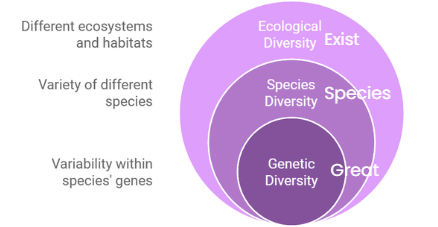
Mnemonic: "Great Species Exist"
Mnemonic Explanation
- Great → Genetic Diversity - Variation of genes within a species. Examples: different breeds of dogs, varieties of rice. Genetic diversity allows populations to adapt to changing environments and resist diseases.
- Species → Species Diversity - The variety of species within a region. Examples: the number of bird, insect and plant species in a forest. Species diversity is important for ecosystem stability and provides food, medicines and other resources.
- Exist → Ecosystem Diversity - The variety of ecosystems or habitats such as forests, grasslands, wetlands and coral reefs. Different ecosystems support different sets of species and ecological processes.
Short notes: Biodiversity is normally described at three levels: genetic, species and ecosystem. High biodiversity increases ecosystem resilience and provides direct and indirect benefits to humans.
2. Causes of Loss of Biodiversity: The Evil Quartet
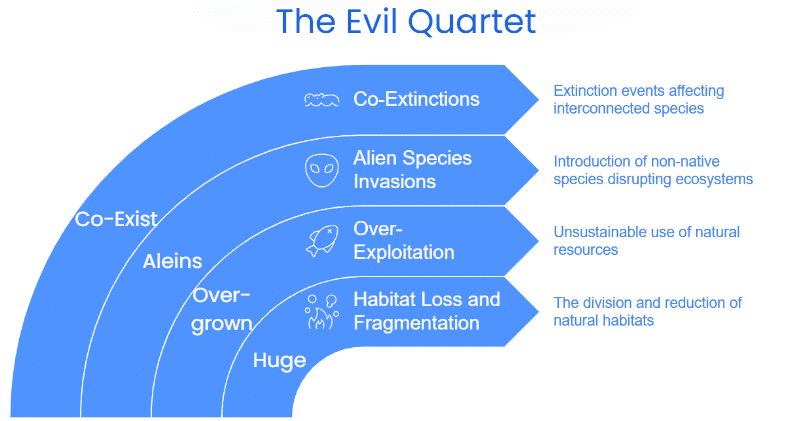
Mnemonic: "Huge Overgrown Aliens Coexist"
Mnemonic Explanation
- Huge → Habitat destruction - Conversion of forests, wetlands and other habitats to agriculture, urban areas, roads and industries. Habitat loss is the primary cause of species decline worldwide.
- Overgrown → Overexploitation - Excessive hunting, fishing, logging and harvesting of species beyond sustainable limits. Overexploitation reduces population sizes and can drive species to extinction.
- Aliens → Alien (invasive) species - Introduction of non-native species that outcompete, prey on or bring diseases to native species. Invasive plants and animals can change ecosystem structure and reduce native biodiversity.
- Coexist → Co-extinctions - Loss of one species causing extinction of another that depends on it (for example, specialised pollinators, parasites or host-parasite relationships). Co-extinctions amplify the overall biodiversity loss.
Additional human causes: pollution, climate change, fragmentation of habitats and disease outbreaks. Conservation measures such as protected areas, sustainable use policies and control of invasives help to reduce these threats.
3. Why Should We Conserve Biodiversity?
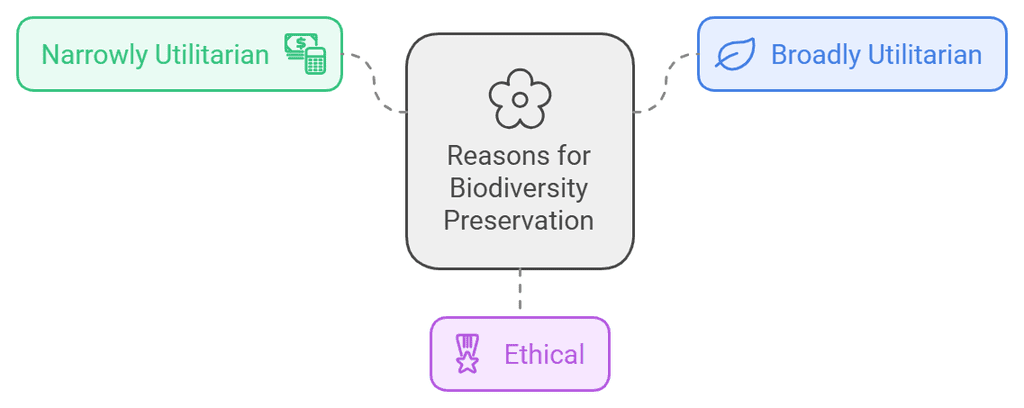
Mnemonic: "Nature Brings Eternal Value"
Mnemonic Explanation
- Nature → Narrowly utilitarian - Direct economic benefits from biodiversity: food (crops, fisheries), medicines (plant and animal derivatives), raw materials (timber, fibres) and genetic resources used in crop and livestock improvement.
- Brings → Broadly utilitarian - Ecosystem services that support life and economic activity: provisioning (water, food), regulating (climate and disease regulation), supporting (soil formation, nutrient cycling) and cultural (recreation, spiritual values). Pollination, water purification and carbon sequestration are key examples.
- Eternal → Ethical (intrinsic) value - Moral responsibility to preserve other life forms and to maintain biodiversity for future generations; biodiversity has an intrinsic worth beyond human use.
Protecting biodiversity therefore secures resources, maintains ecosystem functions and fulfils ethical duties. Conservation combines sustainable use with protection of habitats and species.
4. In-Situ Conservation
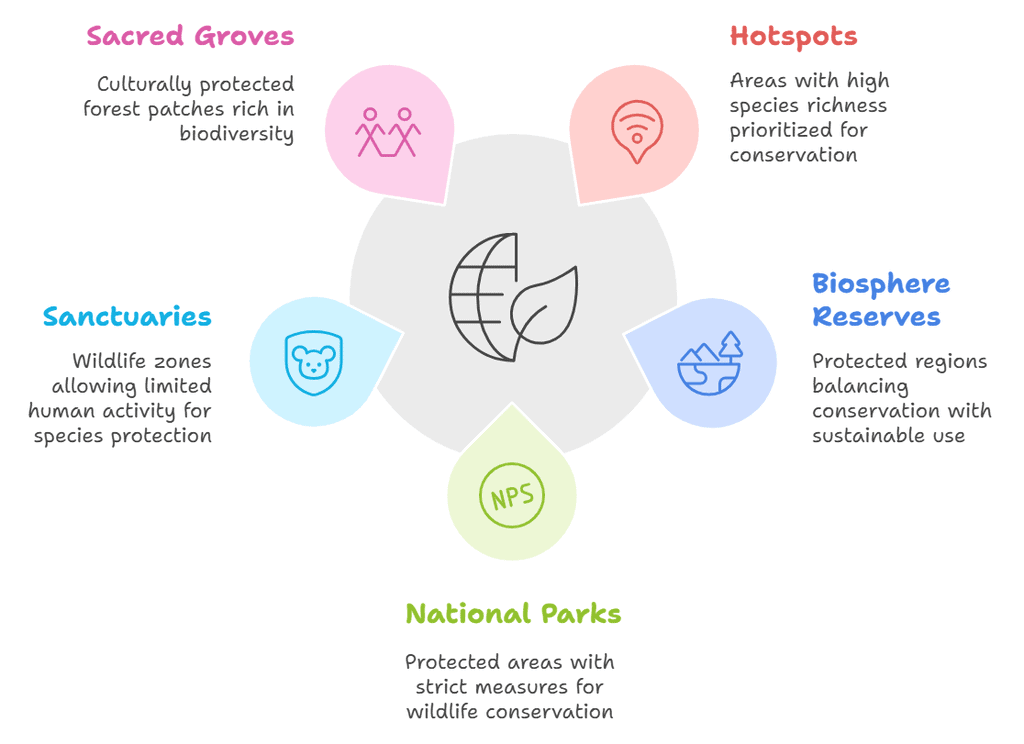
Mnemonic: "Hot Biospheres Naturally Secure Sacred Life"
Mnemonic Explanation
- Hot → Hotspots - Regions with exceptionally high numbers of endemic species and significant habitat loss. Hotspot criteria (commonly used): at least 1,500 endemic vascular plant species and loss of at least 70% of original habitat. Examples at a global level include the Western Ghats and Eastern Himalaya regions in India.
- Biospheres → Biosphere reserves - Large protected areas recognised for conservation, research and sustainable development, typically having core, buffer and transition zones. Biosphere reserves integrate conservation with human use and scientific study.
- Naturally → National parks - Protected areas set aside for the protection of biodiversity and ecological integrity where human activities are strictly regulated. Examples include parks established to protect particular ecosystems or species.
- Secure → Sanctuaries - Protected areas where species and habitats are safeguarded but with flexibility for certain human activities under regulation; sanctuaries often protect particular species or migratory routes.
- Sacred → Sacred groves - Community-protected patches of forest or vegetation preserved for religious or cultural reasons; they often harbour high local biodiversity and act as genetic reservoirs.
- Life → Goal - The overall aim is to protect species within their natural habitats and to conserve ecological processes.
Advantages of in-situ conservation: conserves whole ecosystems and processes, maintains species interactions and allows natural evolution and behaviour to continue. It is the preferred long-term conservation strategy.
5. Ex-Situ Conservation
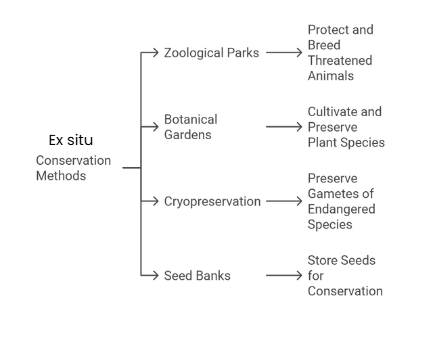
Mnemonic: "Zoo Babies Cry for Seeds"
Mnemonic Explanation
- Zoo → Zoological parks - Captive breeding of animals, education, research and sometimes reintroduction programmes. Zoos can save species that are critically endangered in the wild.
- Babies → Botanical gardens - Living collections of plants for conservation, education and research. They preserve rare and threatened plant species and serve as centres for propagation and public awareness.
- Cry → Cryopreservation - Long-term storage of reproductive material (seeds, pollen, sperm, ova, embryos) at very low temperatures for future use in breeding and restoration programmes.
- Seeds → Seed banks - Storage of seeds under controlled conditions to preserve plant genetic diversity. Examples include national seed banks and global facilities such as the Svalbard Global Seed Vault.
Advantages of ex-situ conservation: protects species outside their natural habitats, useful for small or critically endangered populations, allows controlled breeding and facilitates research.
Limitations: expensive, limited space, may not preserve ecological interactions, and reintroduction to the wild can be difficult without habitat protection. Ex-situ methods complement in-situ conservation but cannot fully replace it.
Summary: Use the mnemonics to remember the key ideas: types of biodiversity (Genetic, Species, Ecosystem), the main causes of loss (Habitat destruction, Overexploitation, Invasive species, Co-extinctions), reasons to conserve (narrow utilitarian, broad utilitarian, ethical), and the approaches to conserve life both in-situ (hotspots, biosphere reserves, national parks, sanctuaries, sacred groves) and ex-situ (zoos, botanical gardens, cryopreservation, seed banks). Effective conservation combines both approaches with policies, community involvement and sustainable practices.
FAQs on Mnemonics: Biodiversity and its Conservation
| 1. What are the different types of biodiversity? |  |
| 2. What is "The Evil Quartet" in the context of biodiversity loss? | |
| 3. Why is it important to conserve biodiversity? | |
| 4. What is in-situ conservation, and how does it work? | |
| 5. What are some methods of ex-situ conservation? | |





