CBSE Class 10  >  Class 10 Notes  >  Science   >  Very Short Questions: Chemical Reactions and Equations

Very Short Questions: Chemical Reactions and Equations

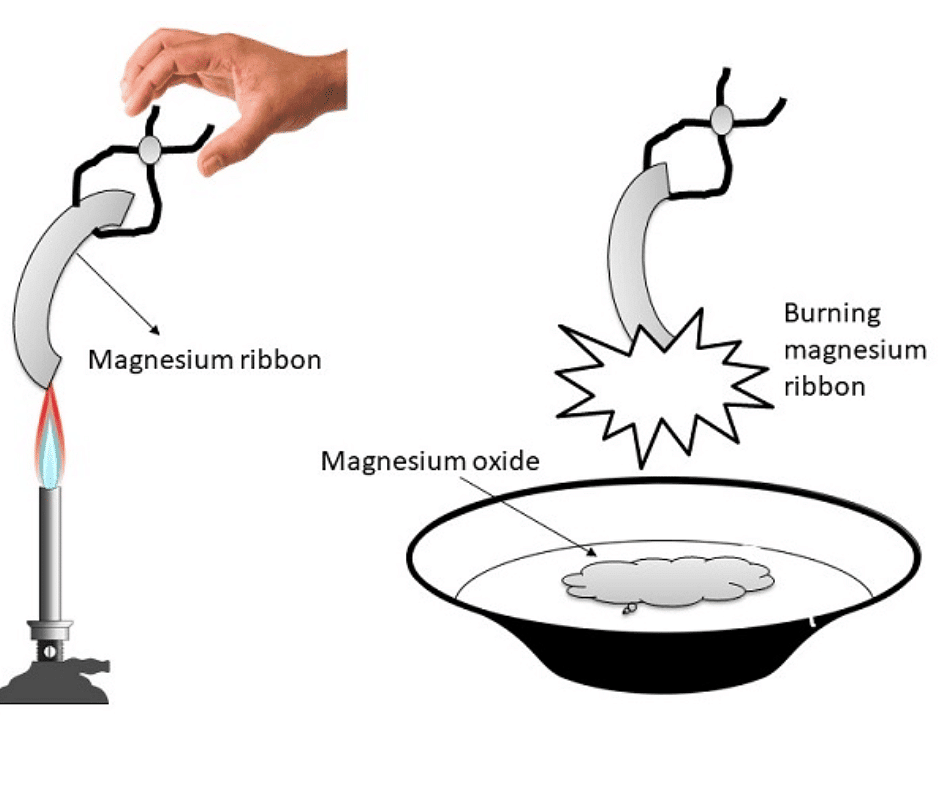
Q1: What happens when magnesium ribbon burns in the air?
Ans: When magnesium ribbon burns in the air, it combines with the oxygen to form magnesium oxide.
2Mg(s) + O2 (g) → 2MgO(s)
Very Short Questions: Chemical Reactions and Equations

Q2: On what chemical law, the balancing of chemical equations is based?
Ans: 
The balancing of a chemical equation is based on the law of conservation of mass.

Q3: Name the gas that evolved when zinc reacts with dil. HCl.
Ans: 
Hydrogen gas is evolved.
When HCl , which is an acid goes into the chemical reaction with the Zinc metal, the reaction occurs by vigorously bubbles, which are due to the formation of Hydrogen gas.

Q4: Name and state the law which is kept in mind while we balance a chemical equation.
Ans:
Law of conservation of mass. Mass can neither be created nor destroyed during a chemical reaction.

Q5: Write the chemical equation for reactions that take place when lead nitrate and potassium iodide solutions are mixed.
Ans:
Pb(NO3)2 + 2KI → 2KNO3 + PbI2
Lead nitrate + Potassium iodide → Potassium nitrate + Leadiodide

Q6: Why is photosynthesis considered an endothermic reaction?
Ans: 
Photosynthesis is considered an endothermic reaction because heat is absorbed in this process.

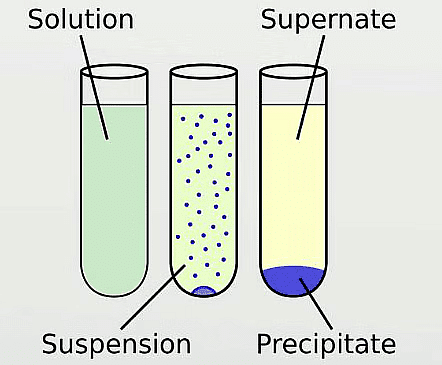
Q7: What is precipitate?
Ans: 
Precipitate is an insoluble metal compound formed after a reaction.
Very Short Questions: Chemical Reactions and Equations

Q8: Why is the combustion of Liquified Petroleum Gas (LPG) a chemical change?
Ans: Combustion of Liquified Petroleum Gas (LPG) is a chemical change because, after its combustion, a new substance is formed and cannot be turned back into LPG.

Q9: What is wrong with the following equation?
Mg + O ➝ MgO
Identify the mistake and balance the equation.
Ans:
In this equation, oxygen should be in molecular form (O2).
2Mg + O2 ➝ 2MgO.

Q10: What is meant by the skeletal equation?
Ans: 
The equation where the number of atoms of each element on both sides of a chemical equation is not equal is called a skeletal equation.

The document Very Short Questions: Chemical Reactions and Equations is a part of the Class 10 Course Science Class 10.
All you need of Class 10 at this link: Class 10

FAQs on Very Short Questions: Chemical Reactions and Equations

1. What's the difference between a physical change and a chemical reaction?
Ans. A physical change alters matter's appearance or state without forming new substances-like melting ice or dissolving salt. A chemical reaction creates entirely new substances with different properties through breaking and forming bonds. For example, burning wood is chemical; tearing paper is physical. Chemical reactions release or absorb energy and cannot be reversed easily.
2. How do I identify if a chemical equation is balanced for Class 10 CBSE exams?
Ans. Count atoms of each element on both sides of the equation. Equal numbers on reactant and product sides mean it's balanced. For instance, in 2H₂ + O₂ → 2H₂O, hydrogen atoms total four on each side and oxygen totals two. Balancing equations ensures the law of conservation of mass is followed, critical for scoring marks in chemical reactions questions.
3. Why do some chemical reactions need a catalyst, and what does it actually do?
Ans. A catalyst speeds up chemical reactions by lowering activation energy-the minimum energy needed for reactants to transform into products. It isn't consumed in the reaction, so it reappears unchanged. Catalysts enable reactions to occur faster at lower temperatures without altering the final outcome, making them essential in industrial processes and biochemical pathways.
4. What are the main types of chemical reactions, and how do I tell them apart?
Ans. The four primary types are combination (two substances form one), decomposition (one substance breaks into multiple), displacement (one element replaces another), and double displacement (ions exchange between compounds). Combination and decomposition are opposites; displacement involves reactivity series considerations; double displacement produces precipitates or gas. Recognising these patterns helps predict products and balance equations systematically.
5. What does it mean when a chemical reaction shows a colour change or produces gas, and why does this matter?
Ans. Colour changes and gas evolution signal that a chemical reaction has occurred-atoms have rearranged into new substances. These observable signs prove that bonds were broken and reformed, not just physical mixing. Recording such observations strengthens answers in very short answer questions. Students can use EduRev's mind maps and flashcards to memorise common indicators like precipitate formation, heat release, and odour changes.
Explore Courses for Class 10 exam
Get EduRev Notes directly in your Google search
Related Searches
Very Short Questions: Chemical Reactions and Equations, study material, Very Short Questions: Chemical Reactions and Equations, Exam, Free, shortcuts and tricks, Previous Year Questions with Solutions, Viva Questions, Very Short Questions: Chemical Reactions and Equations, Semester Notes, mock tests for examination, Objective type Questions, practice quizzes, Important questions, Sample Paper, pdf , Summary, past year papers, ppt, video lectures, MCQs, Extra Questions;


