CBSE Class 9  >  Class 9 Notes  >  Social Studies (SST)   >  Map Based Questions: Physical Features of India

Map Based Questions: Physical Features of India

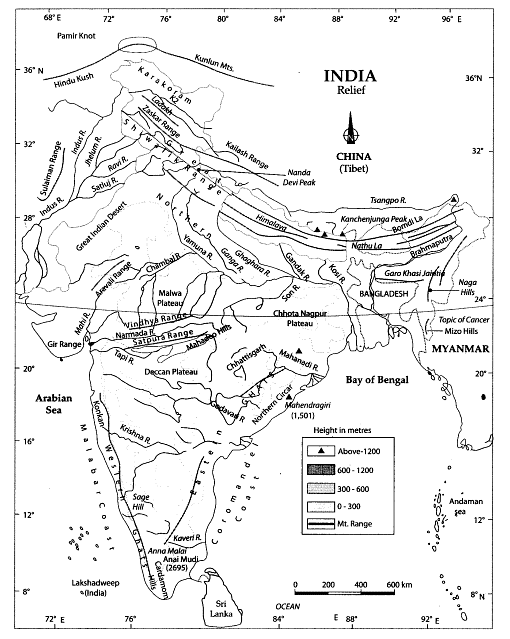
INDIA: Physical Features

This is a physical map of India showing all the physiographic regions of the nation. In terms of physiography, the nation can be split into the following areas:

  • The Islands
  • Coastal plains
  • The Peninsular plateau
  • The Great Indian Desert
  • Northern plains
  • The Himalayan mountains
INDIA: Physical Features


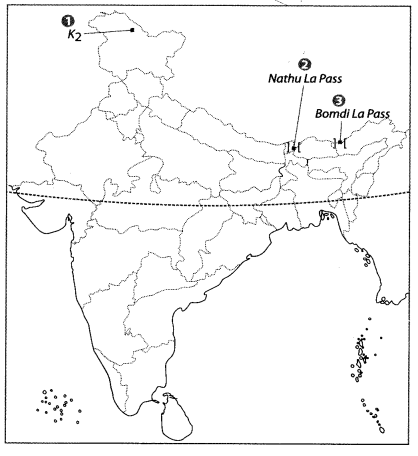
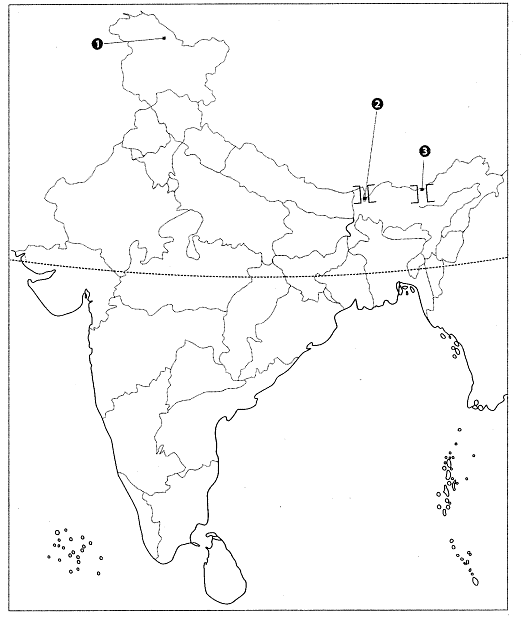
Q1: Features are marked by numbers in the given political map of India. Identify these features with the help of the following information and write their correct names on the lines marked in the map.
1. The highest mountain peak of Himalaya in India
2. A mountain pass in Sikkim
3. A mountain pass in Arunachal Pradesh
INDIA: Physical Features

Ans:

INDIA: Physical Features

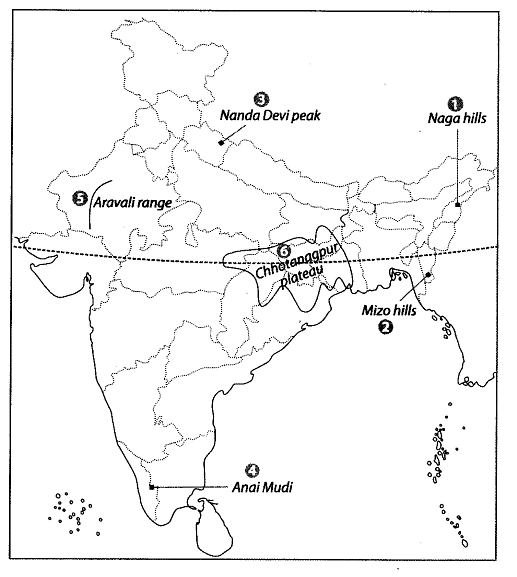
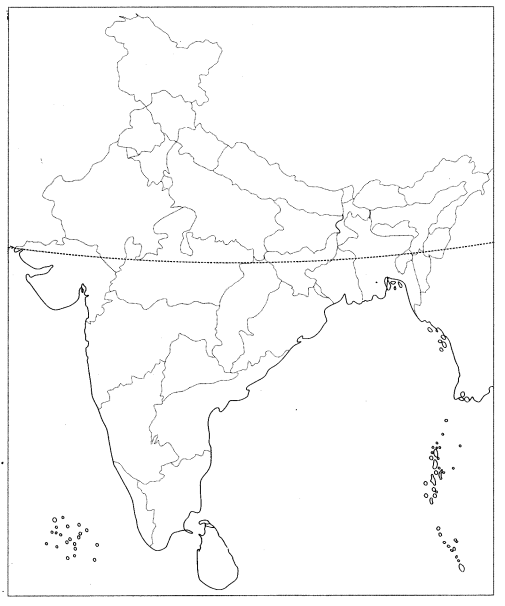
Q2: Locate and label the following items on the given map
1.Naga hills
2. Mizo hills
3. Nanda Devi peak
4. Anai Mudi
5. Aravali range or A mountain range in Rajasthan or The hill range forming the Western boundary of the Malwa plateau
6. Chhotanagpur plateau or An important plateau
INDIA: Physical Features

Ans:

INDIA: Physical Features

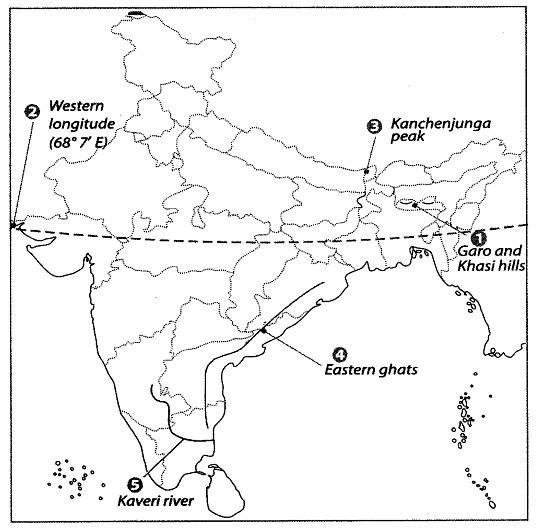
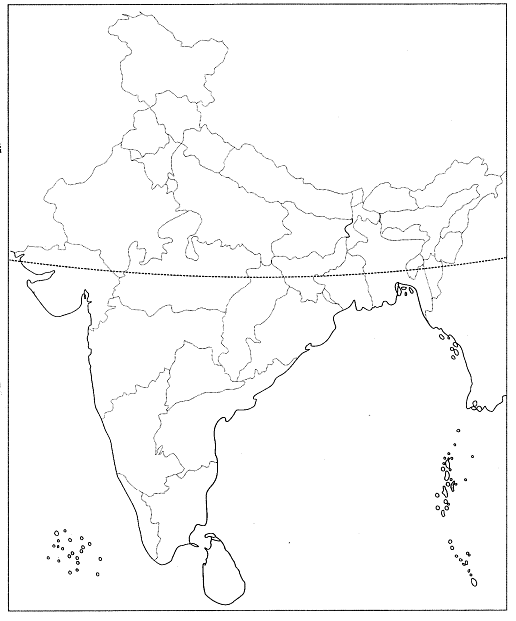
Q3: Locate and label the following items on the given map with appropriate symbols.
1. Garo and Khasi hills
2. Western Longitude
3. Kanchenjunga peak
4. Eastern ghats
5. Kaveri river
INDIA: Physical Features

Ans:

INDIA: Physical Features

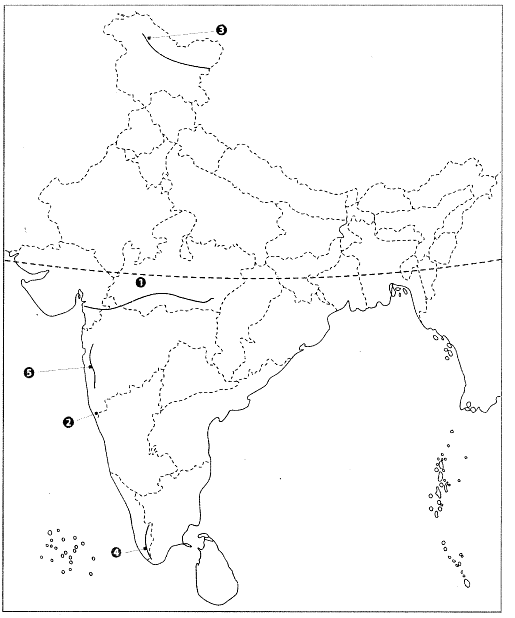
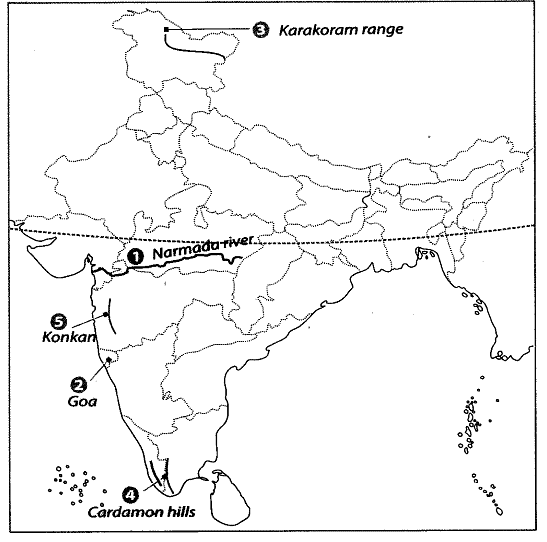
Q4: Features are marked by numbers in the given political map of India. Identify these features with the help of the following information and write their correct names on the lines marked in the map.
1. River of Peninsular India that forms an estuary
2. A mountain range
3. A South India hill range
4. A South Indian hill range
5. Western Coastal strip in the North
INDIA: Physical Features

Ans:
1. Narmada River - A major west-flowing peninsular river which opens into the Arabian Sea and forms an estuary near its mouth.
2. Goa - The location marked corresponds to the State of Goa on the west coast; this area lies close to the Western Ghats, a prominent mountain range along India's western edge.
3. Karakoram Range - A major mountain range in northern India and part of the greater Himalayan system, noted for very high peaks and glaciers.
4. Cardamom Hills - A hill range in southern India, forming part of the southern Western Ghats, situated mainly in Kerala and Tamil Nadu.
5. Konkan - The northern section of the western coastal strip along the Arabian Sea, forming the western coastal plain in the north of the peninsula.
INDIA: Physical Features
The document Map Based Questions: Physical Features of India is a part of the Class 9 Course Social Studies (SST) Class 9.
All you need of Class 9 at this link: Class 9

FAQs on Map Based Questions: Physical Features of India

1. What are the major physical features of India?
Ans. The major physical features of India include the Himalayan mountain range in the north, the Indo-Gangetic Plain, the Thar Desert in the west, the Deccan Plateau in the south, and the coastal regions along the Arabian Sea and the Bay of Bengal. These features contribute to India's diverse geography and climate.
2. How do the Himalayas influence the climate of India?
Ans. The Himalayas act as a natural barrier, preventing cold winds from Central Asia from entering India, which helps maintain a warmer climate in the northern plains. They also play a crucial role in the monsoon system, as the mountains trap moisture-laden winds, causing heavy rainfall in the region during the monsoon season.
3. What is the significance of the Indo-Gangetic Plain in India?
Ans. The Indo-Gangetic Plain is one of the most fertile regions in India, formed by the alluvial deposits of the Indus, Ganges, and Brahmaputra rivers. This plain supports a large agricultural economy and is densely populated, making it a crucial area for food production and economic activity.
4. Describe the characteristics of the Thar Desert.
Ans. The Thar Desert, also known as the Great Indian Desert, is characterised by arid conditions, sparse vegetation, and extreme temperature variations between day and night. It is primarily located in the northwest part of India and supports a unique ecosystem, including adapted flora and fauna, and is home to various indigenous communities.
5. What role do the Western and Eastern Ghats play in India's ecology?
Ans. The Western and Eastern Ghats are mountain ranges that run parallel to the western and eastern coasts of India, respectively. They are recognised as biodiversity hotspots, hosting a wide variety of flora and fauna, including many endemic species. These ranges also influence the monsoon rains, contributing to the ecological balance and agricultural productivity in the surrounding regions.
Explore Courses for Class 9 exam
Get EduRev Notes directly in your Google search
Related Searches
study material, Exam, Viva Questions, Semester Notes, Important questions, past year papers, Extra Questions, Previous Year Questions with Solutions, shortcuts and tricks, mock tests for examination, video lectures, pdf , Objective type Questions, Free, Summary, ppt, MCQs, Map Based Questions: Physical Features of India, Sample Paper, Map Based Questions: Physical Features of India, practice quizzes, Map Based Questions: Physical Features of India;