Worksheet: How Many Squares? - 1

Q1: Fill in the blanks.
(i) A square with 1 cm length will have an area of ______.
(ii) Area of a square with side 2 m is ______ square metres.
(iii) Length of a boundary is called ______.
(iv) Measure of the space enclosed in a plane figure is called ______.
Q2: Answer the following Questions.
(i) Draw 2 straight lines in this rectangle to divide it into 1 rectangle and 2 equal triangles. Find the area of the new rectangle and the area of 1 of the triangles.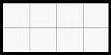
(ii) Write the area in square cm of the shaded portion.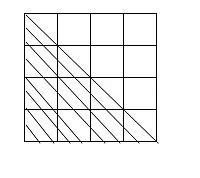
(iii) Find the perimeter and area of the following figure.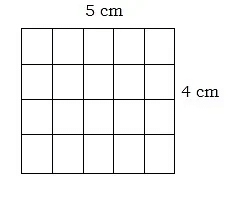
(iv) Look at the following image: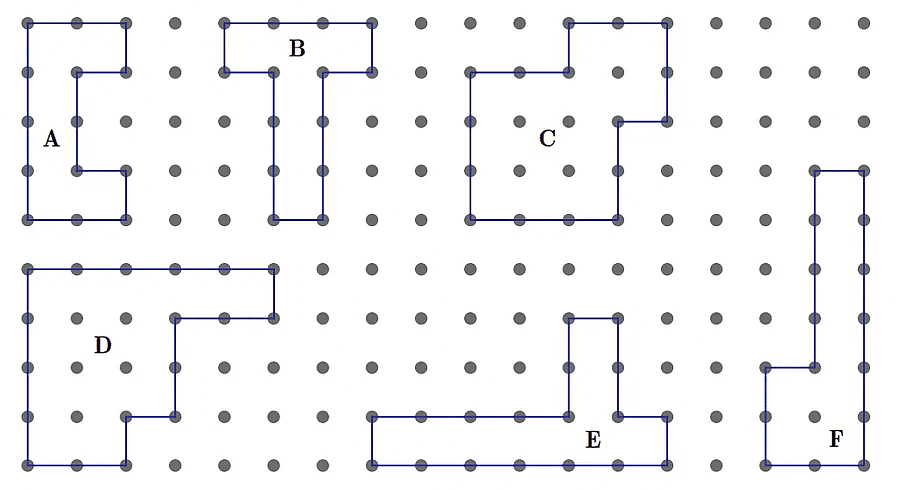 (a) Which shape has the maximum perimeter? Its perimeter is ______ cm.
(b) Which shape has the minimum perimeter? Its perimeter is ______ cm.
(c) The perimeter of figure D is ____ cm. It is _____ (less/more) than the perimeter of figure A which is______ cm.
(v) Study the diagram given below. Draw 2 more lines so that the area is 18 square cm.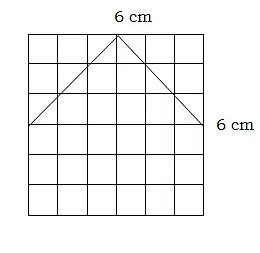 (vi) Here is a rectangle of an area of 20 square cm. Answer the following based on this:
(a) Draw one straight line in this rectangle to divide it into two equal triangles. What is the area of each of the triangles?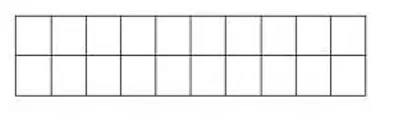 (b) Draw one straight line in this rectangle to divide it into two equal rectangles. What is the area of each of the smaller rectangles?
(vii) Answer the following questions:
(a) The area of a square is 9 cm. Find the area of shaded part: (b) Find the perimeter of the following figure:
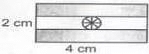 (c) Find the area of the shaded shape:
 (d) Find the area of the following:
 (e) Find the area of the shaded path.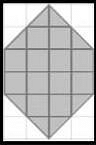
(vii) Find the perimeter and area of the figure by counting the squares.
(viii) Draw your own tile pattern using triangles.
(ix) Draw one straight line in the following rectangle to divide it into two equal triangles. What is the area of each of the triangles?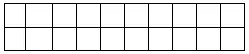
(x) Draw lines and divide the figure into parts having equal area as two triangles.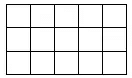
You can access the solutions to this worksheet here.
FAQs on Worksheet: How Many Squares? - 1
| 1. How do you count squares in a grid for Class 5 maths? |  |
| 2. What's the trick to finding all square sizes in grid counting problems? | |
| 3. Why do students get different square counts on the same grid? | |
| 4. Can a rectangle grid have the same number of squares as a square grid? | |
| 5. How does understanding square counting help with shape recognition skills? | |