Worksheet: Earth and its Natural Satellites - 2

Q1: Define the following.
Space, Satellite, Eclipse, Tides, Artificial Satellite
Q2: Name the Following.
(i) Earth's closest neighbour's and the only natural Satellite.
(ii) India's first unmanned spacecraft to moon.
(ii) The surface of the moon is covered with _______, __________ and huge ______.
(iv) The first astronaut who stepped on moon.
(v) A person who goes to space.
(vi) First man to go to space.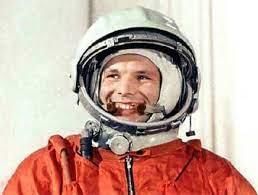
(vii) Four artificial satellites launched by India.
(viii) Name Indian's who have travelled to space.
(ix) Satellites which take picture of the movement of clouds and help us forecast the weather.
Q3: Fill in the Blanks.
(i) The object through which light does not pass is called ________.
(ii) _________ was the first satellite launched by India in 1975.
(iii) Satellites which send messages from one country to another are called _________ satellites.
(iv) High tides are caused by attraction between _____ and _________.
(v) Zhai Zhigang of china remained suspended in space for about _____ minutes.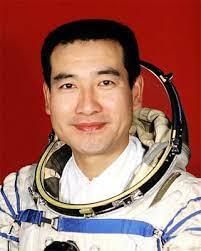
(vi) The craters on the surface of the moon are formed by pieces of rocks _____.
(vii) The moon is about _______ km away from the earth.
(viii) Different shapes of the moon are called its _________.
Q4: True or False.
(i) The celestial bodies form a part of earth's atmosphere.
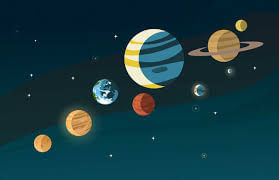
(ii) Saturn is seventh planet in our solar system.
(iii) Continents and oceans are present in the mantle.
(iv) Factors such as air, food, water etc which are essential for life are present in the crust.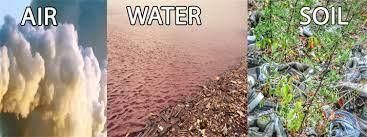
(v) Lower part of the mantle is made up of solid rocks.
(vi) A day on Mercury is as long as almost two months on the Earth.
(vii) Uranus has more than 60 natural satellites.
(viii) Neptune has one natural satellite.
Q5: Multiple Choice Questions (MCQs).
(i) The reason behind the different phases of the Moon is:
(a) Rotation of the Moon about its own axis
(b) Revolution of the Moon around the Earth
(c) Revolution of earth around the sun
(ii) Apollo 11 was launched from ____ at Florida, USA on:
(a) Kentville Space Center, 1969
(b) Kennedy Shuttle Center, 1968
(c) Kennedy Space Center, 1969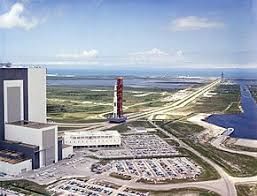
(iii) The man-made object that revolves around the Earth is known as:
(a) Artificial satellite
(b) Natural satellite
(c) Space shuttle
(iv) What do you mean by Lunar Eclipse?
(a) The Moon comes between the Sun and the Earth and blocks the sunlight from reaching the Earth
(b) The Earth comes between the Sun and the Moon and blocks the sunlight from reaching the Moon
(c) The sun comes between the earth and the sun
(v) NASA stands for:
(a) National Aeronautics and Space Administration
(b) National Aerodynamics and Space Administration
(c) National Aerodynamics and Shuttle Administration
The solutions of the worksheet "Earth and its Natural Satellites - 2"
FAQs on Worksheet: Earth and its Natural Satellites - 2
| 1. What are natural satellites? |  |
| 2. How many moons does Earth have? | |
| 3. Why is the Moon important for Earth? | |
| 4. Can other planets have natural satellites too? | |
| 5. How do natural satellites differ from artificial satellites? | |