Worksheet Solutions: Earth and its Natural Satellites - 2

Q1: Define the following.
Space, Satellite, Eclipse, Tides, Artificial Satellite
Ans:
- Space: Space is the vast region beyond Earth's atmosphere where planets, stars, moons and galaxies exist. It has very little air and is mostly empty, with objects moving in paths called orbits.
- Satellite: A satellite is any object that moves around a larger body because of gravity. A natural satellite, like the Moon, orbits a planet by itself. An artificial satellite is built by humans and put into orbit for purposes such as communication, weather observation or navigation.
- Eclipse: An eclipse happens when one celestial body comes between two others and blocks the light. A solar eclipse occurs when the Moon comes between the Sun and Earth and blocks the Sun. A lunar eclipse occurs when Earth comes between the Sun and the Moon and casts its shadow on the Moon.
- Tides: Tides are the regular rise and fall of sea levels caused mainly by the gravitational pull of the Moon and, to a lesser extent, the Sun. As Earth rotates, different coastal areas pass through the bulges of water that form, producing high and low tides.
- Artificial Satellite: An artificial satellite is a human-made object placed into orbit around Earth or another body. These satellites are used for sending TV and phone signals, predicting weather, taking pictures of Earth, and helping ships and vehicles find their way.
Q2: Name the Following.
(i) Earth's closest neighbour's and the only natural Satellite.
Ans: The Moon.

(ii) India's first unmanned spacecraft to moon.
Ans: Chandrayaan-1.
(ii) The surface of the moon is covered with _______, __________ and huge ______.
Ans: The surface of the Moon is covered with rocks, dust, and huge craters.
(iv) The first astronaut who stepped on moon.
Ans: Neil Armstrong.
(v) A person who goes to space.
Ans: Astronaut (also called cosmonaut in Russian usage).
(vi) First man to go to space.
Ans: Yuri Gagarin was the first person to travel into space.

(vii) Four artificial satellites launched by India.
Ans:
- INSAT series (for communication and broadcasting).
- IRS series (for Earth observation and remote sensing).
- NavIC satellites (for regional navigation services).
- GSAT series (communication and broadcasting satellites).
(viii) Name Indian's who have travelled to space.
Ans: Rakesh Sharma and Kalpana Chawla.
(ix) Satellites which take picture of the movement of clouds and help us forecast the weather.
Ans: Such satellites are called weather satellites (or meteorological satellites).
Q3: Fill in the Blanks.
(i) The object through which light does not pass is called ________.
Ans: opaque object
(ii) _________ was the first satellite launched by India in 1975.
Ans: Aryabhata
(iii) Satellites which send messages from one country to another are called _________ satellites.
Ans: communication
(iv) High tides are caused by attraction between _____ and _________.
Ans: Moon and Earth
(v) Zhai Zhigang of china remained suspended in space for about _____ minutes.
Ans: 13 minutes

(vi) The craters on the surface of the moon are formed by pieces of rocks _____.
Ans: colliding
(vii) The moon is about _______ km away from the earth.
Ans: 384,400
(viii) Different shapes of the moon are called its _________.
Ans: phases
Q4: True or False.
(i) The celestial bodies form a part of earth's atmosphere.
Ans: False
Explanation: Celestial bodies such as stars, planets and moons exist in space outside Earth's atmosphere; they are not part of the atmosphere.
(ii) Saturn is seventh planet in our solar system.
Ans: False
Explanation: Saturn is the sixth planet from the Sun. Jupiter is the fifth, Saturn the sixth and Uranus the seventh.
(iii) Continents and oceans are present in the mantle.
Ans: False
Explanation: Continents and oceans form part of Earth's crust, which lies above the mantle.
(iv) Factors such as air, food, water etc which are essential for life are present in the crust.
Ans: True
Explanation: Earth's crust contains soil, water, plants and the air near surface; these support life and provide food and water.
(v) Lower part of the mantle is made up of solid rocks.
Ans: True
Explanation: The mantle is mainly made of solid rock that behaves slowly like a very thick fluid over long times. The lower mantle is largely solid, while the outer core beneath it is liquid.
(vi) A day on Mercury is as long as almost two months on the Earth.
Ans: True
Explanation: A day on Mercury is incredibly long compared to Earth's day. It takes about 176 Earth days for Mercury to complete one rotation on its axis.
(vii) Uranus has more than 60 natural satellites.
Ans: False
Explanation: Uranus has 27 known natural satellites, not more than 60.
(viii) Neptune has one natural satellite.
Ans: False
Explanation: Neptune has multiple natural satellites; the largest and best known is Triton, and there are several more (total known moons are greater than one).
Q5: Multiple Choice Questions (MCQs).
(i) The reason behind the different phases of the Moon is:
(a) Rotation of the Moon about its own axis
(b) Revolution of the Moon around the Earth
(c) Revolution of earth around the sun
Ans: (b)
Explanation: As the Moon revolves around Earth, different parts of its sunlit side become visible from Earth. The changing portion of the illuminated side seen from Earth gives the phases such as new moon, crescent, quarter and full moon.
(ii) Apollo 11 was launched from ____ at Florida, USA on:
(a) Kentville Space Center, 1969
(b) Kennedy Shuttle Center, 1968
(c) Kennedy Space Center, 1969
Ans: (c)
Explanation: Apollo 11, the mission that first carried humans to the Moon, was launched from the Kennedy Space Center in Florida on 16 July 1969.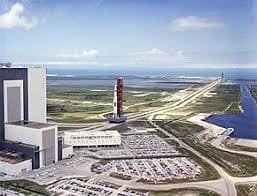
(iii) The man-made object that revolves around the Earth is known as:
(a) Artificial satellite
(b) Natural satellite
(c) Space shuttle
Ans: (a)
Explanation: A man-made object placed into orbit around Earth is called an artificial satellite. These are launched by rockets and used for communication, weather monitoring, navigation and scientific study.
(iv) What do you mean by Lunar Eclipse?
(a) The Moon comes between the Sun and the Earth and blocks the sunlight from reaching the Earth
(b) The Earth comes between the Sun and the Moon and blocks the sunlight from reaching the Moon
(c) The sun comes between the earth and the sun
Ans: (b)
Explanation: A lunar eclipse occurs when Earth moves between the Sun and the Moon so that Earth's shadow falls on the Moon, darkening it. This can happen only at full moon.
(v) NASA stands for:
(a) National Aeronautics and Space Administration
(b) National Aerodynamics and Space Administration
(c) National Aerodynamics and Shuttle Administration
Ans: (a)
Explanation: NASA stands for the National Aeronautics and Space Administration. It is the United States government agency responsible for civilian space programmes and aeronautical research.

FAQs on Worksheet Solutions: Earth and its Natural Satellites - 2
| 1. What are natural satellites? |  |
| 2. How was the Moon formed? | |
| 3. What is the distance between the Earth and the Moon? | |
| 4. Can we see the Moon during the daytime? | |
| 5. How does the Moon affect Earth? | |