Worksheet Solutions: Weather, Water and Air - 2

Q1: Name any two.
(i) Things which make air dirty.
Ans: Industries and vehicles
- Industries: Industries release smoke, gases, and particles into the air as they make things. This can make the air dirty and affect our environment.
- Vehicles: Cars, buses, and trucks release exhaust fumes when they run. These fumes can pollute the air and cause problems for both people and the planet.
(ii) Things that gives out smoke on burning.
Ans: Candle and match-stick
- Candle: When a candle burns, it melts the wax and gives off smoke along with light. The smoke is a result of the burning process.
- Matchstick: When you strike a matchstick, it ignites and gives off smoke as the wood burns and turns into ash.
(iii) Things which move with the help of air.
Ans: Kites and balloons
- Kites: Kites have a lightweight frame and a large surface area. When wind blows against them, the air pressure helps lift them up into the sky.
- Balloons: Helium-filled balloons are lighter than air, so they float. The helium inside the balloon makes it rise and move upwards.
(iv) Things you need water for.
Ans: Drinking and cooking
- Drinking: We need water to drink and stay hydrated. Our bodies use water for many functions, and it's essential for our health.
- Cooking: Water is used for cooking many foods. We use it to boil pasta, make soups, and prepare many other dishes.
(v) Things into which you can fill air.
Ans: Balloon and tyre
- Balloon: A balloon can be filled with air by blowing into it. Once filled, it becomes bigger and can even float if it's light enough.
- Tyre: The tires on bicycles, cars, and other vehicles are filled with air. This helps provide a cushioning effect and allows the vehicles to move smoothly on the road.
Q2: True or False.
(i) Air is a mixture of gases.
Ans: True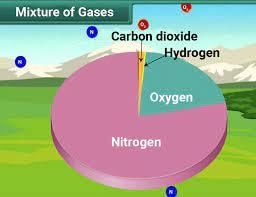 Explanation: Air is composed of various gases like nitrogen (about 78%), oxygen (about 21%), carbon dioxide, water vapor, and trace amounts of other gases. It is considered a mixture because the different gases maintain their individual properties and can be separated through various methods.
(ii) Water vapor is the gaseous form of ice.
Ans: False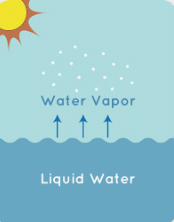 Explanation: Water vapour is the gaseous form of water, not ice. When water is heated, it turns into water vapour, which is an invisible gas. Ice, on the other hand, is the solid form of water, which occurs at temperatures below freezing.
(iii) Weather refers to the long-term atmospheric conditions in a specific area.
Ans: False
Explanation: Weather refers to the short-term conditions of the air in a specific area, such as temperature, humidity, precipitation, and wind on a daily or hourly basis. Long-term atmospheric conditions over many years are referred to as climate.
(iv) Thunderstorms are caused by the movement of tectonic plates.
Ans: False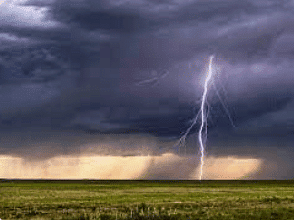 Explanation: Thunderstorms are not caused by the movement of tectonic plates. They are typically caused by the quick upward movement of warm, moist air, which leads to the formation of clouds and the development of lightning, thunder, and heavy rainfall.
(v) The water cycle involves the continuous movement of water on Earth through various processes.
Ans: True
Explanation: The water cycle, also known as the hydrological cycle, is the continuous movement of water on Earth. It includes processes such as evaporation, condensation, precipitation, runoff, and infiltration, through which water changes its state and moves between the atmosphere, land, and oceans.
(vi) Hurricanes and typhoons are the same weather phenomena with different names.
Ans: True
Explanation: Hurricanes and typhoons are the same weather phenomena but are given different names depending on the region where they occur. In the Atlantic and Northeast Pacific, they are called hurricanes, while in the Northwest Pacific, they are referred to as typhoons.
(vii) The ozone layer protects the Earth from harmful ultraviolet (UV) radiation.
Ans: True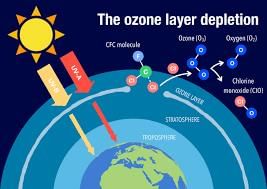 Explanation: The ozone layer is a region of Earth's stratosphere that contains a higher concentration of ozone molecules. It plays an important role in absorbing a significant amount of harmful ultraviolet (UV) radiation from the sun, protecting living organisms from the damaging effects of UV rays.
(viii) The process of water changing from a liquid to a gas is called condensation.
Ans: False
Explanation: The process of water changing from a liquid to a gas is called evaporation, not condensation. Condensation is the opposite process, where water vapor turns into liquid water, usually forming clouds or dew.
(ix) Air pressure decreases with increasing altitude.
Ans: True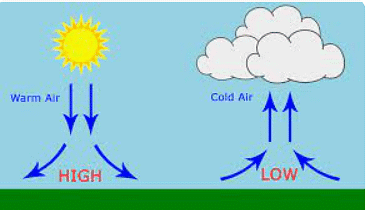 Explanation: Air pressure decreases with increasing altitude. This is because, at higher altitudes, there are fewer air molecules above, exerting less pressure on the surface below.
(x) Acid rain is a natural phenomenon and has no harmful effects on the environment.
Ans: False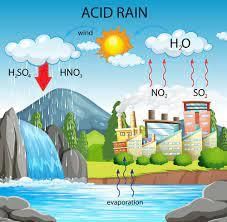 Explanation: Acid rain is a form of rain that contains higher than normal amounts of acidic compounds like sulfur dioxide and nitrogen oxides. It is mainly caused by human activities such as burning fossil fuels. Acid rain can have harmful effects on the environment, including damage to plants, aquatic life, soil, and buildings.
Q3: Answer the following questions.
(i) Give two uses of air.
Ans:
- Breathing: We use air to breathe. We inhale air to get oxygen, which our bodies need to live.
- Flying Kites: Air helps us fly kites. The wind pushes against the kite and makes it go up in the sky.
(ii) Why should we drink clean water?
Ans: We should drink clean water because it keeps us healthy. Clean water doesn't have germs or dirt in it, so drinking it helps our body work well and stops us from getting sick.
(iii) Name the three forms in which water exists.
Ans: Ice, water and steam.
- Ice: Water becomes solid and hard when it is very cold; this is ice.
- Water: In its liquid form we drink it and use it for washing and cooking.
- Steam: When water is heated it becomes a gas called steam, which rises into the air.
(iv) Write three uses of water in your daily life.
Ans:
- Drinking: We drink water to satisfy our thirst and stay healthy.
- Bathing: We use water to take baths and keep our bodies clean.
- Washing Dishes: We use water to wash dishes after eating. It helps remove food and keeps dishes clean.
FAQs on Worksheet Solutions: Weather, Water and Air - 2
| 1. What are the main components of weather? |  |
| 2. How does the water cycle affect weather patterns? | |
| 3. What role does air pressure play in weather forecasting? | |
| 4. How do human activities impact air quality? | |
| 5. What is the significance of understanding local weather and climate? | |