Worksheet Solutions: The Solar System - 2

Q1: Fill in the blanks.
(i) _________ is the largest planet.
Ans: Jupiter
Jupiter is the fifth planet from the Sun and is the largest planet in our solar system. It is much bigger than Earth and has a thick atmosphere made mostly of hydrogen and helium.
(ii) Most _________ have their own moons.
Ans: planets
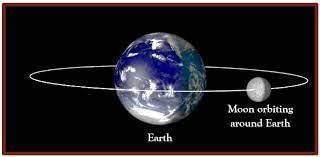
Many planets have natural satellites called moons that orbit them. For example, Earth has one moon, while Jupiter and Saturn have many moons of different sizes.
(iii) _________ is the nearest planet from the Sun.
Ans: Mercury
Mercury is the closest planet to the Sun. It moves very fast around the Sun and has a rocky surface with very little atmosphere.
(iv) The _________ have their own light.
Ans: stars
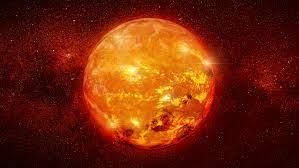
Stars are very hot balls of gas that produce their own light and heat. The Sun is one of the stars, and other stars we see at night are far away but still give off their own light.
(v) The _________ is a big ball of rocks.
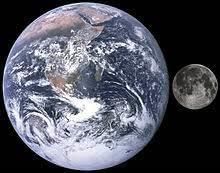
Ans: moon
The Moon is Earth's natural satellite and is made of rock and dust. Its surface has craters and plains, and it shines because it reflects the Sun's light.
Q2: True or False.
(i) The Sun is the largest star.
Ans: False
Explanation: The Sun is an average-sized star. There are many stars in the universe that are much larger than the Sun.
(ii) The small visible part of the moon is called the crescent moon.
Ans: True
Explanation: When only a small curved part of the Moon is visible, we call it a crescent moon. This happens during certain phases of the Moon.
(iii) The moon completes one round of the Earth in about 28 days.
Ans: True
Explanation: The Moon takes about 27.3 days to orbit the Earth, and the lunar phases repeat roughly every 29.5 days. Saying "about 28 days" is a simple way to describe this cycle for this class level.
(iv) Planets do not move at all.
Ans: False
Explanation: Planets move continuously; they travel around the Sun in paths called orbits. This motion is why we say planets orbit the Sun.
(v) The Earth is a part of the solar system.
Ans: True
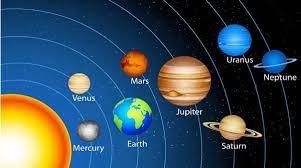
Explanation: Earth is one of the eight planets that orbit the Sun. Together with the Sun, moons, asteroids and comets, these objects make up the solar system.
(vi) The moon gives light to the Earth.
Ans: False
Explanation: The Moon does not make its own light. We see the Moon because it reflects light from the Sun toward the Earth.
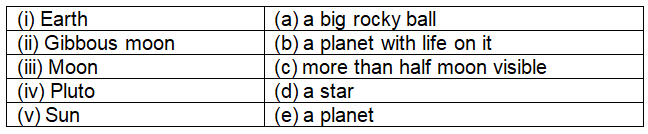
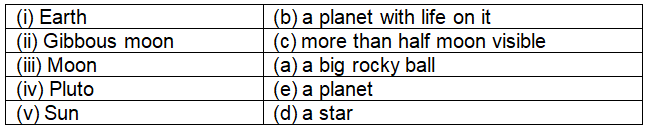
Q3: Match the column.
Ans:
Q4: Answer the following questions.
(i) What is the solar system?
Ans: The solar system is the Sun and all the objects that move around it. This includes eight planets, their moons, and various smaller celestial bodies like dwarf planets, asteroids and comets. The Sun is at the center of the solar system, and all the other celestial bodies orbit around it due to its gravitational pull.
(ii) What rotates around the Earth?
Ans: The Moon rotates around the Earth. As it goes around, we see different shapes of the Moon called phases.
(iii) What is known as the full moon?
Ans: A full moon is when the whole face of the Moon that faces Earth is lit up by the Sun. This happens when the Earth is between the Sun and the Moon.
(iv) When is the moon not visible at all?
Ans: The Moon is not visible during the new moon phase. At this time the Moon is between the Earth and the Sun, and the side facing Earth is dark.
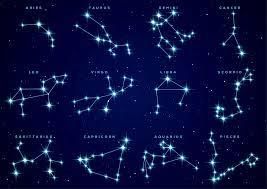
(v) What are constellations?
Ans: Constellations are groups of stars that form patterns or shapes as seen from Earth. People from different cultures have identified and named these patterns over thousands of years. Constellations are used as a way to navigate the night sky and tell stories associated with them.
(vi) Why do stars appear so smaller?
Ans: Stars look very small because they are extremely far away from us. Even though many stars are much larger than Earth, their great distance makes them look like tiny points of light in the night sky.
FAQs on Worksheet Solutions: The Solar System - 2
| 1. What is the solar system? |  |
| 2. How does the solar system work? | |
| 3. What are some interesting facts about the solar system? | |
| 4. How far is the solar system from other stars? | |
| 5. Can we live on other planets in the solar system? | |