HOTS Questions: The Revolt of 1857

Q1: Which company was formed by the British for trading with India?
Ans: The East India Company was formed by the British for trading with India. It set up trading posts and ran trade on behalf of Britain.
Q2: Why were the trading centres called factories?
Ans: The officials who worked at these trading centres were called factors. These factors bought, sold and stored goods for the company at the coastal trading centres. Because the place where factors worked came to be known by their name, the trading centres were called factories.
Q3: Who helped the British in the battle of Plassey against Siraj-ud-Daulah? And why?
Ans: Mir Jafar helped the British in the Battle of Plassey against the Nawab of Bengal, Siraj-ud-Daulah. He supported the British because he wanted to become the Nawab of Bengal and had promised to help them in return for their support.
Q4: Name the prominent leaders of the Revolt of 1857.
Ans: Nana Sahib, Tantia Tope, Rani Lakshmi Bai, Begum Hazrat Mahal and Liaquat Ali were some of the prominent leaders of the Revolt of 1857. These leaders led uprisings in different parts of India against British rule.
Q5: Which crops were the raw materials for the industries in Britain?
Ans: Cotton and indigo were the main raw materials grown in India for the British industries. These crops were used by British factories to make cloth and dyes.
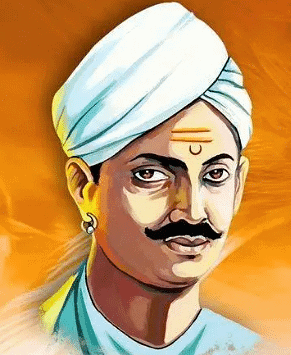
Q6: Who was Mangal Pandey?
Ans: Mangal Pandey was an Indian soldier (sepoy) in the British army who attacked British officers near Calcutta (now Kolkata). He opposed the use of the new rifle cartridges and was arrested and hanged on 8 April 1857.
Q7: Why did the European traders set up trading centres at the coasts?
Ans: They set up trading centres at the coasts because it was easy for ships to reach these places. Goods could be loaded and unloaded from ships quickly, which made trade faster and cheaper.
Q8: Why were the factories fortified?
Ans: The factories were made strong and were surrounded by walls for protection against attacks. Soldiers were kept at these factories to guard the goods and the people working there.
Q9: How did the Indian farmers suffer during the Industrial Revolution?
Ans: Indian farmers were forced to grow cotton and indigo instead of food crops because these were needed by British industries. The British often bought these crops at low prices. As a result, many farmers became poorer and faced hardship.
Q10: What is the importance of the revolt of 1857?
Ans: The Revolt of 1857 was important because it was the first large-scale uprising against British rule. It inspired many people and made Indians realise that unity could challenge British power and move the country towards independence.
Q11: What were the reasons for the Revolt of 1857?
Ans: Many groups - farmers, workers, traders and rulers - were unhappy with British injustice and policies. The introduction of the new rifle cartridges angered Indian soldiers. When soldiers at Meerut heard about Mangal Pandey's arrest and death, they attacked their British officers and took control of Meerut. This action marked the beginning of the Revolt of 1857.
FAQs on HOTS Questions: The Revolt of 1857
| 1. Why did Indian soldiers and common people revolt against the British in 1857? |  |
| 2. What were the main causes of the 1857 revolt that students need to understand for CBSE exams? | |
| 3. How did the cartridge issue become the spark that ignited the 1857 Revolt? | |
| 4. Which leaders and regions played important roles during the 1857 Revolt uprising? | |
| 5. What were the major consequences and impact of the 1857 Revolt on India's future? | |