Worksheet Solutions: The Great Indian Desert

Q1: Fill in the Blanks.
(i) The Great Indian Desert is located to the ______________ of the Gangetic plain.
Ans: West
The Great Indian Desert is located to the west of the Gangetic Plain. It is also called the Thar Desert and lies mainly in the state of Rajasthan, extending into Pakistan.
(ii) The western region of which Indian state is covered by the Great Indian Desert?
Ans: Rajasthan
The western region of the Indian state of Rajasthan is covered by the Great Indian Desert. Rajasthan is one of the largest states in India, and much of its western part is arid desert land.
(iii) In the desert lands, there is a ______________ of water.
Ans: Shortage
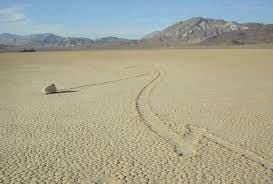
In desert lands, there is a shortage of water. Rainfall is very low, and water sources are few, so people and animals often struggle to find enough water.
(iv) People in some villages have to travel a few ______________ to get drinking water.
Ans: Kilometres
People in some villages have to travel a few kilometres to get drinking water. Wells or ponds may be far from homes, so villagers walk or go by cart to fetch water.
(v) The natural growing plants in the desert are mostly ______________.
Ans: Thorny bushes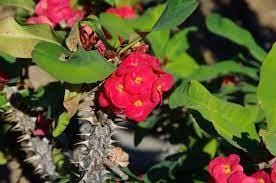
The natural plants in the desert are mostly thorny bushes. These plants save water and protect themselves with thorns so they can live in hot, dry weather.
(vi) The beast of burden commonly found in the desert is the ______________.
Ans: Camel
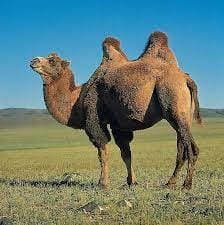
The common beast of burden in the desert is the camel. Camels can carry heavy loads for long distances and can go long without water, so they are very useful in deserts.
(vii) During the day, the desert sand becomes very ______________ due to the heat.
Ans: Hot
During the day, the desert sand becomes very hot because the sun is strong and there is little shade. This makes walking on sand difficult without shoes.
(viii) The Indira Gandhi Canal provides ______________ facilities in several districts.
Ans: Irrigation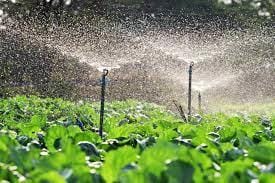
The Indira Gandhi Canal provides irrigation facilities in several districts. It brings water to dry areas so farmers can grow crops where rainfall is not enough.
(ix) The district of ______________ is known for the production of cotton.
Ans: Ganganagar
The district of Ganganagar is known for cotton production. Irrigation from canals helps farmers there grow cotton and other crops.
(x) The people of Rajasthan are skilled ______________ who make beautiful handicrafts.
Ans: Craftsmen
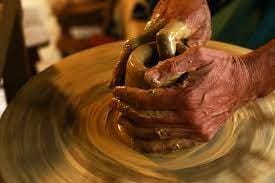
The people of Rajasthan are skilled craftsmen who make beautiful handicrafts. They create colourful textiles, pottery, jewellery and other items that show their culture and skill.
Q2: Multiple Choice Questions (MCQs).
(i) The Great Indian Desert lies to the ______________ of the Gangetic plain.
(a) east
(b) south
(c) west
(d) north
Ans: (c)
Explanation: The Great Indian Desert, or Thar Desert, is located to the west of the Gangetic Plain. It lies mainly in the western part of India, especially in Rajasthan, which is west of the Gangetic region.
(ii) Which animal is known as the "ship of the desert"?
(a) Cow
(b) Horse
(c) Camel
(d) Elephant
Ans: (c)
Explanation: The camel is called the "ship of the desert" because it can carry people and goods across sandy deserts for long distances and survive with little water.
(iii) What is the traditional clothing worn by men in Rajasthan?
(a) Sari
(b) Kurta-Pyjama
(c) T-shirt and jeans
(d) Skirt
Ans: (b)
Explanation: Kurta-pyjama is the traditional dress for many men in Rajasthan. A kurta is a long shirt, and pyjamas are loose trousers; this clothing suits the local climate and customs.
(iv) Which festival is celebrated during the monsoon months in Rajasthan?
(a) Diwali
(b) Holi
(c) Teej
(d) Navratri
Ans: (c)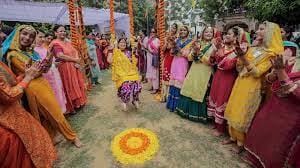
Explanation: Teej is a monsoon festival celebrated in Rajasthan. It celebrates the arrival of the rains and is marked by songs, dances and colourful clothes, especially among women.
(v) The famous Taj Mahal was built using marble from which region?
(a) Mount Abu
(b) Udaipur
(c) Makrana
(d) Chittaurgarh
Ans: (c)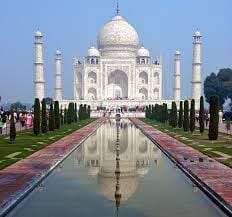
Explanation: The white marble used to build the Taj Mahal was taken from Makrana in Rajasthan. Makrana marble is known for its quality and was used to give the Taj Mahal its shining white look.
Q3: True or False.
(i) The Great Indian Desert covers the northern region of India.
Ans: False
Explanation: The Great Indian Desert covers the north-western region of India, mainly in Rajasthan, not the northern region of the whole country.
(ii) Rajasthanis celebrate the festival of Teej in the winter months.
Ans: False
Explanation: Teej is celebrated during the monsoon months when the rains arrive, not in winter.
(iii) The natural surroundings of the desert are very colourful.
Ans: False
Explanation: Deserts usually have dry and muted landscapes. People in Rajasthan wear colourful clothes to bring brightness to their lives, but the natural surroundings are not always colourful.
(iv) Wheat and rice are not commonly consumed by the people of Rajasthan.
Ans: False
Explanation: Wheat and rice are commonly eaten in Rajasthan, along with other grains such as millets and maize.
(v) The annual fair at Jaipur features camel races.
Ans: False
Explanation: The well-known Jaipur Literature Festival is a cultural and literary event and does not focus on camel races. Camel races happen at other fairs in Rajasthan, such as in rural fairs and special camel events.
Q4: Match the Following.
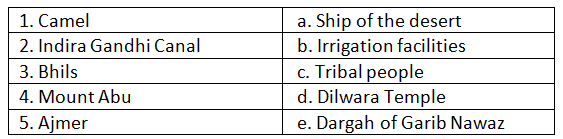
Ans: 1. Camel - Ship of the desert: Camels are often called the "ship of the desert" because they can carry heavy loads across sandy areas.
2. Indira Gandhi Canal - Irrigation facilities: The Indira Gandhi Canal brings water to dry parts of Rajasthan and helps farmers grow crops.
3. Bhils - Tribal people: Bhils are one of the tribal communities living in parts of Rajasthan.
4. Mount Abu - Dilwara Temple: The famous Dilwara Temples are located at Mount Abu, which is a hill station in Rajasthan.
5. Ajmer - Dargah of Garib Nawaz: Ajmer is known for the Dargah (shrine) of the Sufi saint Garib Nawaz.
Q5: Choose the Odd One Out.
(i) (a) Wheat
(b) Rice
(c) Millets
(d) Camel
Ans: (d)
Explanation: Wheat, rice and millets are foods that people eat. A camel is an animal and not part of the diet, so it is the odd one out.
(ii) (a) Forts
(b) Palaces
(c) Temples
(d) Skyscrapers
Ans: (d)
Explanation: Forts, palaces and temples are traditional buildings you find in Rajasthan. Skyscrapers are modern tall buildings and are not typical of the region, so they are the odd one out.
(iii) (a) Gangaur
(b) Holi
(c) Diwali
(d) Teej
Ans: (c)
Explanation: Gangaur, Holi and Teej are festivals especially celebrated with strong local traditions in Rajasthan. Diwali is a festival celebrated across India and is not specific to Rajasthan, so it is the odd one out.
(iv) (a) Sand dunes
(b) Mountains
(c) Camel caravans
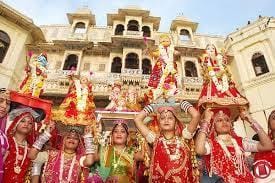
(d) Dancing women
Ans: (b)
Explanation: Sand dunes, camel caravans and dancing women are things often seen in desert life and culture. Mountains are not typical in desert areas, so they are the odd ones out.
(v) (a) Copper
(b) Marble
(c) Zinc
(d) Mica
Ans: (d)
Explanation: Copper, marble and zinc are important materials found or used in the region. Mica is less commonly associated with Rajasthan compared to marble and the other minerals listed, so it is the odd one out.
Q6: Short Answer Questions.
(i) Why is life in the desert lands hard?
Ans: Life in the desert is hard because there is very little water, rainfall is scarce, and temperatures can be extremely hot during the day and cold at night. These conditions make farming and daily life difficult.
(ii) What is the role of the Indira Gandhi Canal in Rajasthan's agriculture?
Ans: The Indira Gandhi Canal supplies water to the dry areas of Rajasthan for irrigation. This water helps farmers grow crops in regions where there is little rainfall, improving farming and livelihoods.
(iii) Name two important festivals celebrated in Rajasthan.
Ans: Teej and Gangaur
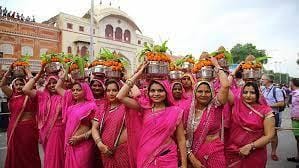
(iv) How have the people of Rajasthan made their lives colourful despite the dull natural surroundings?
Ans: People of Rajasthan wear bright, colourful clothes, make beautiful handicrafts and celebrate lively festivals. These traditions add colour and joy to their daily life despite the dry landscape.
(v) What are some of the prominent cities in Rajasthan?
Ans: Some prominent cities in Rajasthan are Jaipur, Ajmer, Chittaurgarh, Udaipur and Jodhpur.
FAQs on Worksheet Solutions: The Great Indian Desert
| 1. What is the Great Indian Desert? |  |
| 2. What is the climate like in the Great Indian Desert? | |
| 3. What is the main occupation of people living in the Great Indian Desert? | |
| 4. What are some unique features of the Great Indian Desert? | |
| 5. How does the Great Indian Desert impact the surrounding regions? | |